
The Complete Guide to Hardwood Floors in Pennsylvania — Everything You Need to Know Before You Install, Refinish, or Restore
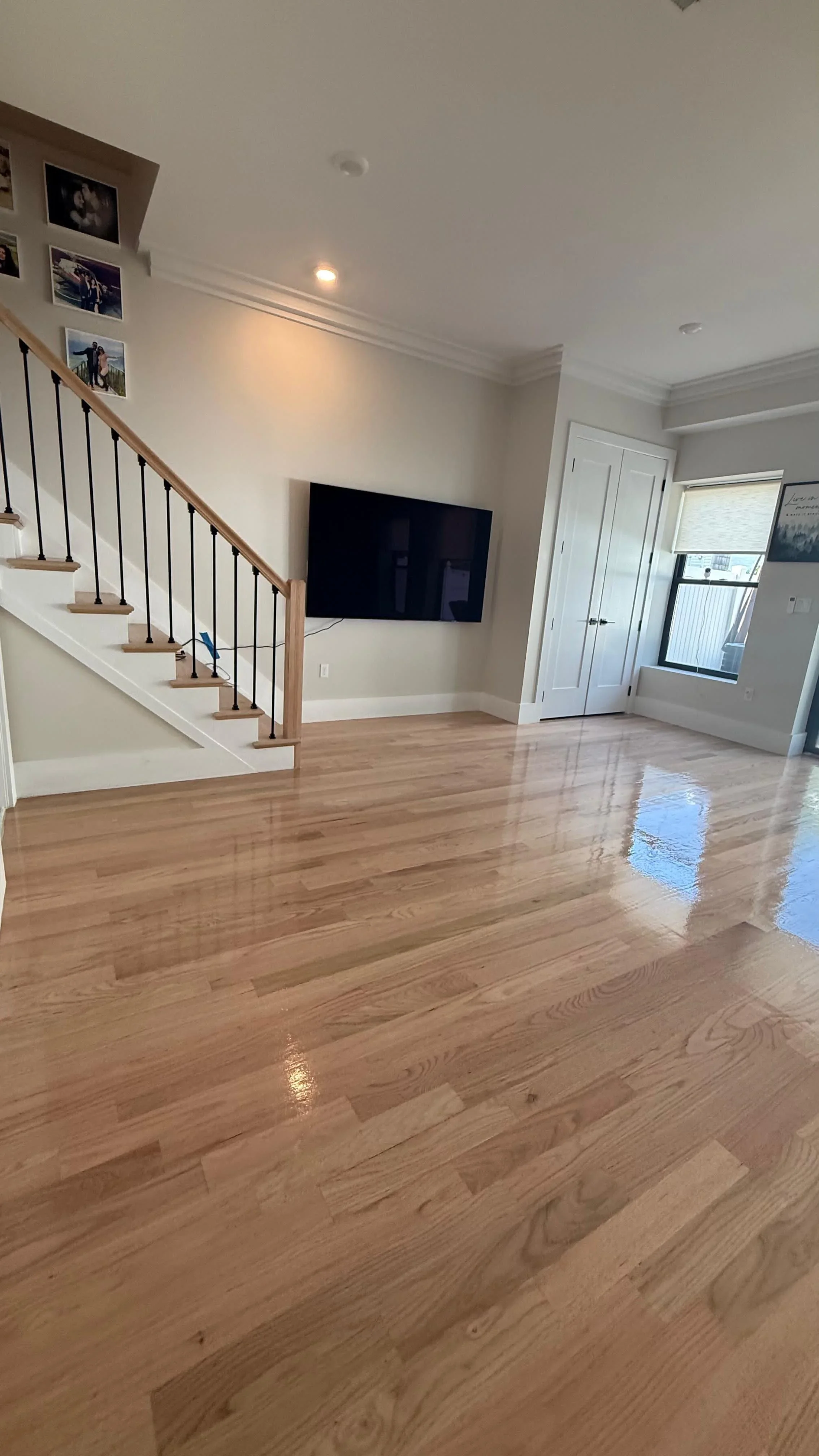
If you own a home in Pennsylvania and have hardwood floors — or are thinking about getting them — this is the guide we wish every homeowner read before calling us. Not because it replaces the conversation, but because homeowners who understand the basics make better decisions, ask better questions, and end up with better results. After 20 years of installing and refinishing hardwood floors throughout Bucks County, Montgomery County, Chester County, Delaware County, and Philadelphia, here's everything that actually matters.
Is Hardwood Right for Your Pennsylvania Home?
The short answer is almost certainly yes — but the type of hardwood and the installation method depend entirely on your specific home, subfloor, and situation.
Pennsylvania is a challenging climate for hardwood floors. The summers are humid — 70 to 90% relative humidity in July is normal. The winters with forced air heating drop interior humidity to 20 to 35% in many homes. That's a significant seasonal swing that every hardwood floor has to survive twice a year, every year. The species you choose, the product type — solid versus engineered — and how the floor is installed all determine how well it handles that swing.
The good news is that hardwood has been performing correctly in Pennsylvania homes for centuries. The original floors in the colonial farmhouses throughout New Hope, Doylestown, and Washington Crossing are proof. The original red oak strip in the 1960s colonials throughout Lansdale, Warrington, and Blue Bell is proof. Hardwood works here when it's done right. The failures we're called in to fix — buckling, gapping, cupping, finish peeling — are almost always installation or maintenance failures, not material failures.
If you're starting from zero and haven't yet decided on species or product type, the next two sections cover both decisions in detail.
Choosing Your Species
Species selection is the first real decision and it affects everything that comes after — how the floor looks, how it performs, how it responds to finish, and how long it lasts. Here's the honest breakdown on every species we install regularly in Pennsylvania.
Red Oak is the most common species in the Philadelphia metro and it earns its position. Janka hardness of 1290, warm grain pattern, excellent finish compatibility, refinishes reliably for decades. The open grain absorbs stain well which is an advantage for homeowners who want a specific color and a liability in kitchens and high-moisture areas where spills penetrate faster. The vast majority of the original hardwood floors in the post-war and suburban colonial housing stock throughout Bucks County and Montgomery County is red oak. If your house was built between 1950 and 1990 and has original hardwood, it's almost certainly red oak.
White Oak has become the dominant species in new installations and high-end renovations throughout the Philadelphia suburbs over the past decade. Closed grain structure — more resistant to moisture penetration than red oak. Slightly harder at 1360 Janka. Takes contemporary stains — natural, fumed, gray, Scandinavian-inspired finishes — with exceptional results. Wide-plank white oak at 5 inch and wider in a renovated Main Line colonial or a Bucks County farmhouse is one of the most beautiful floors we install. The full comparison between these two species — stability, finish compatibility, cost, and long-term performance in Pennsylvania's climate — is covered in detail in our red oak vs white oak comparison for Pennsylvania homes.
Pine is the species most commonly found in the oldest Pennsylvania properties — the colonial farmhouses and Victorian borough homes throughout New Hope, Phoenixville, West Chester, and Doylestown. Original wide-plank pine in an 18th or 19th century stone colonial is irreplaceable and extraordinarily beautiful when properly restored. It's also the most misunderstood species we work with. Pine is soft — eastern white pine scores between 380 and 870 on the Janka scale depending on grade. It dents, scratches, and absorbs moisture faster than any hardwood species. Wet rugs, houseplants, high heels, and improper cleaning cause permanent damage in pine that wouldn't mark an oak floor at all. Before you install or refinish pine there's a specific body of knowledge that applies to this species that doesn't apply to oak — here's everything you need to know about pine hardwood floors before you make any decisions.
Hickory is one of the hardest domestic species available at 1820 Janka — significantly harder than oak, resistant to denting and compression, with dramatic natural color variation from board to board. It's not for every home or every aesthetic but for active households with dogs, kids, and heavy traffic it performs exceptionally. The color variation is either a selling point or a drawback depending on the homeowner — some love the character, others want something more uniform.
Exotic species — Brazilian Cherry, Tigerwood, Ipe, Acacia — are beautiful, hard, and distinctly challenging in Pennsylvania's climate. Tropical species come from stable high-humidity environments and their cellular structure doesn't handle Pennsylvania's seasonal humidity swings the way domestic species do. Wide winter gapping, finish adhesion problems from natural oils, and color matching nightmares for future repairs are the most common issues. We install exotics and have done so successfully throughout our service area — but it requires strict moisture protocol, extended acclimation, and ongoing humidity management. The full breakdown on what makes exotic hardwood challenging in Pennsylvania and what correct installation requires is here in our guide to exotic vs domestic hardwood stability.
Solid or Engineered
This is the second major decision and it's determined primarily by your subfloor type and installation environment — not by preference or budget alone.
Solid hardwood is a single piece of wood milled to 3/4 inch thickness. It can be refinished 4 to 6 times over its lifetime. It performs best over plywood subfloor on the main and upper levels of a home with reasonably stable humidity. The majority of Pennsylvania's suburban colonial housing stock — the plywood-over-joists construction throughout Bucks County, Montgomery County, and Chester County — is ideal territory for solid hardwood. If your home has this subfloor profile and you plan to stay 20 or more years, solid hardwood is almost always the right call.
Engineered hardwood is a real hardwood veneer bonded to a cross-ply plywood or HDF core. The surface is genuine wood — same species, same grain, same finish options as solid. The core is engineered for dimensional stability in applications where solid hardwood can't perform reliably. Concrete slab foundations, below-grade installations, rooms with radiant heat, and wide-plank installations in moisture-variable environments are where engineered hardwood is the correct product — not a compromise but the right tool for the application. The split-levels and ranchers throughout King of Prussia, Havertown, and Montgomeryville with concrete slab foundations need engineered hardwood. Installing solid over a slab in Pennsylvania's climate is a risk that produces buckling, gapping, and failures. Check out our article on why hardwood floors buckle.
The critical detail that separates good engineered floors from bad ones is wear layer thickness. The veneer on top of the core is what gets sanded when the floor is refinished. Products under 2mm cannot be refinished at all. Products at 3mm or above support one or two refinishing cycles. Premium products at 6mm approach solid hardwood in their refinishing potential. Never install engineered hardwood with a wear layer under 3mm in a primary residence. The full breakdown on every variable in this decision — subfloor types, installation methods, wear layer specifications, cost comparison — is in our complete engineered vs solid hardwood guide for Pennsylvania homes.
Installation — What the Process Actually Involves
A hardwood floor is only as good as its installation. The most expensive wide-plank white oak installed over a moisture-compromised subfloor by a contractor who skipped acclimation is going to fail. The most budget-friendly red oak strip installed correctly over a properly prepared plywood subfloor is going to last 50 years. Here's what correct installation looks like.
Moisture testing is the non-negotiable first step. We test the wood, the subfloor, and the ambient environment before anything is installed. Wood moisture content needs to be within 2% of subfloor moisture content for a stable installation. In Pennsylvania's climate — especially in older homes with crawl spaces, stone foundations, or concrete slabs — moisture conditions vary significantly and affect installation decisions. A contractor who doesn't moisture test before installation is skipping the step that prevents the most expensive failures.
Acclimation means the wood spends time in the specific room it's being installed in before installation begins. Not the garage, not the basement — the room. Solid hardwood needs 3 to 5 days minimum. Wide plank needs 5 to 7 days. Exotic species need 7 to 10 days or more. Acclimation allows the wood to reach equilibrium moisture content with its permanent environment before it's fastened in place. Skipping it installs stored stress that releases after installation in the form of movement, gapping, and buckling.
Subfloor preparation addresses flatness, fastening, and moisture before the wood goes down. Subfloor needs to be within 3/16 inch over 10 feet for standard installation, tighter for wide plank glue-down. High spots, low spots, squeaks, soft areas, and moisture issues get addressed before installation begins — not discovered after. See our article on subfloor issues that cause problems to your hardwood floors.
Wide plank installation requires glue-assist — full spread adhesive used in combination with mechanical fastening — for any plank 5 inches or wider in Pennsylvania's climate. Nails alone cannot restrain the seasonal movement of a wide plank board across the full face width. The result of nail-only wide plank installation in this climate is gapping in winter and potential buckling in summer. Here's the full explanation of why wide plank hardwood requires glue-assist installation and what happens when contractors skip it.
Timing affects installation quality more than most homeowners realize. The worst time to install hardwood in Pennsylvania is in the dead of winter when interior humidity is at its annual low — the wood will acclimate to dry conditions and expand when humidity rises in spring, potentially causing buckling if expansion gaps weren't left correctly. The full honest breakdown on when is the best time to install or refinish hardwood floors in Pennsylvania is here — including why most contractors won't tell you this.
Finish Selection
The finish is what protects the wood and determines how the floor looks. It's also where the most confusion exists in the homeowner decision process.
Oil-based polyurethane is the traditional standard. It produces a warm amber tone that deepens over time — enhancing the character of red oak and traditional wood species. It's durable, it's been in use for decades, and a quality oil-based finish properly applied lasts 7 to 10 years in normal residential use. The downsides are significant VOC content during application, a 30-day full cure period during which the floor is vulnerable, and the ambering effect that some homeowners — particularly those who want a clean natural white oak look — specifically don't want.
Water-based polyurethane dries clear, stays clear, has significantly lower VOC content, and cures faster. Single-component water-based products are the weakest finish option available — adequate for low-traffic applications, inadequate for active households. Two-component water-based products like Bona Traffic HD are a completely different category — commercial-grade durability that cross-links chemically during cure and outperforms most oil-based products in scratch and wear resistance. This is our standard recommendation for active Pennsylvania households with kids and pets.
Penetrating oil finishes like Rubio Monocoat soak into the wood fiber rather than building a film on top. The result is a floor that looks and feels like bare wood — no surface sheen, no film build, extraordinary natural appearance. It's the most historically appropriate finish for antique and wide-plank floors in older Pennsylvania properties and the most technically demanding to maintain correctly. The full comparison of oil-based versus water-based finish for Main Line and Pennsylvania homes — including a real client case study — is here.
Finish selection also directly affects how your stain color reads in the final result. Oil-based finish adds warmth and depth to stain colors. Water-based finish reads truer to the stain chip. The same stain applied under oil-based and water-based finish looks like two different colors on the same floor. Here's the full breakdown on how your floor finish changes your stain color and why sampling on your actual boards before committing is non-negotiable.
Refinishing
Refinishing is the most requested service we provide throughout Bucks County, Montgomery County, Chester County, and Philadelphia. It's also the most misunderstood. Here's what it actually involves, when it's the right call, and what determines how long the result lasts.
What refinishing involves: mechanical sanding of the floor back to bare wood, repair of individual boards as needed, stain application if a color change is desired, and multiple coats of fresh finish. The result is a floor that looks new because the surface you're seeing is new — everything worn, scratched, and damaged is removed in the sanding process.
When to refinish versus screen and recoat: A screen and recoat — light abrasion of the existing finish surface followed by one or two fresh coats without sanding to bare wood — is appropriate when the wear is in the finish surface rather than the wood itself. Dullness, light scratching, loss of sheen in traffic lanes — these are screen and recoat situations. Deep scratches into the wood, staining in the wood fiber, significant color change desired, or finish that has failed and separated from the wood — these require full refinishing. Screen and recoat costs roughly 40 to 60% less than full refinishing and extends finish life by 3 to 5 years. The full breakdown on how long hardwood floor refinishing lasts — including how traffic, species, finish product, and maintenance habits affect the timeline — is here.
Preparation matters more than most homeowners know. The mistakes that cause callbacks and floor damage happen before we arrive — HVAC left running during finish application, furniture moved back too soon, pets allowed on wet finish, wet rugs placed on floors that haven't fully cured. Here's the complete homeowner preparation checklist for hardwood floor refinishing covering every step in the week before, the day before, and the morning of the job.
Ventilation is a safety issue, not just a comfort issue. Oil-based and water-based finishes both release VOCs during application and curing. In a poorly ventilated space those fumes accumulate to levels that cause headaches, dizziness, and respiratory irritation — and create specific risks for pregnant women, infants, and anyone with chemical sensitivities. Here's the full breakdown on why ventilation is the most important part of any hardwood floor refinishing job and what proper ventilation protocol actually looks like.
Thin floors need assessment before refinishing. 5/16 inch face-nailed hardwood — common in older Pennsylvania homes throughout Bucks County and the Main Line — has limited wear layer above the tongue. Floors that have been refinished before may not have enough material left to support another sanding cycle. Here's everything you need to know about refinishing 5/16 face-nailed hardwood floors before you commit to a scope.
Stairs
Stairs are the most visible hardwood in a Pennsylvania home and the most technically demanding to install correctly. Every tread is an individual precision cut, riser heights need to be consistent to code, and the connection between the stair installation and the floor it lands on is one of the most scrutinized design details in any renovation.
The dominant stair design question in the Philadelphia suburbs right now is white painted risers versus risers stained to match the treads. It's a legitimate design debate with a real answer that depends on your home's style, trim color, and personal preference. The full breakdown — including maintenance reality, durability comparison, and which works in which homes — is in our guide to white risers vs matching treads.
The broader principle — that your staircase needs to connect visually and materially to your first-floor hardwood — is something we see violated constantly in Pennsylvania homes where stairs were updated at a different time than floors or by a different contractor. Here's why your staircase must match your first-floor hardwood and how to get the species and stain connection right. For the full picture on what stair installation involves — treads, risers, railings, carpet-to-hardwood conversions, pricing — here's our complete hardwood stair installation guide.
Maintenance
The way you maintain a hardwood floor determines how long it looks good between refinishing cycles. We get more calls about floors that were damaged by cleaning than by foot traffic, furniture, or pets. Here's what correct maintenance looks like and what to avoid.
Never wet mop hardwood floors. A traditional mop deposits far more moisture than hardwood finish is designed to handle repeatedly. Over time wet mopping breaks down the finish, raises the grain, and causes the cumulative dullness and discoloration that makes homeowners think the floor needs refinishing when what it actually needs is a change in cleaning method. Use a dry microfiber dust mop for daily maintenance and a barely damp microfiber mop with a pH-neutral hardwood cleaner like Bona for deeper cleaning. The full list of cleaning mistakes that damage hardwood floors in Montgomery County homes — including steam mops, vinegar solutions, wrong vacuum attachments, and rubber-backed rugs — is here.
Seasonal humidity management is the highest-impact maintenance habit most homeowners ignore. A whole-house humidifier maintaining interior humidity between 35 and 55% year-round protects the floor from the excessive contraction that causes winter gapping and finish cracking. Pennsylvania winters with forced air heating are brutal on hardwood — here's the complete guide to how winter weather damages hardwood floors in Bucks County and Montgomery County and what you can do about it.
Direct sunlight causes fading and discoloration that accumulates over years into visible variation between sun-exposed and protected sections of the same floor. UV-filtering window treatments and strategic area rug placement in high-sun rooms are the practical solutions. Here's the full breakdown on why sunlight fades hardwood floors and what actually helps.
Kitchen hardwood requires specific attention because it combines hardwood's vulnerability to moisture with the highest-traffic, highest-spill-risk room in the house. Here's the complete homeowner's guide to kitchen hardwood floors and why water is your floor's number one enemy.
Common Problems and How to Fix Them
Buckling — boards lifting from the subfloor, sometimes dramatically — is almost always a moisture problem. Either the floor was installed over a moisture-compromised subfloor, the installation didn't use appropriate expansion gaps, or a water event introduced moisture after installation. Wide plank floors without glue-assist are particularly vulnerable. Here's the full guide to why hardwood floors buckle in Main Line and Bucks County homes and how to prevent it.
Subfloor problems cause more floor failures than bad wood or bad finish combined. Sagging joists, soft spots, uneven surfaces, and moisture-compromised subfloor all show up in the finished floor surface as movement, squeaking, unevenness, and in severe cases structural failure. Here's why your bad hardwood floor is actually a subfloor problem and what it takes to fix it correctly.
Pet staining that has penetrated below the finish layer into the wood fiber is not fixable with refinishing alone. The ammonia in urine reacts with wood tannins and creates discoloration that goes deeper than sanding can reach. Here's why some stained hardwood boards can't be sanded out and need replacement instead — and what board replacement and blending actually involves.
Hidden hardwood under carpet is one of the best discoveries in Pennsylvania home renovation. The colonial and Victorian housing stock throughout Bucks County, Montgomery County, and Chester County has a high percentage of original hardwood under decades of carpet. Here's how refinishing the hardwood under your carpet can save $5,000 to $10,000 compared to new installation — and how to assess what's actually there before you commit to anything.
Finding the Right Contractor in Bucks, Montgomery, and Chester County
The contractor you hire determines the outcome more than any other variable. Here's what to look for and what to ask.
Experience in your specific market matters. Pennsylvania's climate creates specific challenges — the seasonal humidity swings, the moisture variability in older homes, the wide range of species in the historic housing stock — that a contractor without regional experience handles poorly. Ask how long they've been working in this specific area. Ask for examples of jobs similar to yours. Here's why hardwood floor refinishing requires real experience and skill and what separates contractors who know this work from those who don't.
Ask about moisture testing protocol. Any contractor who can't tell you specifically how they test moisture content before installation or refinishing is skipping a step that matters. This is a fundamental quality indicator.
Ask what finish products they use and whether they're single or two-component. A contractor who can't name the specific product or doesn't know whether it's single or two-component hasn't thought carefully enough about the most important material decision on the job.
Ask for written scope and timeline before any work begins. A written estimate with line items, a realistic timeline, and documentation of what's included protects you and tells you something about how the contractor runs their business.
Get the preparation conversation. A contractor who walks you through what you need to do before they arrive — HVAC shutdown, furniture, pets, re-entry timeline — is thinking about the whole job not just their part of it.
Frequently Asked Questions
What is the best hardwood floor species for Pennsylvania homes? White oak is our top recommendation for new installations in Pennsylvania right now. Closed grain structure, excellent stability in Pennsylvania's seasonal humidity swings, outstanding finish compatibility with contemporary stains, and strong long-term resale value. Red oak is the proven alternative with 70 years of performance history in the Philadelphia metro. For historic homes with original pine or specific aesthetic requirements, species selection becomes more nuanced — call us for a site-specific recommendation.
How much does hardwood floor installation cost in Bucks County and Montgomery County? Solid red oak installation runs $6 to $9 per square foot installed. Solid white oak runs $8 to $12 per square foot. Engineered hardwood at 3mm+ wear layer runs $7 to $11 per square foot. Wide-plank premium installations run higher depending on species and wear layer. Refinishing runs $3 to $5 per square foot for most jobs in our market. We provide free, detailed written estimates with line items before any work begins.
How long does hardwood floor installation take? A standard colonial with 1,000 square feet of hardwood installation typically runs 3 to 5 days including subfloor preparation, installation, and finish coats. Larger homes, complex layouts, or wide-plank glue-assist installations run longer. Refinishing a comparable square footage runs 3 to 4 days. We give you a realistic timeline before we start — not one that changes after we're in the house.
Can hardwood floors be installed over radiant heat in Pennsylvania? Yes — engineered hardwood with full glue-down using radiant-rated adhesive is the correct approach. The adhesive product and wear layer thickness both matter for radiant heat applications. Solid hardwood over radiant heat is possible with specific conditions — narrower planks, species with lower shrinkage rates, controlled humidity management — but engineered is the lower-risk recommendation for most homeowners.
How do I know if my original hardwood floors are worth refinishing? The key factors are remaining wear layer thickness, species, and condition. A floor with 1/8 inch or more of wear layer above the tongue in solid condition is almost always worth refinishing. Floors with significant structural damage, severe pet staining throughout, or insufficient wear layer may need assessment before a refinishing decision is made. We assess this during a free walkthrough — no charge, honest answer.
Do you serve the entire Philadelphia metro? Yes. We serve Bucks County, Montgomery County, Chester County, Delaware County, and Philadelphia. Our primary service area includes Doylestown, Newtown, New Hope, Yardley, Warminster, Blue Bell, Fort Washington, Ambler, Lansdale, Jenkintown, Elkins Park, Narberth, Wynnewood, Havertown, King of Prussia, West Chester, Paoli, Berwyn, Phoenixville, Malvern, Downingtown, and surrounding communities. Call or text us at (484) 253-5348 — we respond to every inquiry within 24 hours.
Cyclone Hardwood Floors LLC has served Bucks County, Montgomery County, Chester County, Delaware County, and Philadelphia for over 20 years. We specialize in hardwood floor installation, refinishing, and restoration throughout the Philadelphia metro. Contact Us Here or Call or text (484) 253-8348.
