
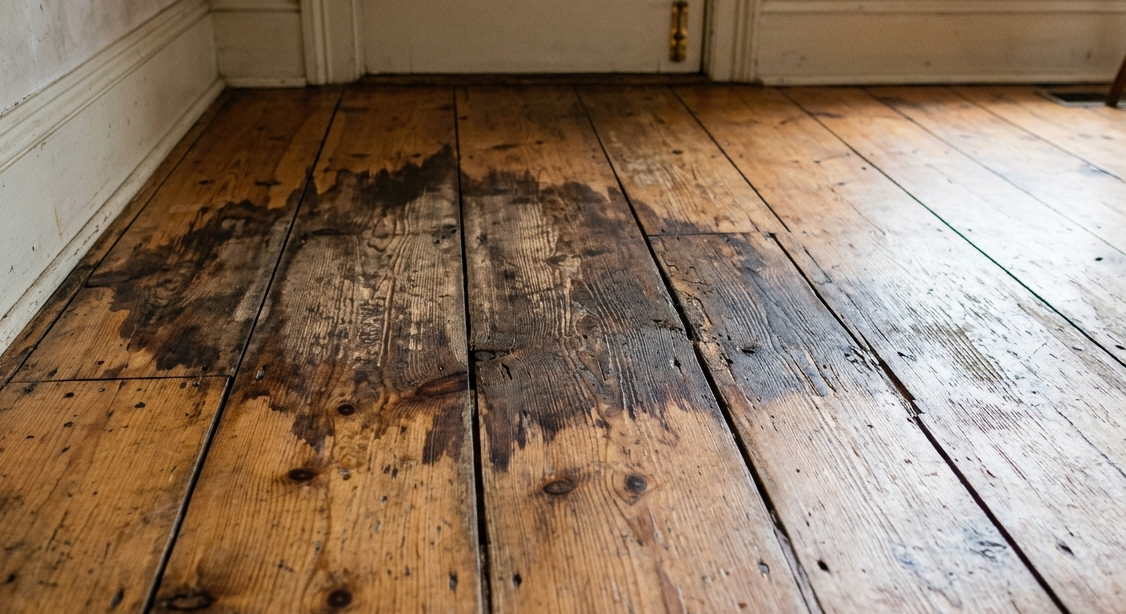
Pine floors are having a moment — and for good reason. The wide-plank pine in a installed in Bucks County farmhouse, the original heart pine in a West Chester Borough Victorian, the painted and stripped pine in a New Hope stone colonial — there is nothing that gives a room the warmth, authenticity, and sense of history that original pine hardwood does. It's irreplaceable. It's beautiful. And it is, without question, the most misunderstood flooring material we work with in 20 years of doing this throughout the Philadelphia metro.
Here's what we see constantly: a homeowner buys an older home in Doylestown, Newtown, Lansdale, or Chestnut Hill. The floors are original pine, refinished at some point in the last decade, and they look stunning at the showing. Six months later the homeowner calls us. There's a dark ring under the plant in the corner. There are compression marks near the entry. There's a water stain the size of a dinner plate where a wet umbrella sat against the wall for a week. And in the dining room, small indentations that weren't there before — a pattern that turns out to be a trail of high heel marks from a dinner party.
None of this is unusual. All of it is preventable if you understand what pine actually is and how it behaves differently from the oak floors most people grew up with.
Pine Is Soft. Genuinely, Measurably Soft.
This is the foundation of everything else in this article, so let's establish it clearly.
Hardness in wood flooring is measured on the Janka scale — a standardized test that measures the force required to embed a steel ball halfway into the surface of the wood. The higher the number, the harder the species. Red oak, the most common hardwood floor in Philadelphia-area homes, scores 1290 on the Janka scale. White oak comes in at 1360. Hickory sits around 1820.
Eastern white pine — the species most commonly found in original floors throughout Bucks County, Montgomery County, and Chester County historic homes — scores between 380 and 870 depending on the specific grade and age of the lumber. Heart pine, the old-growth longleaf pine found in some of the oldest floors in the region, is harder at around 1225 — but still softer than standard red oak and significantly softer than modern hardwood species.
What this means in practice: pine dents, compresses, and marks under forces that hardwood absorbs without evidence. It's not defective. It's the nature of the material. Understanding that changes how you live with it and what you do and don't put on it.
Pine sits at the soft end of the domestic hardwood spectrum — for the full picture on how domestic species compare to each other and to exotic species in Pennsylvania's climate, here's our breakdown on exotic vs domestic hardwood stability.
Moisture Is Pine's Biggest Enemy
Pine absorbs moisture faster and more deeply than most hardwood species. The cellular structure of pine is more porous than oak or maple, which means water doesn't just sit on the surface — it penetrates the wood fiber quickly, causing swelling, discoloration, and in persistent cases, permanent dark staining that no amount of sanding will fully remove.
The most common moisture damage scenarios we see in pine floors throughout the Philadelphia metro:
Wet area rugs. This is the single most destructive thing most pine floor owners do without realizing it. A bathroom rug, an entryway mat, a kitchen runner — any rug that gets wet from foot traffic, spills, or cleaning and sits against pine for even a short period of time will trap moisture against the wood. The result is a dark stain in the exact shape of the rug's perimeter, sometimes several shades darker than the surrounding floor. In severe cases the wood is permanently discolored and the only solution is board replacement. We see this in homes throughout Narberth, Jenkintown, and the older borough properties in West Chester where pine floors and area rugs coexist without proper protection underneath.
The fix is simple but requires diligence: never place a rug directly on pine without a breathable rug pad underneath, and never leave wet rugs in place. If a rug gets wet — from mopping, from a spill, from wet shoes — remove it immediately and allow both the rug and the floor to dry completely before replacing it.
Houseplants. A terra cotta pot sitting directly on a pine floor is a moisture delivery system. The condensation that forms on the exterior of pots, the water that seeps through drainage holes, the humidity that accumulates under a saucer — all of it goes directly into the wood. We've pulled plant rings out of pine floors in Doylestown and New Hope colonials that were an inch deep in the wood fiber. Not discoloration. Structural damage to the board.
The rule is absolute: never place any plant pot — regardless of whether it has a saucer — directly on pine flooring. Use a waterproof plant stand with felt feet, a sealed stone or tile platform, or a heavy-duty waterproof mat rated for wet use. The saucer alone is not sufficient protection.
Tracked-in moisture and wet foot traffic. Pine near exterior doors — front entries, mudrooms, back doors — takes more abuse than anywhere else in the house. Wet boots, umbrellas leaned against the wall, snow tracked in from outside. In a week of winter weather a pine entry floor can absorb enough moisture to cause visible swelling and the beginning of dark grain raising if it's not addressed.
Practical solutions: waterproof entry mats outside the door before people come in, a secondary rug with a sealed waterproof backing just inside, and a habit of not leaving wet outerwear on pine floors. A good boot tray — actual waterproof, raised-edge containment — costs twenty dollars and saves a floor refinish.
Improper cleaning. Pine floors should never be wet mopped. Ever. A traditional mop — even a wrung-out one — deposits far more moisture than pine can safely absorb without consequence. Over time wet mopping breaks down the finish, raises the grain, and causes the cumulative discoloration and dullness that makes homeowners think their floors need refinishing when what they actually need is a change in cleaning method.
Pine floors are the most unforgiving species when it comes to cleaning mistakes — here's the full breakdown on the most common hardwood floor cleaning mistakes Montgomery County homeowners make and how to avoid them
The correct way to clean pine floors: dry dust mop daily or as needed. For deeper cleaning, a barely damp microfiber mop with a pH-neutral hardwood floor cleaner — Bona Hardwood Floor Cleaner is our standard recommendation — applied lightly and dried immediately. Never standing water. Never steam mops. Never traditional wet mopping.
Staining: What Goes In Usually Stays In
Because pine is so porous, stains that would sit on the surface of an oak floor penetrate deeply into pine fiber within minutes. This applies to everything — wine, coffee, pet urine, cooking oil, and the tannin from wet leaves tracked in from the yard.
Pet urine is the worst of them. The ammonia in urine reacts with the tannins naturally present in pine and creates a dark stain that penetrates through the finish, through the wood fiber, and often into the subfloor. Surface sanding removes the finish layer but exposes the stain in the wood itself. Additional sanding removes more wood but often reveals that the discoloration goes deeper than the wear layer can accommodate. In most cases, board replacement of the affected area is the only complete solution. We do this regularly in older Bucks County and Montgomery County homes.
Food and beverage spills need to be addressed immediately on pine — not in a few minutes, immediately. Blot rather than wipe to avoid spreading. Follow with a damp cloth and the appropriate cleaner and dry the area completely. A spill that sits on oak for ten minutes might wipe off clean. The same spill on pine for ten minutes may leave a permanent shadow in the wood.
High Heels, Furniture Legs, and Compression Damage
The softness of pine that makes it dent from moisture also makes it vulnerable to point-load pressure — concentrated force on a small surface area. Two scenarios cause this constantly in homes throughout the Philadelphia suburbs:
High heels. A stiletto heel concentrates a person's body weight onto a surface area smaller than a pencil eraser. On pine, that force is enough to leave a permanent compression mark in the wood fiber. It doesn't matter how good the finish is — the finish flexes under load and the wood underneath compresses. We've seen pine floors in Villanova and Haverford homes that looked like a dot-matrix printout after a dinner party. The marks are not refinishable out. They're in the wood.
This is not a reason to ban guests from wearing heels — it's a reason to set expectations about pine floors as a living, reactive material that records the life of the house. Some homeowners embrace this as part of pine's character. Others prefer to put down area rugs in high-traffic entertaining areas during events. Both are valid choices, but you need to make them knowing the reality.
Furniture legs. Any furniture leg without a proper felt pad can leave permanent impressions in pine under normal static load. This includes dining room chairs — the back legs of a dining chair bear significant weight when someone is seated and leaning. In a house with pine floors throughout the dining room and kitchen, felt pads on every furniture leg is a non-negotiable maintenance step, not an optional one.
Castors and hard plastic furniture feet are worse than bare wood legs on pine. Replace them with wide felt glides rated for hardwood. Check and replace felt pads every six months — dirty, compressed, or debris-embedded felt does more damage than no pad at all.
Pine Floors Throughout the Philadelphia Metro — What We See in the Field
Pine floors are more prevalent in the Philadelphia metro than most homeowners realize. The concentration of pre-1900 housing stock throughout Bucks County, Montgomery County, Chester County, and the older Philadelphia neighborhoods means original pine floors are common in the market.
In New Hope and Solebury Township, we regularly work on wide-plank pine in stone colonials and farmhouses dating to the 1700s and 1800s. Boards that are 12, 14, even 18 inches wide — material that doesn't exist in commercial lumber anymore. These floors are irreplaceable and the damage scenarios described in this article are exactly what destroys them.
In West Chester Borough, the Victorian and Federal-era properties off Gay Street, High Street, and the surrounding historic district frequently have original pine or fir on upper floors and in secondary rooms. Homeowners renovating these properties often discover pine they didn't know existed under carpet or linoleum.
In Doylestown Borough and the surrounding Bucks County communities — Newtown, Yardley, New Britain — post-war colonials and older properties routinely have original pine in bedrooms and upper floors where it was used as an economy alternative to oak in less formal spaces. These floors are thinner, often face-nailed, and require the most careful handling of all.
In the older Main Line communities — Narberth, Jenkintown, Bala Cynwyd, and Merion — pre-war twins and singles have original pine in secondary rooms that homeowners frequently want to refinish and unify with the oak floors in the primary living spaces. Matching the finish tone between pine and oak in adjacent rooms is a nuanced process we navigate regularly.
Can Pine Floors Be Refinished?
Yes — and when it's done correctly the results are some of the most beautiful work we produce. The considerations are the same as any thin or soft-species floor: wear layer assessment before any sanding begins, controlled sanding technique appropriate for soft wood, finish selection that protects without obscuring the grain character, and an honest conversation about what refinishing can and can't correct.
Surface scratches and light wear: refinishable. Minor discoloration from light moisture exposure: sometimes addressable through refinishing, sometimes not depending on depth. Pet urine staining, deep moisture rings, plant rings that have penetrated below the finish layer: board replacement followed by full refinishing is the correct approach. Compression marks from heels and furniture: not refinishable — they're in the wood fiber, not the finish.
We assess every pine floor individually before we quote anything. We tell you what refinishing will accomplish and what it won't. We don't sell a refinishing job on a floor that needs board replacement, and we don't recommend replacement on a floor that refinishing can restore.
Pine floors generally need refinishing more frequently than oak or maple given the softness of the species. For a full breakdown of what refinishing involves and what determines how long results last, here's our contractor's guide to hardwood floor refinishing lifespan.
Frequently Asked Questions
Can you put area rugs on pine floors?
Yes, with the right protection underneath. Use a breathable, non-trapping rug pad — not rubber-backed rugs or pads, which trap moisture against the pine. Never leave wet rugs in place. In kitchens and bathrooms, use rugs with a fully waterproof backing and check underneath regularly for moisture accumulation.
My pine floor has a dark ring where a plant sat. Can it be fixed?
Depends on the depth of the staining. Shallow rings that haven't fully penetrated the wood fiber can sometimes be addressed through sanding and refinishing. Deep rings that have penetrated through the wear layer require board replacement of the affected area followed by refinishing the full field to blend. We assess before quoting.
Are pine floors practical for families with kids and pets?
Yes, but with realistic expectations. Pine records life — it will show wear, develop a patina, and accumulate character over time. Many homeowners love this about pine. If you need a floor that looks perfect indefinitely with no maintenance adjustments, pine is probably not your material. If you want a floor with soul that improves with age when cared for properly, pine is exceptional.
How do I clean pine floors without damaging them?
Dry dust mop regularly. For deeper cleaning use a barely damp microfiber mop with a pH-neutral hardwood cleaner like Bona. Never wet mop, never steam clean, never use oil soaps or multi-surface cleaners not rated for hardwood. Dry any spills immediately.
Do high heels always damage pine floors?
Stiletto heels on pine will leave compression marks — this is essentially unavoidable given the hardness differential. Wider heeled shoes cause less concentrated damage. Area rugs in high-traffic entertaining areas during events provide practical protection without restricting how you live in your home.
How often do pine floors need refinishing?
With proper care and maintenance, pine floors in a well-maintained home typically need refinishing every 7 to 12 years. Heavy traffic, pets, and inadequate maintenance accelerate that timeline. Proper daily care and immediate spill response extend it significantly.
Cyclone Hardwood Floors LLC has served Bucks County, Montgomery County, Chester County, and Philadelphia for over 20 years. We specialize in hardwood floor installation, refinishing, and restoration including pine, fir, and all antique and specialty wood species. Serving New Hope, Doylestown, Newtown, West Chester, Narberth, Lansdale, Jenkintown, Villanova, and surrounding communities. Contact us here or call or text (484) 253-8348.
