
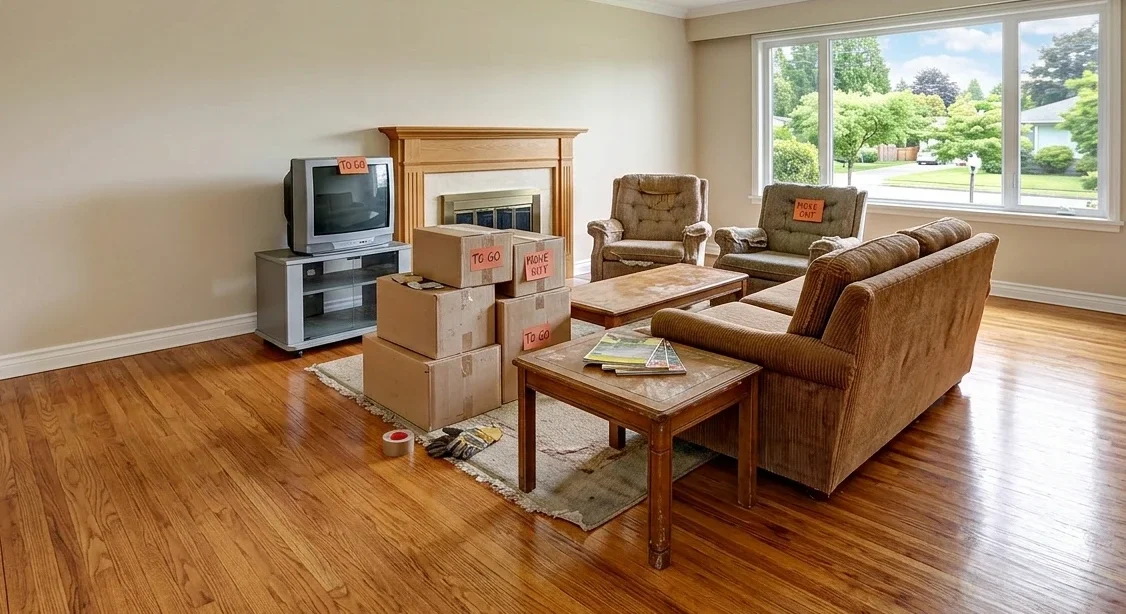
After 20 years of refinishing hardwood floors throughout Bucks County, Montgomery County, Chester County, and Philadelphia, the problems we're called back to fix almost never come from bad technique on the job. They come from bad preparation before the job starts. Furniture that wasn't moved correctly, HVAC systems left running, pets that got back on wet floors, food left uncovered in the kitchen — small oversights that create real problems in the finished result.
Preparation is the homeowner's part of the job. We handle everything once we're on site. But what happens before we arrive determines a significant amount of how the job goes and how the floors look when it's done. This is the complete checklist we walk every homeowner through before a refinishing job anywhere in our service area.
Understanding how long a properly executed refinish lasts — and what determines that lifespan — helps you plan the project and set realistic expectations. Here's the full breakdown on how long hardwood floor refinishing lasts.
The Week Before — Decisions and Logistics
Confirm your stain color and finish type. If you haven't already seen stain samples on your actual floor, request them before the job starts — not during. Changing your mind about stain color after the first coat is down creates delays, added cost, and sometimes irreversible results depending on how the stain was applied. We sample on your boards in your rooms before we start. Make the decision before the crew arrives with equipment.
Arrange where you're staying. For a whole-home refinishing job you need to plan to be out of the house during the sanding phase and for at least 24 hours after the final coat of water-based finish — longer for oil-based. If you're doing a partial floor refinish you can often stay in unaffected parts of the house, but the sanding noise and dust containment process make it uncomfortable. Plan ahead. Don't assume you'll figure it out the morning of.
Arrange pet accommodations. Pets need to be out of the house during the job and for the re-entry period after the final coat. Dogs and cats walking on wet finish is one of the most common callbacks we get — paw prints in a cured finish are not fixable without re-coating the affected area. Beyond the finish damage, the VOCs from finish products are harder on animals than on humans. Arrange boarding, a pet sitter, or a family member who can take them for the duration.
Plan for your plants. Every houseplant needs to come off the hardwood floors before the job starts and stay off until full cure — 7 days after the final coat. This applies to plants on the floors being refinished and on adjacent floors if you have pine or soft species anywhere in the house. Terra cotta pots sweat condensation. Saucers trap moisture. One plant left in place during a refinishing job is how you get a ring stain on a freshly finished floor. Move them all.
Schedule food and kitchen prep. If your kitchen hardwood is being refinished, you're not cooking in there for 3 to 5 days. Plan for it. Stock a cooler, arrange meals out, or set up a temporary food station in a room that isn't being worked on. Trying to cook around an active refinishing job creates foot traffic on wet floors, introduces moisture from cooking steam, and puts grease particles in the air that can settle on finishing coats. Don't do it.
Two Days Before — The House
Move furniture out of every room being refinished. We move standard furniture as part of the job — sofas, chairs, tables, bed frames. But there are categories of furniture that need to be handled before we arrive:
Pianos — upright or grand. These require specialty movers. We cannot and will not move a piano. If you have a piano on hardwood that's being refinished, arrange a piano mover before the job date.
Built-in furniture or shelving that overhangs the floor. If a built-in bookcase has a base that sits on the hardwood, we need clearance around it. Talk to us about this during the estimate so we can discuss the plan.
Antiques, heirlooms, and anything fragile or irreplaceable. We're careful but we're moving furniture at volume. Items with significant monetary or sentimental value should be moved to a room that isn't being worked on, not left in the room and moved by the crew.
Large electronics — TV stands, entertainment centers. Standard size we'll move. Large wall-mounted units or complex AV setups should be disconnected and cleared before we arrive.
Remove all area rugs. Every rug, every runner, every bath mat on or adjacent to the floors being refinished. Roll them up, move them to a room that isn't being worked on, and keep them there through full cure.
Clear the perimeter of every room. Baseboards and the perimeter of the floor are where the edge sander works. Anything sitting against the walls — decorative objects, baskets, dog bowls, shoe racks — needs to move away from the walls entirely. We need clean access around the full perimeter of every room.
Remove artwork and mirrors from walls in rooms being refinished. The vibration from sanding equipment is significant. Framed artwork and mirrors on walls in active sanding rooms can shift, fall, or have glass damaged from vibration. Take them down and store them flat or move them to another room.
Take down curtains and drapes in rooms being sanded. Curtains that hang to the floor will be in the way of edge sanding. Curtains that hang above the floor will accumulate dust. Take them down for the duration of the job.
The Day Before — Systems and Details
Turn off the HVAC system. This is non-negotiable and it's the preparation step most homeowners forget. Running forced air heat or central air during a refinishing job pulls finish fumes and fine dust particles through the ductwork and distributes them throughout the entire house — including rooms that aren't being worked on. It also creates airflow across wet finish coats that can cause uneven drying and surface defects.
The HVAC needs to be off before the first coat of finish goes down and stay off until the final coat is fully dry — typically 24 hours after the last coat with water-based finish. If the job runs multiple days, the system stays off through the finish phase. We'll remind you but confirm with us the morning the finish coats start.
Seal HVAC vents in rooms being refinished. Even with the system off, open vents create airflow paths. Use painter's tape and plastic sheeting to seal floor and wall vents in every room being worked on. Prevents dust from entering the ductwork during sanding and prevents any system-on accidents from affecting the finish.
Cover kitchen cabinets and counters. Fine dust from sanding travels farther than most people expect, especially in open-plan homes. If your kitchen is adjacent to floors being sanded, cover the countertops, put dishes away, and close cabinet doors. Sanding dust in your kitchen cabinets and on food prep surfaces is not something you want to deal with after the job.
Remove or cover electronics in adjacent rooms. Computers, stereos, televisions in rooms adjacent to the work area should be covered or moved. Fine dust is hard on electronics and fans.
Communicate with neighbors in attached or semi-attached homes. This matters specifically in Havertown, Jenkintown, Elkins Park, Narberth, and other Delaware and Montgomery County communities with dense housing — twins, row homes, and semi-attached properties where sanding noise carries through shared walls. A quick heads up to your neighbor the day before is the right thing to do and avoids unnecessary friction.
Morning of the Job
Clear a parking space for the truck. We arrive with a truck and equipment. If you're in a borough or neighborhood with street parking, clear a space in front of the house the evening before. A truck that has to park down the street adds setup time and complicates equipment movement.
Identify your water shutoff. In the unlikely event of a water issue during the job — a leaking pipe disturbed during furniture moving, a subfloor moisture discovery — knowing where your main shutoff is saves time. We ask this on most jobs. Know the answer.
Leave the house or confine yourself to a separate area. Sanding is loud, dusty even with containment, and disruptive. Most homeowners find it easier to be out of the house during the sanding phase. If you're staying, confine to a room that's not being worked on and plan to stay there — foot traffic through the work area during active sanding creates safety hazards and contamination issues.
Secure children away from the work area. Power sanding equipment is loud and dangerous. Children should not be in or near rooms being actively sanded. This is not negotiable on safety grounds.
During the Job — What to Expect
Noise. Belt sanders and edge sanders are loud — comparable to a lawnmower in an enclosed space. Expect it and plan around it for phone calls, conference calls, and nap schedules.
Dust. Even with commercial containment equipment, some fine dust escapes the work area. More so during sanding than finishing. If you're staying in the house, expect a light film of fine dust on surfaces in adjacent rooms by the end of day one.
Smell. Water-based finishes have a mild chemical smell that dissipates within 24 to 48 hours with proper ventilation. Oil-based finishes are significantly stronger and take longer. We discussed this in detail in our post on ventilation and VOCs — if you have pregnant family members, infants, or anyone with respiratory conditions, read that before the job starts.
Daily cleanup. We clean the work area before we leave every day. You won't come home to tools and equipment scattered throughout the house.
Re-Entry — When Can You Come Back
With water-based finish — Bona Traffic HD which is our standard — the re-entry timeline is:
Light foot traffic in socks: 24 hours after the final coat. No shoes, no dragging anything across the floor.
Furniture back: 72 hours after the final coat. Move furniture carefully — slide don't drag, use felt pads under every leg before anything goes back down.
Rugs back: 72 hours minimum, 7 days preferred. Area rugs trap moisture against the floor during the cure period. The longer you wait the better.
Pets back: 48 hours minimum. Paw traffic on a floor that isn't fully cured leaves marks. Keep them out until you're confident the surface is hard.
Full cure: 7 days. The finish is dry and walkable before this but it's still curing chemically. No heavy furniture, no rug grippers, no rubber-backed mats until full cure is complete.
Oil-based finish extends all of these timelines — add roughly 50% to each window.
The One Thing That Causes More Problems Than Everything Else
Coming back too early.
We see it on almost every job where there's a callback. The homeowner came back 12 hours after the final coat because the smell was gone and the floor looked dry. They walked on it in shoes, moved a chair, let the dog in. The floor wasn't fully cured and now there are marks, scuffs, or impressions that require a recoat to fix.
The floor looks done before it is done. The surface cures from the outside in — it feels hard to the touch hours before it's hard enough to withstand foot traffic, furniture, or pet claws. Trust the timeline we give you. It's based on the specific product applied on your specific job, not a generic estimate.

-
Not legally required but practically recommended during the sanding phase due to noise and dust. For the finishing phase, especially with oil-based products, leaving is strongly advisable due to VOC levels. With water-based finish you can often return 24 hours after the final coat for light traffic — we give you the specific timeline for your job.
-
72 hours after the final coat with water-based finish — with felt pads under every leg. Oil-based extends that to 96 hours minimum. Full cure is 7 days — no heavy furniture or rugs until then.
-
Remove it from rooms being actively sanded. Vibration from sanding equipment can shift and damage wall-hung artwork and mirrors. Store flat or move to a room not being worked on.
-
Yes. The HVAC needs to be off during finish coat application and for 24 hours after the final coat. Running it distributes fumes through the ductwork and creates airflow that causes uneven drying. This is one of the most commonly skipped prep steps and one of the most consequential.
-
Arrange for pets to be out of the house for the duration of the job and for at least 48 hours after the final coat. Paw prints in wet or partially cured finish are not fixable without recoating. VOCs from finish products are harder on animals than on humans — keeping them out is the right call on both grounds.
-
Arrange a specialty piano mover before the job date. We cannot move pianos. This needs to be resolved before the crew arrives — don't leave it for the morning of.
-
Felt pads under every furniture leg, no rubber-backed rugs directly on the floor, clean with a barely damp microfiber mop and pH-neutral hardwood cleaner only, never wet mop or steam clean, clean up spills immediately. The finish does its job — your maintenance habits determine how long it lasts between refinishing cycles.
Cyclone Hardwood Floors LLC has served Bucks County, Montgomery County, Chester County, Delaware County, and Philadelphia for over 20 years. We specialize in hardwood floor installation and refinishing throughout the Philadelphia metro. Serving Doylestown, Newtown, New Hope, Blue Bell, Fort Washington, Lansdale, Ambler, West Chester, Paoli, Berwyn, Bryn Mawr, Villanova, Gladwyne, Havertown, King of Prussia, Elkins Park, Jenkintown, and surrounding communities. Contact Us Here or call or text (484) 253-5348.
