
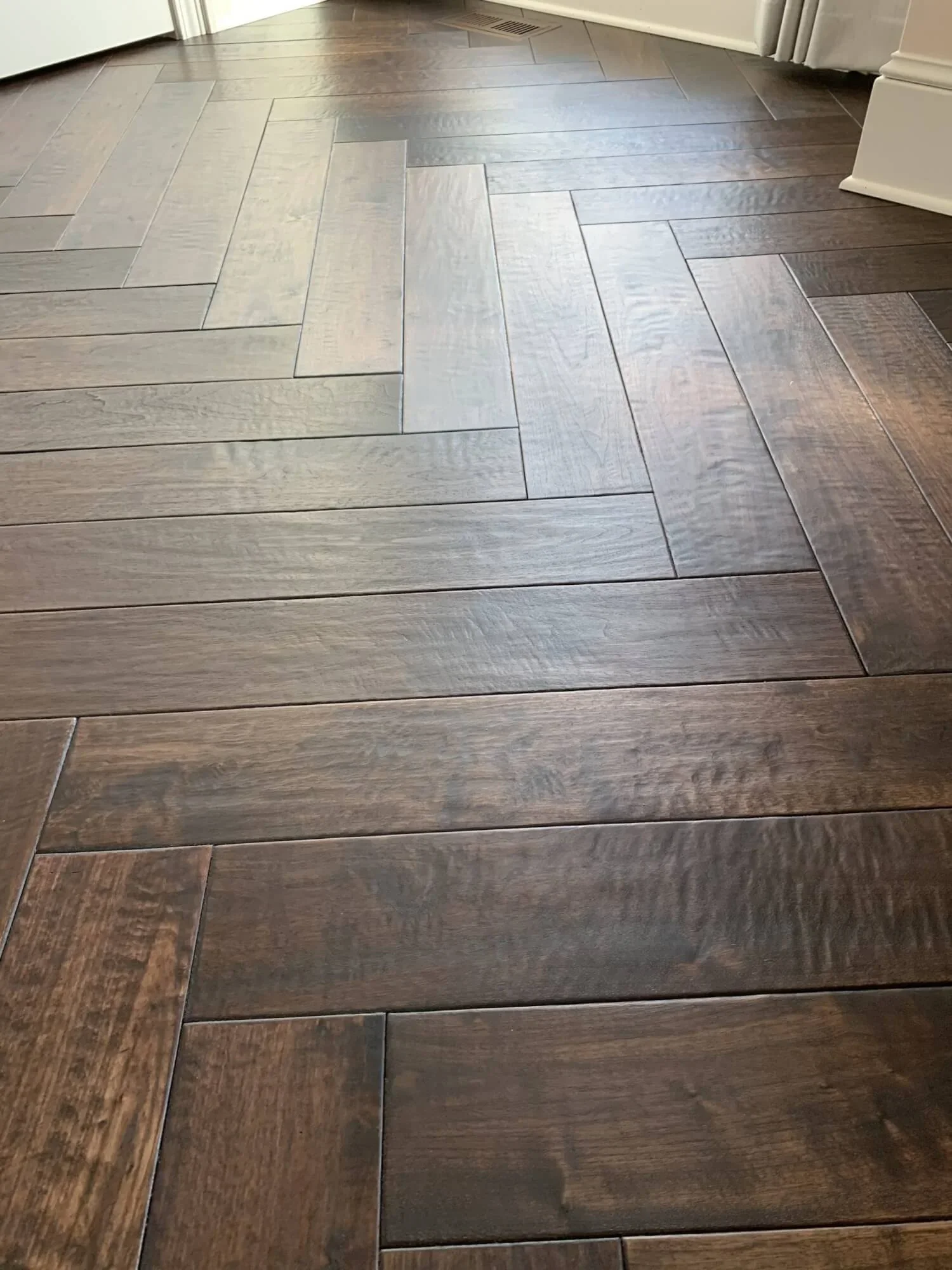
Engineered vs Solid Hardwood Floors in Pennsylvania: Which Is Actually Right for Your Home?
It's the first question on almost every installation job we quote throughout Bucks County, Montgomery County, Chester County, and Philadelphia. Solid or engineered? And the honest answer — after 20 years of installing both in Pennsylvania homes — is that it depends entirely on your specific situation. Your subfloor type, your moisture conditions, your budget, your timeline for staying in the house, and what you want the floor to look and feel like in 20 years.
What it doesn't depend on is a blanket rule that one is always better than the other. Solid hardwood is the right call in many Pennsylvania homes. Engineered hardwood is the right call in many others. Installing solid hardwood in the wrong application creates buckling, gapping, and failures. Installing engineered where solid would've worked is sometimes leaving money on the table at resale. We install both. We sell neither religion.
Here's the real breakdown.
What Each Product Actually Is
Before the comparison means anything you need to understand what you're actually comparing.
Solid hardwood is exactly what it sounds like — a single piece of wood milled to a consistent thickness, typically 3/4 inch for residential flooring. The entire board is one species of wood from face to bottom. It can be sanded, refinished, and rejuvenated multiple times over its lifetime because there's real wood all the way through. A properly maintained solid hardwood floor installed in a Pennsylvania home today can last 75 to 100 years or more. The original red oak strip floors in Doylestown colonials and Lansdale ranchers installed in the 1960s are proof — most of them are still refinishable today.
Species selection for solid hardwood in Pennsylvania's climate matters as much as the product type — here's the full breakdown on exotic vs domestic hardwood stability and which species handle our seasonal swings.
Engineered hardwood is a layered product. A real hardwood veneer — anywhere from 1mm to 6mm thick depending on the product — is bonded to a core of cross-ply plywood or HDF. The face is genuine hardwood. The core is engineered for dimensional stability. The result is a product that looks identical to solid hardwood, installs in applications where solid can't go, and performs differently in ways that matter depending on where and how it's used.
The key distinction most people miss: engineered hardwood is not fake wood. It's not laminate. It's not LVP. The surface you're walking on and looking at is real hardwood — same species, same grain, same finish options. What's different is the core construction and what that core construction enables and limits.
Where Solid Hardwood Is the Right Call
Solid hardwood performs best — and is the right recommendation — in specific conditions that are common in Pennsylvania homes.
Nail-down installations over wood subfloor. This is solid hardwood's home territory. The 3/4 inch profile nails or staples cleanly into plywood or OSB subfloor and the result is a floor that feels solid underfoot, sounds solid underfoot, and responds to seasonal humidity in predictable ways we can account for in installation. The vast majority of the 1960s through 1990s colonial housing stock throughout Newtown, Lansdale, Blue Bell, Warrington, and the surrounding communities has plywood subfloor over joists — ideal for solid hardwood.
Homes where long-term refinishing value matters. A 3/4 inch solid floor can be refinished 4 to 6 times over its lifetime. For a homeowner who plans to stay in the house for 30 or 40 years, or for a property in a market like Doylestown, Bryn Mawr, or Gladwyne where the quality of original hardwood floors directly affects sale price, solid hardwood's refinishing potential is a real financial asset. The floor that was installed in 1985 and refinished twice is still a 3/4 inch floor that can be done again.
Whether you choose engineered or solid, finish selection affects the final appearance more than most homeowners expect — here's how oil-based vs water-based finish affects hardwood floors.
The two most common solid hardwood species in Pennsylvania homes are red and white oak — here's the detailed comparison on red oak vs white oak for stability, finish, and longevity.
Upper floors in homes with stable humidity. Bedrooms and upper-level living spaces that aren't exposed to the moisture variability of basements, kitchens, and ground-floor spaces with slab adjacency are where solid hardwood performs most predictably. Less moisture fluctuation means less seasonal movement means fewer problems.
Historic homes where authenticity matters. The stone colonials and pre-war estates throughout New Hope, Washington Crossing, Villanova, and Gladwyne were built with solid hardwood. When we're restoring or adding to these properties, matching the original solid installation with new solid material is almost always the right call aesthetically and architecturally.
Where Engineered Hardwood Is the Right Call
Engineered hardwood isn't a compromise product — it's the correct product for specific applications that solid hardwood can't handle reliably in Pennsylvania's climate.
Concrete slab installations. This is where solid hardwood fails and engineered hardwood doesn't. The split-levels, ranchers, and colonials throughout King of Prussia, Havertown, Montgomeryville, and the broader suburban Philadelphia market have a meaningful percentage of concrete slab foundations. Solid hardwood nailed or glued directly to concrete over a moisture barrier can work in low-humidity conditions. In Pennsylvania's seasonal humidity swings it's a risk that frequently produces buckling, gapping, and cupping within two or three years. Engineered hardwood's cross-ply core resists the moisture-driven expansion and contraction that destroys solid hardwood over concrete. Full glue-down engineered over a moisture-tested concrete slab with appropriate adhesive is the correct installation for these homes and it performs reliably.
Below-grade and basement installations. Grade level and below are moisture-variable environments that solid hardwood can't reliably tolerate in Pennsylvania. The humidity differential between a Bucks County basement in July and January is significant enough to make solid hardwood movement unpredictable. Engineered hardwood — properly specified for the moisture conditions and installed with the correct method — handles this environment. Solid hardwood doesn't.
Radiant heat systems. Radiant floor heating creates consistent low-level heat from below the floor surface — exactly the conditions that cause solid hardwood to dry out, shrink, and gap in the joints. Engineered hardwood's dimensional stability makes it significantly more tolerant of radiant heat applications. We specify engineered with a wear layer of 3mm or more, full glue-down with adhesive rated for radiant heat, and we discuss the acceptable temperature range for the system before anything is installed. Solid hardwood over radiant heat can be done but it requires specific species, narrower widths, and very controlled humidity management year-round. Engineered is the safer call for most homeowners.
Wide plank installations in moisture-variable environments. The wider the plank the more it moves seasonally. A 7-inch solid white oak plank moves significantly more than a 3-inch strip. In living spaces with good humidity control, wide solid plank can work beautifully. In spaces with moisture variability — near exterior doors, in kitchens, in rooms with inconsistent HVAC coverage — wide plank engineered provides the appearance of wide plank without the movement risk.
Wide plank solid hardwood requires specific installation technique in Pennsylvania's climate — here's why wide plank hardwood nail and glue installation is the correct approach and what happens when contractors skip it.
Budget-conscious renovations where appearance is the priority. Quality engineered hardwood at $6 to $9 per square foot installed produces a result that is visually indistinguishable from solid hardwood to anyone who isn't on their knees with a measuring tape. For a homeowner who is updating a house to sell, not planning to stay 30 years, or working with a budget that doesn't support solid hardwood throughout, engineered is a legitimate and practical choice.
The Wear Layer Question — What It Actually Means
This is the technical detail that separates a good engineered floor from a bad one and it's almost never explained properly in showrooms.
The wear layer is the real hardwood veneer on top of the engineered core. It's what you see, what you walk on, and what gets sanded when the floor is refinished. Wear layer thickness determines both how much refinishing is possible and how the floor performs under daily use.
Wear layers under 2mm — common in budget engineered products — cannot be safely refinished. Once the surface shows wear it's worn. The floor either lives with the scratches or gets replaced. In a Havertown or Lansdale home with kids and dogs, a 1.5mm wear layer engineered product is going to show wear within 5 to 7 years.
Wear layers of 3mm or more can typically support one light refinishing cycle — a careful screen and recoat or a very light sanding pass. Some 4mm and 5mm products can support two refinishing cycles.
Wear layers of 6mm and above — found in premium engineered products from manufacturers like Boen, Lauzon, and some Mirage lines — approach solid hardwood in their refinishing potential. These products can often be refinished twice or three times and have a realistic 40 to 60 year lifespan in a well-maintained household.
Our recommendation: never install engineered hardwood with a wear layer under 3mm in a primary residence in Pennsylvania. The upfront savings are not worth the shortened lifespan. Specify 4mm minimum if the budget allows. Know what you're buying before it goes down.
Installation Method Matters More Than Most Homeowners Know
The method used to install both solid and engineered hardwood directly affects how the floor performs over time. This is another area where the showroom conversation usually falls short.
Solid hardwood nail-down over plywood: the standard and correct method for most Pennsylvania installations. Cleats or staples driven through the tongue at the correct angle and spacing anchor the floor while allowing controlled seasonal movement. Properly done this produces a quiet, stable floor that lasts decades.
Incorrect installation of solid hardwood — particularly wide plank without glue-assist — is one of the leading causes of buckling in Pennsylvania homes. Here's why hardwood floors buckle and how to prevent it.
Engineered glue-down over concrete: the correct method for slab installations. Full spread adhesive — not troweled in sections — bonds the entire board to the slab and provides both mechanical hold and a moisture management layer. The adhesive product matters. A moisture-rated elastomeric adhesive like Bostik Best or SikaBond provides both bond strength and flexibility to accommodate minor movement. Commodity adhesives do not.
Floating installation — engineered boards clicked or glued together at the joints without bonding to the subfloor: we don't recommend this for full rooms in Pennsylvania homes. Floating floors move as a unit, produce hollow sound underfoot, and in humid Pennsylvania summers can expand enough to buckle if the room perimeter gaps weren't left large enough. For small areas or over radiant heat where glue-down isn't possible, floating can work. For primary living spaces it's not our recommendation.
The Cost Reality
Here's the actual cost comparison for installed floors in Bucks County, Montgomery County, and the surrounding Pennsylvania market:
Solid red oak 3/4 inch, nail-down, select grade: $6 to $9 per square foot installed. Refinishable 4 to 6 times. Realistic lifespan 75 to 100 years with proper maintenance.
Solid white oak 3/4 inch, nail-down, select grade: $8 to $12 per square foot installed. Same refinishing and lifespan profile as red oak.
Engineered hardwood, 3mm+ wear layer, quality core, glue-down: $7 to $11 per square foot installed depending on species and wear layer thickness. Refinishable 1 to 2 times with appropriate wear layer. Realistic lifespan 20 to 40 years in normal residential use.
Engineered hardwood, 6mm wear layer premium product: $10 to $15 per square foot installed. Refinishable 2 to 3 times. Realistic lifespan 40 to 60 years.
The long-term cost comparison changes depending on how long you stay in the house and how many refinishing cycles the floor goes through. For a homeowner staying 10 to 15 years, quality engineered and solid are comparable on total cost. For a homeowner staying 30 or 40 years, solid hardwood's refinishing potential makes it significantly more cost effective over the full ownership period.
For the full picture on what determines how long a refinished floor lasts — product, traffic, species, maintenance — here's our contractor's guide to hardwood floor refinishing lifespan.
What We Actually Recommend in Specific Scenarios
Twenty years of doing this in Pennsylvania homes produces clear patterns. Here's the honest recommendation by scenario:
Plywood subfloor, main living level, planning to stay 20+ years: solid hardwood. Red oak or white oak depending on aesthetic preference and budget. No reason to go engineered here.
Concrete slab, any level: engineered hardwood. Full glue-down, moisture-rated adhesive, 3mm+ wear layer minimum. Not a compromise — the correct product for the application.
Below grade or basement: engineered hardwood specified for grade conditions. Floating installation only if glue-down isn't feasible.
Radiant heat: engineered hardwood, 3mm+ wear layer, full glue-down with radiant-rated adhesive, moisture and temperature testing before installation.
Wide plank in a moisture-variable room: engineered if the environment has meaningful humidity swings. Solid with glue-assist if humidity is controlled and stable.
Moisture testing before installation is non-negotiable on both solid and engineered — here's the full breakdown on when is the best time to install hardwood floors in Pennsylvania and why timing affects moisture conditions.
Pre-listing renovation with budget constraint: quality engineered at 3mm+ wear layer. Looks identical to solid, costs less, buyer won't know the difference.
Historic restoration matching original floors: solid hardwood matching original species and width. No substitution.
Frequently Asked Questions
Can engineered hardwood be refinished in Pennsylvania homes? Yes — but it depends entirely on the wear layer thickness. Products with 3mm or more can support one or two light refinishing cycles. Products under 2mm cannot be safely refinished. Always confirm wear layer thickness before purchasing and before any refinishing contractor quotes the job. We measure the wear layer on every engineered floor before committing to a refinishing scope.
Is engineered hardwood real wood? Yes. The surface veneer is genuine hardwood — same species, same grain, same appearance as solid. The core is cross-ply plywood or HDF engineered for dimensional stability. What you see and walk on is real wood. What's different is the core construction and what it enables in terms of installation applications and refinishing cycles.
Does engineered hardwood add as much value as solid hardwood at resale in Bucks County and Montgomery County?Quality engineered hardwood with a substantial wear layer adds comparable value to solid in most buyer assessments — buyers in the Philadelphia suburb market generally cannot tell the difference visually. The distinction shows up in the long-term durability story during a home inspection or in a conversation with a knowledgeable buyer's agent. For properties in the high-end Main Line market — Villanova, Gladwyne, Bryn Mawr — solid hardwood commands more respect from buyers who know what they're looking at.
Can solid hardwood be installed over radiant heat in a Pennsylvania home? It can be done but it requires specific conditions — narrower plank widths, species with lower tangential shrinkage, full glue-down rather than nail-down, and very controlled year-round humidity management. Engineered hardwood is the lower-risk recommendation for radiant heat applications. If a client insists on solid over radiant, we discuss all the requirements and ongoing maintenance obligations before we agree to the installation.
What's the minimum wear layer I should accept in engineered hardwood? 3mm is our minimum recommendation for any primary residence room in Pennsylvania. Under 3mm the floor cannot be refinished and will show wear within 5 to 10 years in a normal household. For active households with kids and pets, 4mm or more. For long-term installations where the homeowner expects to stay 20+ years, 6mm wear layer premium products are worth the upfront cost.
How do I know if my subfloor is concrete or plywood? Knock on the floor. Concrete sounds and feels solid with no flex. Plywood has a slight give and sounds hollow in comparison. If you're not sure, pull up a floor register or threshold where the edge of the subfloor is exposed and look at it. Or call us — it's a 5 minute assessment on a site visit and it determines the entire direction of the installation recommendation.
Cyclone Hardwood Floors LLC has served Bucks County, Montgomery County, Chester County, Delaware County, and Philadelphia for over 20 years. We install both solid and engineered hardwood throughout the Philadelphia metro — the right product for the right application on every job. Serving Doylestown, Newtown, New Hope, Blue Bell, Fort Washington, Lansdale, Ambler, West Chester, Paoli, Berwyn, Bryn Mawr, Villanova, Gladwyne, Havertown, King of Prussia, Warrington, Elkins Park, Jenkintown, Yardley, and surrounding communities. Contact Us Here or Call or text (484) 253-5348.
