
Bona Beauty in Bryn Mawr
When homeowners in Bryn Mawr, Villanova, Gladwyne, and across the Main Line are getting their hardwood floors refinished, the finish selection conversation comes up on every single job. Oil-based polyurethane or water-based? It's not a simple answer — and the right choice depends on your wood species, your household, your aesthetic goals, and how long you need to be out of the space. After 20 years of refinishing floors throughout Montgomery, Delaware, and Chester County, here's the honest breakdown.
The Classic Contender: Oil-Based Urethane
Oil-based polyurethane has been the traditional choice for hardwood floor finishing for decades, and for good reason.
Pros:
Exceptional Durability: Historically, oil-based finishes are known for their ruggedness. They create a very thick, hard, and protective layer that stands up well to heavy foot traffic.
Rich, Ambering Hue: Over time, oil-based finishes develop a warm, amber glow that deepens the natural color of the wood. Many homeowners love this classic, aged look, especially on traditional species like oak hardwood flooring.
Cost-Effective: Often, oil-based polyurethanes are more budget-friendly per gallon than their water-based counterparts.
Cons:
Longer Drying Times: Each coat of oil-based poly can take 8-12 hours (or more) to dry, significantly extending the project timeline.
Strong Fumes: The high VOC (Volatile Organic Compounds) content means strong, lingering odors during and after application, requiring good ventilation and temporary relocation for some.
Ambering (Aesthetic Preference): While a "pro" for some, others prefer a finish that doesn't change the wood's natural color.
The Modern Marvel: Water-Based Urethane
Water-based polyurethane has gained immense popularity, particularly for those seeking a quicker, cleaner, and more contemporary finish.
Pros:
Faster Drying Times: You can often apply multiple coats in a single day, drastically reducing project duration.
Low VOCs, Low Odor: Minimal fumes make it a much more pleasant experience for homeowners and pets, allowing for a quicker return to the space.
Clear, Non-Yellowing Finish: Water-based poly dries clear and stays clear, preserving the natural color of the wood. This is ideal for lighter wood species like maple or ash, or for achieving a modern, Scandinavian aesthetic.
Eco-Friendly Options: Many water-based products are formulated with lower environmental impact.
Cons:
Perceived Durability (Historically): Older formulations were less durable, leading to a lingering misconception. However, modern, high-quality water-based products, like the one in our story, have exceptional wear resistance.
Higher Cost: Generally, water-based urethanes are more expensive per gallon.
Finish choice interacts with species selection — here's the full comparison on red oak vs white oak and how each species responds to oil-based versus water-based finish.
A Bryn Mawr Dog Lover's Dilemma: Finding the Perfect Finish
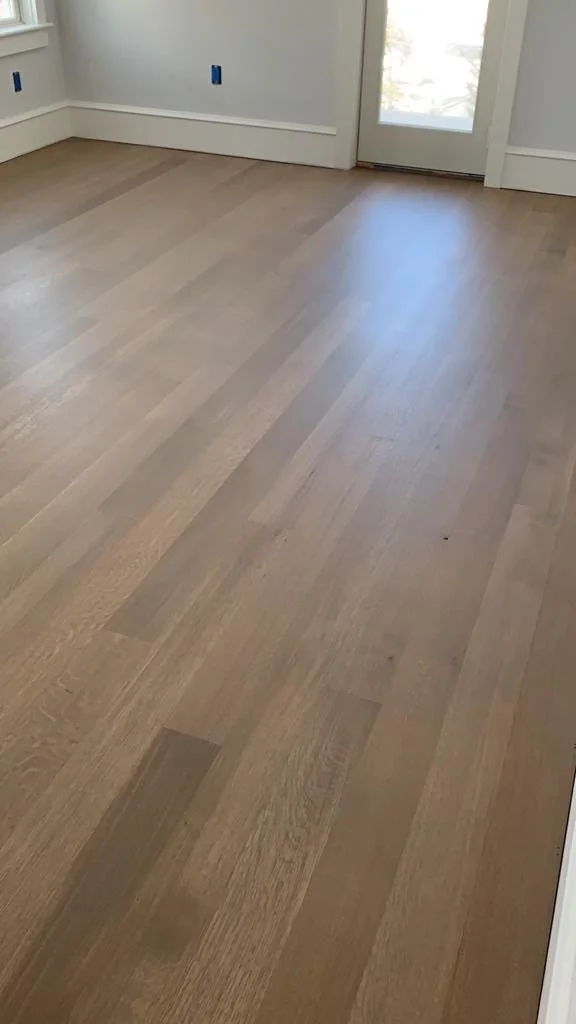
We recently had a wonderful customer in Bryn Mawr, a charming historic home brimming with character – and no less than three energetic dogs! She was set on a hardwood floor refinishing project, but when it came to the finish, she was adamant about water-based urethane. Her primary concerns were the strong fumes of oil-based poly (for her beloved canine companions) and preserving the light, airy feel of her home without the ambering effect.
Given the heavy paw traffic expected, our initial recommendation for ultimate durability would typically lean towards an oil-based system. We expressed our concerns about potential wear with a standard water-based product under such rigorous conditions. It was a classic "durability vs. desired aesthetic/health" debate.
The Compromise & Triumph: Bona Traffic HD
After a thorough discussion, we found the perfect compromise: Bona Traffic HD. This premium, two-component commercial-grade water-based urethane is specifically engineered for extreme durability and heavy traffic – think airport terminals and bustling restaurants, not just residential homes! It offered:
Unmatched Scratch & Scuff Resistance: Crucial for three playful dogs.
Low VOCs & Fast Drying: Allowing her dogs to return home much sooner.
Crystal Clear Finish: Maintaining her home's bright, modern aesthetic.
The result? Our client was thrilled. Her Bryn Mawr hardwood floors not only look stunning, maintaining their beautiful, natural tone, but they are also holding up phenomenally against daily dog-induced chaos. It was a testament to how finding the right product, even within a specific category, can meet unique homeowner needs.
Finish durability and lifespan depends on more than just the product — here's the complete breakdown on how long hardwood floor refinishing lasts and what variables matter most.
Frequently Asked Questions
Which lasts longer — oil-based or water-based polyurethane?
Modern commercial-grade water-based products like Bona Traffic HD match or exceed oil-based durability in real-world residential conditions. The old reputation of water-based as the weaker option was earned by early formulations from the 1990s. A two-component water-based finish applied correctly today outperforms a standard oil-based product in scratch resistance and longevity. Single-component water-based products are a different story — durability varies significantly by brand and formulation.
How long do I need to be out of my house with oil-based polyurethane?
Plan for 24 hours minimum between coats with oil-based, and 48 to 72 hours after the final coat before light foot traffic. Full cure takes up to 30 days. For households with pets, young children, or pregnant family members, the VOC off-gassing during application and initial cure is a serious consideration — water-based finishes are significantly lower in VOC content and allow faster, safer re-entry.
Does water-based polyurethane change the color of hardwood floors?
Water-based finishes dry clear and stay clear — they will not amber over time. Oil-based finishes add a warm, golden tone that deepens over years. On red oak this ambering is often desirable and enhances the traditional character of the wood. On white oak, maple, or ash where a natural or gray tone is the goal, oil-based finish will fight the aesthetic — water-based is the correct choice.
Is Bona Traffic HD worth the extra cost?
For high-traffic households — dogs, kids, heavy use, commercial applications — yes. It's a two-component finish that cross-links during cure, creating a harder surface film than standard single-component water-based products. The price difference per gallon is real but the performance gap is significant. For a lightly used formal living room, a standard water-based product is fine. For the kitchen, hallway, and main living areas in an active household, Traffic HD is worth every dollar.
Can I switch from oil-based to water-based finish when I refinish?
Yes — full sanding back to bare wood removes the previous finish entirely regardless of type, and you start fresh with whatever product you choose. A screen and recoat — where only the surface is abraded without full sanding — is different. Going from oil-based to water-based on a screen and recoat risks adhesion failure because water-based products don't bond reliably over oil-based residue. Full refinishing has no such restriction.
Whether your home is a classic colonial in Villanova or a contemporary masterpiece in Malvern, understanding your hardwood floor finish options is crucial for its longevity and beauty. Our expertise in hardwood floor installation, refinishing, and maintenance across the Main Line ensures that your floors receive the tailored treatment they deserve.
Don't guess when it comes to your valuable wood flooring. Consult with a professional to discuss your lifestyle, aesthetic goals, and budget. We're here to help you choose the ideal urethane finish that will protect your investment and keep your Main Line hardwood floors looking impeccable for decades. Get in touch today for a no-obligation estimate!
