
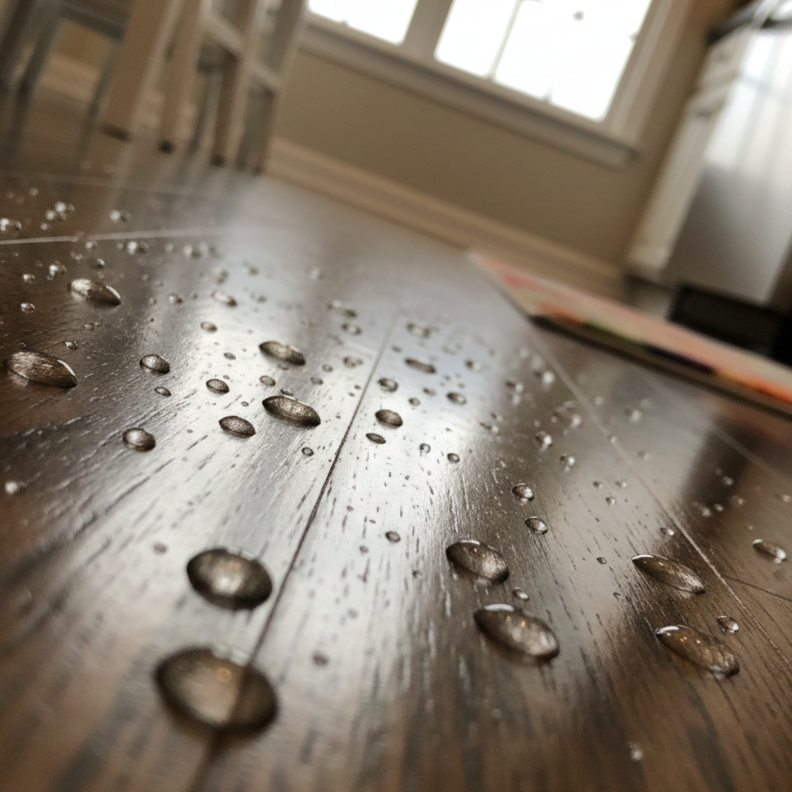
The Reality of Hardwood in a Kitchen
Many "experts" will tell you that hardwood doesn't belong in a kitchen. They’re wrong. Hardwood is one of the most durable surfaces you can own—if you understand how it reacts to water. In Bucks county, Montgomery county, in fact all over the Philly metro area, where humidity swings from 20% in the winter to 90% in the summer, your kitchen floor is under constant stress.
When you drop water on a wood floor, you aren’t just getting it wet; you’re triggering a structural change in the material. Here is the technical breakdown of how that happens and how to stop it.
1. The Physics of Wood: "Cupping" vs. "Crowning"
Wood is a cellular material. Think of a hardwood plank like a stack of tiny straws.
Cupping: This happens when the bottom of the board gets wetter than the top. The bottom expands, forcing the edges of the board up. This often happens because of a slow leak under a dishwasher or a damp subfloor.
Crowning: This is the opposite. It happens when the top of the board is sanded while it's still damp, or when a massive surface spill isn't dried properly.
The Fix: You cannot sand a cupped floor immediately. A professional contractor uses a moisture meter to ensure the wood has returned to its "equilibrium moisture content" (EMC) before any repair begins. Sanding too early leads to permanent structural damage.
2. The Three Levels of Water Damage
Not every water spot requires a full sand and finish. You need to know which "level" of damage you're dealing with:
Level 1: Surface Clouding
This is a white, hazy spot. It means moisture is trapped in the topcoat of the finish, but hasn't reached the wood.
The Solution: Often, a professional "screen and coat" (buffing the top layer and applying a new coat) will fix this without a full sand.
Level 2: Graying or "Tannin Pull"
If the wood is turning gray or black, the water has reached the wood fibers. The water reacts with the natural tannins in the wood (especially in White Oak). We just did a job in Doylestown where the customer had this effect on their floor which we repaired.
The Solution: This requires a full sand down to raw wood. If the staining is deep, we may have to use wood bleach or replace the specific boards.
Level 3: Fiber Crush
If a board has stayed wet for too long, the cells actually crush against each other. Even after it dries, the board will look "shrunken" or have gaps.
The Solution: Board replacement is the only way to restore the floor's integrity.
3. Professional Grade Protection: What Actually Works
In a kitchen, "off-the-shelf" hardware store polyurethanes aren't enough. They are often too brittle.
Commercial-Grade Finishes: We use waterborne finishes with "catalysts." These create a flexible, chemical-resistant shield. They can withstand the acidic nature of a spilled orange juice or a dropped jar of pickles—things that would eat right through a standard oil-based finish.
Sealing the Perimeter: Water often kills a floor by running under the baseboards. We recommend a tight seal around the refrigerator water line and dishwasher area.
4. Maintenance: The "Squeaky Clean" Myth
The biggest mistake homeowners make is using "Oil Soaps" or steam mops.
Steam Mops: They force high-pressure moisture into the grain. It’s the fastest way to ruin a kitchen floor.
Oil Soaps: They leave a residue that makes it impossible to "screen and coat" your floor later. You’ll be forced to do a full, expensive sand-down because the new finish won't bond to the old wax.
Kitchen cleaning mistakes are part of a broader set of maintenance errors that damage hardwood throughout the house — here's the complete guide to hardwood floor cleaning mistakes Montgomery County homeowners make.
Conclusion: Get a Professional Assessment
If your kitchen floor feels "wavy" under your feet or you see black spots near the sink, the damage is already moving into the subfloor. Don't wait for it to rot.
Get a No-Nonsense Moisture Check & Quote from Cyclone Hardwood Floors, LLC!
