
You're updating hardwood floors before listing your home, and every contractor gives you the same advice: "Pick whatever you like—it's personal preference."
That's terrible advice if you're trying to sell. Personal preference matters when you're living in the house for 20 years. When you're listing in 60 days, you need floors that appeal to the widest range of buyers and photograph well in listing photos. The wrong finish choice can add weeks to your time on market or cost you thousands in sale price.
After 20+ years refinishing hardwood floors throughout Bucks County and Montgomery County—from Wayne, Radnor, and Bryn Mawr on the Main Line to Newtown, Doylestown, and Yardley in Bucks County—we've seen which aesthetic choices move properties fast and which ones sit. Here's what actually works in markets where homes regularly sell for $600k to $3M+.
Matte and Satin Finishes Outsell High-Gloss By a Mile
Walk into any recently sold Main Line home and you'll notice the floors have a soft, natural sheen—not the mirror-like gloss that was popular in the 1990s and 2000s. This isn't coincidence. Buyer preferences have shifted dramatically toward matte and satin finishes, and homes with these finishes consistently sell faster.
Why matte and satin work for selling:
They photograph better. High-gloss finishes create reflections and hot spots in listing photos, especially with flash photography. Windows, light fixtures, and the photographer themselves all show up as bright reflections that distract from the room. Matte and satin finishes absorb light rather than reflecting it, resulting in clean, professional photos where buyers focus on the space instead of glare.
Professional real estate photographers will tell you the same thing: matte floors are easier to shoot and produce better listing images. Since 95% of buyers start their search online, your listing photos determine whether they schedule a showing. Floors that photograph poorly hurt your chances before anyone walks through the door.
They hide imperfections. High-gloss finishes show every scratch, scuff, and dust particle. Buyers doing walk-throughs will notice minor flaws that wouldn't be visible with a softer sheen. Matte and satin finishes diffuse light across the surface, making small imperfections nearly invisible unless you're looking closely.
This matters because buyers scrutinize floors during showings. If they see scratches and wear, they mentally deduct money for refinishing—even if the floors are structurally sound. A matte finish that hides minor wear keeps buyers focused on the home's positives instead of calculating repair costs.
They feel current and sophisticated. Design trends move in cycles, but the shift toward matte and satin finishes has been consistent for over a decade. High-gloss reads as dated—it signals 1990s McMansion aesthetics rather than contemporary design. Buyers want homes that feel current, and floor finishes contribute significantly to that perception.
Matte finishes in particular align with the modern farmhouse, Scandinavian, and transitional design aesthetics that dominate current buyer preferences. If your home has updated kitchens, neutral paint, and modern fixtures, high-gloss floors will clash with everything else. Matte or satin creates visual cohesion that buyers respond to.
The exception: Historic properties in Wayne, Radnor, Bryn Mawr, Haverford, Ardmore, and similar Main Line towns—plus older estates in Newtown, Doylestown, New Hope, and Perkasie—with original 1920s-1940s architecture can sometimes carry semi-gloss finishes if the home is being marketed as a period restoration. But even then, satin is safer.
Natural and Light Stains Sell Faster Than Dark
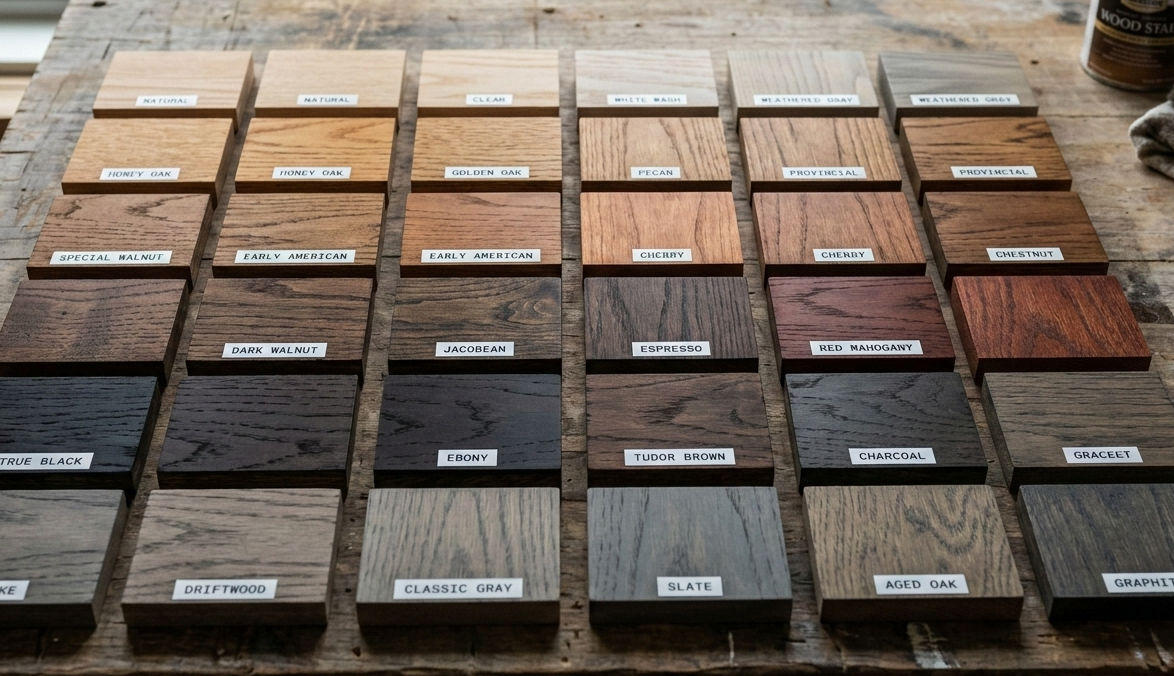
Ten years ago, dark espresso and ebony stains were everywhere—particularly on red oak floors where homeowners wanted to hide the natural grain and create a more exotic look. That trend has reversed. Today's buyers overwhelmingly prefer natural, light, and medium-toned stains that showcase wood grain rather than obscuring it.
Why light stains dominate the resale market:
They make spaces feel larger and brighter. Dark floors absorb light, making rooms feel smaller and requiring more artificial lighting to achieve the same brightness. Light and natural stains reflect light, opening up spaces and creating an airy feel that buyers associate with move-in ready homes.
This is especially critical in Pennsylvania where natural light is limited during fall and winter—the peak home-selling seasons. A home with dark floors photographed on a cloudy November afternoon in Ambler, Lansdale, or Warrington looks dim and cave-like in listing photos. The same home with natural or light-stained floors looks bright and welcoming.
They're more versatile for staging and furnishing. Buyers imagine their furniture in your space. Dark floors limit color palettes and design choices—they pair well with certain styles but clash with others. Natural and light stains work with virtually any furniture style, paint color, or decor aesthetic.
Real estate agents know this. When staging a home for sale, light floors give them flexibility to use bold accent colors, varied furniture styles, and eye-catching accessories without worrying about visual conflict. Dark floors demand specific staging choices that narrow the potential buyer pool.
They hide dust and pet hair better. Every homeowner with dark floors knows the frustration: vacuum in the morning, and by afternoon you can see dust and pet hair again. Buyers notice this during showings. Light and natural stains camouflage dust, making homes look cleaner with less effort.
This matters for showings because sellers can't deep-clean before every walk-through. Floors that show every speck of dust create the impression of a poorly maintained home, even if everything else is pristine.
They age more gracefully. Dark stains show scratches, wear patterns, and fading more obviously than natural tones. High-traffic areas develop lighter patches where the stain wears through, creating a shabby appearance that costs you negotiating power. Natural and light stains wear more evenly, and when wear does occur, it blends into the overall patina rather than standing out as damage.
What about gray stains? Gray was the hottest trend of the 2010s, and it still works—but only with the right application. True gray (not gray-brown or "greige") requires water-based polyurethane to maintain color. Oil-based poly adds an amber tone that turns gray into muddy taupe within months. If you're selling within a year and want gray, insist on water-based finish or you'll regret it when the floors shift color before closing.
Wide Plank Floors Photograph Better and Feel More Luxurious
Buyers browsing Zillow and Realtor.com scroll through dozens of listings in minutes. The properties that get saved and scheduled for showings have one thing in common: they look expensive in photos. Wide plank hardwood (5" to 7"+ width) conveys luxury and quality in ways that standard 2.25" strip flooring simply doesn't.
Why width matters for selling:
Visual impact in listing photos. Wide planks create clean, horizontal lines that make rooms appear larger and more elegant. Narrow strip flooring creates visual busyness—hundreds of thin lines competing for attention. Wide planks simplify the visual field, allowing other design elements (furniture, architectural details, natural light) to shine.
Real estate photographers prefer wide plank floors because they're easier to shoot. Fewer seams mean fewer distracting lines, and the grain patterns of wide planks photograph beautifully with proper lighting.
Perception of quality and value. Buyers associate wide plank flooring with higher-end construction and renovation. Whether that perception is accurate doesn't matter—what matters is that wide planks signal "premium home" in ways that narrow flooring doesn't.
This is particularly important in competitive markets like Montgomery County (Conshohocken, Narberth, Jenkintown, Lower Gwynedd) and Bucks County (Yardley, Newtown, Richboro, Holland) where buyers are comparing similar homes at similar price points. Two identical colonials listed at $850k—one with 2.25" oak strip, one with 5" white oak planks—the wide plank home will generate more showing requests and stronger offers.
They showcase wood character. Wide planks display grain patterns, color variation, and natural wood character more prominently. Buyers who want "real hardwood" rather than the laminate or LVP they see in new construction are drawn to this authenticity.
Premium species like white oak, walnut, and hickory particularly benefit from wide plank installation because their distinctive grain patterns become focal points rather than getting lost in narrow strips.
The trade-off: Wide plank costs more—both in material (less yield from each log) and installation (more precision required). But if you're updating floors specifically to sell, the incremental cost is recovered through faster sale time and potentially higher offers. It's an investment that pays for itself.
White Oak Outperforms Red Oak in Today's Market
For decades, red oak was the default hardwood choice in Pennsylvania and New Jersey—it's locally available, affordable, and takes stain well. But buyer preferences have shifted decisively toward white oak, particularly in homes selling above $600k throughout Bucks County, Montgomery County, and Delaware County.
Why white oak dominates the resale market:
It's the species of choice in high-end design. Every design magazine, Pinterest board, and home renovation show from the past decade features white oak. It's become synonymous with contemporary luxury in ways that red oak simply isn't. Buyers who've been browsing design content expect white oak in updated homes.
Subtler grain pattern. Red oak has pronounced cathedral grain with visible rays and flecks. White oak has a straighter, more uniform grain that reads as sophisticated and modern. In an era where minimalism and clean lines dominate design, white oak's understated beauty aligns with buyer expectations.
Better with natural finishes. The current trend is natural or lightly stained hardwood that showcases wood character. White oak's neutral tone works beautifully with clear or natural finishes. Red oak's pinkish undertone requires staining to achieve the looks buyers want—and even then, the underlying warmth shows through.
More versatile for future owners. Buyers know they might want to change finishes or refinish floors eventually. White oak's neutral base accepts any stain color beautifully—from natural to gray to dark walnut. Red oak's pink undertone limits staining options and requires specific techniques to neutralize.
The cost reality: White oak costs 30-50% more than red oak in material costs. For a typical 1,500 sq ft installation, that's an extra $1,500-2,500. But in competitive markets throughout Bucks and Montgomery Counties—from Villanova and Bryn Mawr to Doylestown and Newtown—that investment translates to faster sales and potentially $5k-10k higher sale prices where buyers expect premium finishes.
If you're replacing floors specifically to sell and your budget allows, white oak is the safer bet for maximizing return.
European Oil Finishes vs. Polyurethane: When Each Makes Sense
Most Pennsylvania hardwood floors are finished with polyurethane—it's durable, affordable, and familiar to contractors. But a growing segment of buyers (particularly those purchasing $1M+ homes) expect European oil finishes, and the presence or absence of this finish can influence sale price and time on market.
European oil finishes (Rubio Monocoat, Osmo, Loba):
These penetrate wood rather than sitting on top like polyurethane. They create a natural, matte appearance that feels like raw wood but with stain and moisture resistance. The look is warm, organic, and unmistakably high-end.
When oil finishes help selling:
Historic Main Line properties (Wayne, Radnor, Haverford, Ardmore) where buyers want authentic period character
Bucks County estates (New Hope, Solebury, Buckingham) where natural materials are priorities
Modern/contemporary homes in Conshohocken, Ambler, or Narberth where natural materials are design priorities
Luxury market ($1M+) throughout Montgomery and Bucks Counties where buyers expect boutique finishes
Homes marketed as eco-friendly or sustainability-focused (oils are lower VOC)
When polyurethane is smarter:
Mid-market homes ($400k-800k) where buyers prioritize durability over aesthetics
Families with young children or pets who need maximum protection
Buyers planning to rent the property (polyurethane handles tenant abuse better)
Any situation where budget is tight (oils cost 40-60% more in material and labor)
The truth is that most buyers can't tell the difference between a well-applied matte polyurethane and an oil finish by looking at listing photos. The difference becomes apparent when they walk the floors and feel the texture—oil finishes have a warmer, softer feel underfoot.
If you're selling a Main Line estate, a Bucks County historic property, or luxury homes in competitive Montgomery County markets, oil finishes can justify premium pricing. For typical suburban homes throughout the region, matte polyurethane delivers similar visual appeal at a fraction of the cost.
The Finishes That Hurt Resale Value
Just as certain finishes help homes sell, others actively harm sale prospects. Avoid these if resale is your goal:
High-gloss polyurethane on anything but formal spaces. Acceptable in grand foyers or formal dining rooms of historic homes. Anywhere else, it reads as dated and creates difficult-to-photograph glare.
Pickled, whitewashed, or heavily distressed finishes. These were trendy in the early 2000s but now signal that the home hasn't been updated in 20 years. Buyers see them as projects requiring immediate refinishing.
Painted hardwood floors. Unless you're selling a beach cottage or historic farmhouse where painted floors are architecturally appropriate, this destroys value. Buyers want hardwood, not painted wood.
Extreme gray tones. Soft gray and greige work well. Blue-gray or charcoal gray are polarizing—buyers either love them or hate them, which narrows your potential market.
Red mahogany and cherry stains on oak. These stains were popular in the 1990s but now look obviously artificial. Natural wood tones or honest staining that works with the species performs better.
How to Choose When Selling is the Priority
If you're refinishing or installing hardwood specifically to sell your home, make decisions based on broad market appeal rather than personal preference:
Finish sheen: Matte or satin (not high-gloss)
Stain color: Natural, light, or medium tones (avoid dark unless architecturally appropriate)
Plank width: 5" or wider if budget allows (3.25" minimum)
Species: White oak if budget allows, red oak is acceptable with the right stain
Topcoat: Matte water-based polyurethane for versatility, oil finish for luxury market
These choices create floors that photograph beautifully, appeal to the widest buyer demographic, and support asking price rather than inviting lowball offers.
The Return on Investment Reality
Hardwood floor refinishing and installation are among the highest-ROI home improvements when done correctly. National Association of Realtors data shows 147% ROI for refinishing and 118% for new installation—meaning you recover more than the cost at sale.
But that ROI assumes you make smart aesthetic choices. Refinish floors with high-gloss polyurethane and dark stain, and you might only recover 80% of cost. Choose matte finish with natural or light stain, and you'll exceed 100% recovery while also reducing days on market.
The difference between smart and poor flooring choices isn't just aesthetic—it's financial. And in competitive markets throughout Bucks County (Newtown, Yardley, Doylestown) and Montgomery County (Wayne, Radnor, Conshohocken, Ambler), the difference between 45 days on market and 90 days on market costs thousands in carrying costs and potentially tens of thousands in sale price negotiation.
For the full picture on how hardwood floors affect home value in Bucks County specifically — here's the breakdown on hardwood floors and home value in the Philadelphia suburbs.
Planning to sell your Bucks County or Montgomery County home this spring or summer? Contact Cyclone Hardwood Floors for a consultation on finishes that maximize resale value. We serve Wayne, Radnor, Bryn Mawr,Villanova, Newtown, Doylestown, Yardley, Ambler, and surrounding communities. We'll assess your current floors, explain which updates will deliver the strongest return, and provide honest recommendations based on your timeline and budget—not what's easiest for us to install.
