
Why Hardwood Floors Are Dramatically Better for Allergies and Asthma Than Carpet
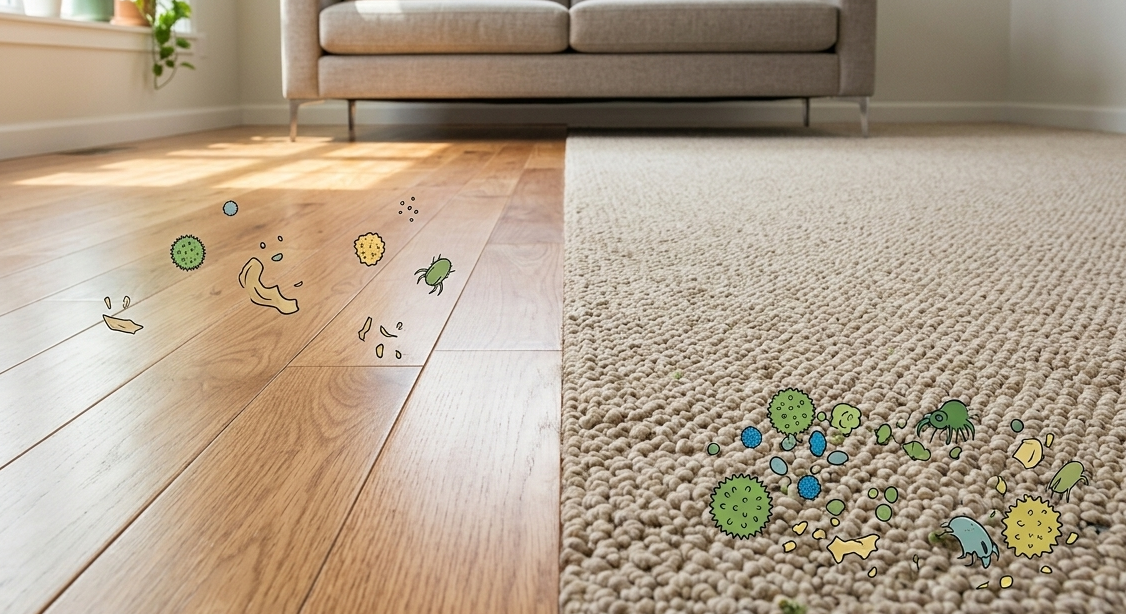
If you or someone in your household suffers from allergies, asthma, or respiratory sensitivities, your flooring choice isn't just about aesthetics or resale value—it's about daily quality of life and long-term health. The difference between hardwood floors and carpet in terms of allergen management is so significant that allergists and pulmonologists routinely recommend hardwood as part of comprehensive allergy treatment plans.
After 20+ years installing and refinishing hardwood floors throughout Pennsylvania and New Jersey, we've heard the same story countless times: families who lived with constant allergy symptoms for years experience dramatic improvement within weeks of replacing carpet with hardwood. This isn't placebo effect or coincidence—it's the predictable result of eliminating the single largest allergen reservoir in most homes.
Here's what you need to know about flooring and allergies, backed by medical research and two decades of real-world experience with allergy-prone clients.
The Allergen Problem with Carpet
Carpet functions as a three-dimensional filter that traps and holds allergens indefinitely. Unlike hard surfaces where particles rest temporarily on top, carpet fibers create a maze of spaces where microscopic allergens become embedded and nearly impossible to remove.
Pollen Accumulation in Carpet
Tree, grass, and weed pollen enter your home on clothing, shoes, pets, and through open windows and doors. Each pollen grain is microscopic (15-100 microns), perfectly sized to settle deep into carpet pile where it remains long after the outdoor pollen season ends.
Studies measuring allergen levels in homes show that carpet can harbor 100 times more pollen per square foot than hard flooring. When you walk across carpet, compression and release of fibers launches these trapped pollen particles back into the air you breathe. This is why allergy sufferers often experience symptoms indoors even when outdoor pollen counts are low—their carpet is releasing last month's (or last year's) pollen with every footstep.
Standard vacuuming removes only surface-level pollen. The particles embedded deep in pile, backing, and padding remain untouched. Professional carpet cleaning provides temporary relief but doesn't solve the fundamental problem: carpet's structure is designed to trap particles, and pollen is exactly the size and weight to be trapped permanently.
Dust Mites: The Invisible Carpet Residents
Dust mites are microscopic arachnids that feed on dead human skin cells and thrive in warm, humid environments—conditions that describe the interior of most carpets perfectly. A single gram of carpet dust can contain 100-10,000 dust mites, and their fecal matter is one of the most potent allergens in indoor environments.
Dust mites don't live well on hard surfaces. They require the humidity, warmth, and food supply provided by carpet fibers and padding. Hardwood floors don't provide the ecosystem dust mites need to establish colonies, which is why homes with hardwood consistently show dramatically lower dust mite populations than carpeted homes.
For people with dust mite allergies (estimated at 20 million Americans), this difference is life-changing. Symptoms that required daily antihistamines and nasal sprays often improve significantly or resolve entirely when carpet is removed.
Pet Dander and Hair Embedding
Pet dander—microscopic skin flakes shed by cats, dogs, and other animals—is lightweight and sticky, making it particularly problematic in carpet. Unlike pollen that eventually settles, pet dander becomes electrostatically charged and clings to carpet fibers, resisting removal even with HEPA-filter vacuums.
Pet hair creates additional problems by tangling in carpet pile and acting as a collection point for other allergens. A single pet hair can accumulate pollen, dust mite waste, and mold spores, creating a concentrated allergen bundle that standard cleaning can't remove.
Cats are particularly problematic because Fel d 1 (the primary cat allergen protein) is produced in saliva, skin, and sebaceous glands and becomes airborne easily. In carpeted homes with cats, Fel d 1 levels remain elevated for months or years after the cat is removed because the allergen is embedded throughout the carpet and padding.
On hardwood floors, pet dander and hair remain on the surface where they're visible and easily removed with sweeping, vacuuming, or damp mopping. There's no hidden reservoir building up over time.
Mold and Mildew Growth in Carpet
Carpet and padding in humid climates (like Pennsylvania and New Jersey summers) or in homes with moisture issues can develop mold and mildew growth that releases allergenic spores into indoor air. Basements, bathrooms, and ground-floor rooms with carpet are particularly susceptible.
Even small amounts of moisture—from humidity, spills, pet accidents, or flooding—can trigger mold growth in carpet backing and padding where it's invisible but actively producing spores. Mold allergies cause symptoms identical to pollen allergies: sneezing, congestion, itchy eyes, and respiratory irritation.
Hardwood floors don't support mold growth the way carpet does. Surface moisture on hardwood is visible and can be wiped up immediately. There's no hidden padding harboring moisture and mold colonies.
Moisture in hardwood creates exactly the mold and allergen conditions you're trying to avoid by choosing hardwood over carpet. Here's the complete guide to kitchen hardwood and why water management is critical.
Chemical Off-Gassing from Carpet Materials
Beyond biological allergens, new carpet releases volatile organic compounds (VOCs) from adhesives, dyes, stain treatments, and synthetic fibers. These chemicals can trigger respiratory irritation, headaches, and allergy-like symptoms in sensitive individuals—a condition sometimes called "new carpet syndrome."
Carpet treatments like stain resistance and antimicrobial coatings add additional chemicals that off-gas over time. While these emissions decrease after initial installation, low-level VOC release continues for months or years.
Hardwood floors—particularly when finished with low-VOC or zero-VOC water-based polyurethanes or natural oil finishes—don't produce ongoing chemical exposure after the initial finish curing period (typically 7-14 days).
Why Hardwood Floors Are Superior for Allergy Management
Hardwood eliminates the allergen reservoir problem that defines carpet. Here's why hardwood performs better for every category of indoor allergen:
Surface-Only Allergen Presence
Allergens on hardwood floors remain on the surface where they're visible and easily removed. Pollen that lands on hardwood doesn't penetrate or embed—it sits on top until swept, vacuumed, or mopped away.
This surface-only presence means daily or every-other-day cleaning actually removes allergens from your home rather than just redistributing them like carpet vacuuming often does.
Effective Cleaning in Minutes
Removing allergens from hardwood requires simple tools and minimal time: a microfiber dust mop or vacuum with hard floor attachment removes 95%+ of surface allergens in minutes. Damp mopping with water or pH-neutral hardwood cleaner captures remaining particles that dry methods miss.
Compare this to carpet, which requires: regular vacuuming with HEPA filtration (15-20 minutes per room to be effective), periodic professional steam cleaning ($200-500+ per cleaning), and ultimately still leaves embedded allergens in place.
For allergy sufferers, the ability to actually remove allergens rather than just managing their surface presence is transformative.
No Dust Mite Habitat
Hardwood's smooth, non-porous surface doesn't provide the warmth, humidity, or food supply dust mites require. Studies comparing dust mite populations in carpeted versus hard-floored homes show 10-100 times fewer mites in homes with hardwood or other hard surfaces.
For the 20 million Americans with dust mite allergies, this elimination of mite habitat often provides more symptom relief than any medical intervention.
Visible Pet Hair and Dander
Pet allergens on hardwood are immediately visible—you see the hair, you sweep it up. There's no mystery about whether cleaning was effective because you can see the results.
This visibility also helps with maintenance timing. You know when floors need cleaning rather than following an arbitrary schedule that may leave allergens accumulating between cleanings.
No Hidden Moisture or Mold
Water spills on hardwood are obvious and cleaned immediately. There's no hidden padding absorbing moisture and developing mold colonies. Hardwood doesn't support mold growth the way organic carpet materials do, and any surface mold (extremely rare) is visible and easily treated.
Low-VOC Finish Options
Modern hardwood finishes—particularly water-based polyurethanes and natural oil finishes like Rubio Monocoat or Osmo—emit minimal VOCs and complete off-gassing within days of application. Once cured, these finishes are inert and don't continue releasing chemicals into your home's air.
For clients with chemical sensitivities or multiple chemical sensitivity (MCS) that need their floors refinished, we can specify zero-VOC finishes that provide excellent durability without ongoing emissions.
Air quality during the refinishing process is as important as the long-term air quality benefits of hardwood. Here's why ventilation is the most important part of any hardwood floor refinishing job — especially for households with allergy or asthma sufferers.
Medical Professional Recommendations
Allergists, pulmonologists, and environmental medicine specialists consistently recommend hard flooring over carpet for patients with:
Seasonal allergies (allergic rhinitis)
Asthma (particularly allergic asthma triggered by environmental factors)
Dust mite allergies
Pet allergies
Mold allergies
Chemical sensitivities
The American Lung Association, Asthma and Allergy Foundation of America, and similar organizations all recommend removing carpet and using hard flooring as a key component of allergen reduction strategies.
This isn't theoretical or based on minor differences—the allergen load reduction from switching carpet to hardwood is measurable, significant, and directly correlates with symptom improvement in clinical studies.
Real-World Client Experiences
Over 20+ years working throughout Bucks County, Montgomery County, and Philadelphia, we've installed and refinished hardwood for hundreds of families dealing with allergies and asthma. The pattern is consistent:
Week 1-2 after carpet removal: Immediate reduction in airborne dust and visible allergens. Clients report less frequent sneezing and eye irritation.
Week 3-4: Noticeable improvement in morning congestion and nighttime symptoms. Many clients reduce daily allergy medication.
Month 2-3: Significant symptom reduction. Clients who previously required daily antihistamines often find they need medication only during peak outdoor pollen season.
Month 6+: Long-term symptom management improves dramatically. Children with asthma often show reduced inhaler dependence and fewer nighttime attacks.
Parents consistently report the biggest improvements in children's symptoms—kids spend more time on the floor playing, and their smaller airways are more sensitive to allergen exposure. Removing carpet from children's bedrooms and play areas often produces the most dramatic health improvements.
Common Questions About Hardwood and Allergies
"Don't hardwood floors stir up more dust than carpet?"
This is a common misconception. Carpet doesn't "trap" dust in a beneficial way—it hides dust and allergens where you can't see or remove them. Yes, you can see dust on hardwood floors, but that's an advantage: you know it's there and you can remove it completely.
Carpet appears cleaner because allergens are hidden in the pile. Out of sight doesn't mean out of your lungs—every footstep releases trapped particles into the air you breathe.
"What about area rugs on hardwood?"
Small area rugs (4'x6' or smaller) used in specific areas don't create the same allergen reservoir problems as wall-to-wall carpet. You can:
Shake rugs outside weekly to remove trapped allergens
Wash rugs regularly (most area rugs are machine washable or easily cleaned)
Replace rugs affordably if allergen buildup becomes problematic
The key is keeping rugs small enough to move and clean regularly, and ensuring 80%+ of your floor area is hard surface.
"Is engineered hardwood as good as solid for allergies?"
Yes. The allergen resistance comes from the smooth, non-porous top surface, not from whether the product is solid or engineered. Both perform identically for allergen management.
Engineered hardwood is actually preferable in basements or ground-floor rooms with higher humidity because it resists moisture-related issues better than solid hardwood, reducing any potential for mold concerns.
"What about luxury vinyl plank (LVP)?"
LVP and other hard-surface alternatives (tile, laminate) also provide allergen resistance superior to carpet. The smooth, non-porous surface is what matters.
Hardwood has advantages in terms of longevity (can be refinished multiple times vs. LVP which must be replaced when worn) and lack of ongoing VOC emissions (some LVP products emit phthalates and other plasticizers over their lifespan).
For pure allergen management, any hard surface is dramatically better than carpet. The choice between hardwood, LVP, and tile comes down to aesthetics, budget, and long-term performance rather than allergy considerations.
"How often do I need to clean hardwood floors for allergy control?"
For effective allergen removal, we recommend:
Daily or every-other-day: Dry mopping or vacuuming with hard floor attachment (5-10 minutes for typical rooms)
Weekly: Damp mopping with water or pH-neutral hardwood cleaner
As needed: Spot cleaning spills and visible dirt
This maintenance schedule sounds intensive but takes far less time than the vacuuming, spot treatment, and professional cleaning carpet requires—and actually removes allergens rather than just managing them.
Hardwood Installation Considerations for Allergy-Prone Homes
If you're installing hardwood specifically for allergy management, certain choices optimize allergen resistance:
Finish Selection
Water-based polyurethane produces minimal VOC emissions and cures quickly (7-10 days until safe for sensitive individuals). Brands like Bona Traffic HD and Loba 2K are specifically formulated for low emissions.
Natural oil finishes (Rubio Monocoat, Osmo) are virtually zero-VOC and safe for chemically sensitive individuals. They penetrate wood rather than creating a surface film, resulting in a natural feel with excellent allergen resistance.
Avoid: Oil-based polyurethane if you have chemical sensitivities. While durable, it requires 2-3 weeks for full VOC off-gassing and can trigger symptoms during curing.
Species Selection
All hardwood species provide equal allergen resistance—the finish creates the smooth, cleanable surface. Choose species based on durability, aesthetics, and cost rather than allergy considerations.
White oak is slightly more moisture-resistant than red oak, making it preferable in humid climates where any moisture issues could theoretically support mold.
Installation Method
Nail-down installation (solid hardwood nailed to wood subfloor) uses no adhesives, eliminating VOC exposure from glues.
Floating installation (engineered hardwood with click-lock) also avoids adhesive exposure.
Glue-down installation requires adhesive but modern products are available in low-VOC and zero-VOC formulations if you're concerned about chemical sensitivity.
The Financial Case for Hardwood Over Carpet for Allergy Sufferers
Beyond health benefits, hardwood makes financial sense for families managing allergies:
Reduced medical costs: Less frequent doctor visits, reduced medication use, fewer missed work/school days from allergy and asthma symptoms.
Eliminated carpet replacement costs: Carpet in high-traffic areas needs replacement every 5-10 years ($2,000-5,000+ depending on home size). Hardwood lasts 50-100+ years and can be refinished multiple times.
No professional carpet cleaning: $200-500 annually for effective allergen removal vs. simple DIY maintenance for hardwood.
Home value: Hardwood adds resale value, carpet is neutral or negative (buyers often view it as something to replace).
For a family spending $1,000-2,000 annually on allergy medications, doctor visits, and carpet maintenance, hardwood pays for itself within 3-5 years while providing superior quality of life.
Making the Switch: What to Expect
If you're considering replacing carpet with hardwood for allergy management, here's what the process looks like:
Carpet removal: We remove existing carpet and padding, ensuring all backing material and tack strips are eliminated (these can harbor residual allergens).
Subfloor cleaning and preparation: We vacuum and clean the subfloor thoroughly to remove any allergen accumulation before installing hardwood.
Low-emission installation: We use low-VOC or zero-VOC products throughout the process, ensuring the installation itself doesn't trigger symptoms.
Finish curing time: Water-based finishes are safe for sensitive individuals within 7-10 days. Natural oil finishes cure in 24-48 hours but we recommend a week before moving furniture back.
Immediate improvement: Most clients notice reduced airborne dust and improved air quality within days of carpet removal, even before hardwood installation is complete.
Our Approach to Allergy-Friendly Hardwood Installation
At Cyclone Hardwood Floors, we've worked with allergy-prone families throughout Pennsylvania and New Jersey for over 20 years. We understand that for these clients, flooring isn't just about appearance—it's about health and quality of life.
We offer:
Low-VOC and zero-VOC finish options from manufacturers like Bona, Loba, Rubio Monocoat, and Osmo specifically for chemically sensitive clients.
Dust-free installation and refinishing using commercial-grade containment systems that capture 99%+ of sanding dust, preventing allergen exposure during the work.
Coordination with medical timelines if you have severe allergies or asthma requiring temporary relocation during installation, we work with your schedule to minimize disruption.
Honest guidance about what to expect regarding VOC off-gassing times, finish curing, and when it's safe to return to the space based on your specific sensitivities.
Post-installation maintenance education so you know how to keep your new hardwood floors allergen-free with minimal effort.
The Bottom Line on Hardwood and Allergies
If you or someone in your home suffers from allergies, asthma, or respiratory sensitivities, carpet is actively working against your health every day. The allergen load reduction from switching to hardwood is measurable, significant, and directly translates to symptom improvement for the majority of allergy sufferers.
This isn't about choosing the prettier option—it's about choosing the option that lets you breathe easier, sleep better, and spend less time managing symptoms and more time living comfortably in your home.
Ready to improve your home's air quality and reduce allergy symptoms?Contact Cyclone Hardwood Floors for a free consultation. We'll explain your options for hardwood installation or refinishing with allergen reduction and chemical sensitivity in mind, serving Bucks County, Montgomery County, Philadelphia, and surrounding Pennsylvania and New Jersey communities.
