
Why Ventilation Is the Most Important Part of Any Hardwood Floor Refinishing Job
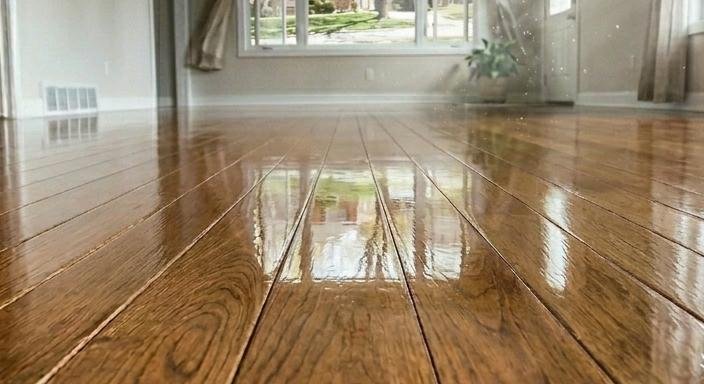
You hired someone to refinish your hardwood floors. The job looks beautiful. But the smell hits you the moment you walk back in — and it doesn't leave for days. That's not just unpleasant. That's a ventilation failure, and it carries real health risks for everyone in your home, especially the most vulnerable.
At Cyclone Hardwood Floors, we've been doing this for over 20 years. We've refinished floors across Bucks County, Montgomery County, and Philadelphia — in Doylestown, Lansdale, Blue Bell, Newtown, Chestnut Hill, Ambler, Jenkintown, and everywhere in between. And the first thing we tell every homeowner before we touch a single plank: ventilation isn't a finishing touch. It's the foundation of a safe job.
What Refinishing Fumes Actually Are
When you sand and coat hardwood floors, you're working with oil-based polyurethane, stains, and chemical solvents. These products release volatile organic compounds — VOCs — as they dry and cure. Unlike smoke, VOC fumes are heavier than air. They don't float up and out. They sink and pool, settling in low areas and filling closed rooms fast.
Common VOCs found in floor finishing products include toluene, xylene, and benzene-related compounds. Short-term exposure causes headaches, dizziness, nausea, and eye or throat irritation. In a poorly ventilated space, prolonged exposure creates more serious risks — particularly for children, elderly residents, pets, and pregnant women.
Water-Based vs. Oil-Based: What the Difference Means for Your Family
This is one of the most common questions we get, and it matters more than most people realize — especially when there are vulnerable occupants in the home.
Oil-based polyurethane is the traditional standard. It produces a warm, amber tone that deepens over time, and it's extremely durable. The tradeoff is VOC content. Oil-based finishes off-gas heavily for the first 24–48 hours and continue curing for up to a week. The odor is sharp and unmistakable. Re-entry timelines are longer, and the ventilation requirements are more demanding.
Water-based polyurethane dries faster, has significantly lower VOC content, and produces a clearer, more neutral finish that doesn't amber over time. For households with pregnant women, infants, or anyone with chemical sensitivities, water-based is often the right call — not because it's fume-free, but because the off-gassing window is shorter and the chemical load is lower. The tradeoff is cost: water-based products run higher, and you typically need more coats.
Neither finish is inherently dangerous when the job is done right. The danger comes from applying either product in a closed, unventilated space and sending the family back in too soon. We discuss both options with every client before the job starts. The choice should be yours, made with full information — not defaulted to whatever the contractor had in the truck.
Why Pregnant Women Face Elevated Risk
This is the call we never want to get: "The floors look amazing, but my wife is pregnant and we can't breathe in here."
It happens when contractors treat ventilation as an afterthought — or skip the conversation entirely.
During pregnancy, VOC exposure carries documented risks. The developing fetus is particularly sensitive to chemical compounds that cross the placental barrier. Studies have linked heavy VOC exposure during pregnancy to complications including low birth weight, developmental concerns, and respiratory issues in newborns. This isn't alarmism — it's the reason OSHA and the EPA have guidelines on occupational and residential chemical exposure.
If you are pregnant, or if someone in your household is pregnant, this needs to be a conversation you have with your contractor before the job starts — not after the first coat goes down. At Cyclone, we ask. Every time.
Our standard protocol when a pregnant occupant is involved: full site evacuation for the duration of the job, extended re-entry window (minimum 72 hours after final coat, often longer depending on the product and square footage), and written guidance on what to look for if re-entry happens too soon.
The risk isn't uniform across pregnancy. The first trimester is the highest-concern window — it's when fetal organ systems are forming, and chemical exposure during this period carries the greatest potential for developmental impact. That said, no trimester is without risk, and "I'm past the first trimester" is not a reason to skip precautions.
VOCs like toluene and xylene are lipid-soluble, meaning they cross the placental barrier and enter fetal circulation. Research published in environmental health literature has associated occupational-level VOC exposure during pregnancy with increased risk of low birth weight, preterm birth, and childhood respiratory issues. Residential exposure from a single refinishing job is not the same as occupational exposure — but the gap narrows fast in a poorly ventilated home where someone is sleeping and spending most of their day.
The practical guidance is straightforward: if you are pregnant, tell your contractor before the job is scheduled. A reputable contractor will adjust the product selection, the ventilation plan, and the re-entry timeline accordingly. If they don't ask and don't adjust, that's information about how they run their jobs.
The long-term air quality advantage of hardwood over carpet is well established — here's the full breakdown on why hardwood floors are better for allergies and asthma than carpet.
What Proper Ventilation Actually Looks Like
Cracking a window is not a ventilation plan. Here's what a real protocol involves:
Fan placement matters. Exhaust fans should be positioned to push air out, not just circulate it. Intake points need to be on the opposite side of the work area to create cross-ventilation and pull fresh air through the space.
HVAC systems go off. Running central air or heat during a refinish job pulls fumes into the ductwork and distributes them throughout the entire house — including rooms nowhere near the floors being worked. The system should be shut off and vents sealed before the first coat of finish is applied.
Sequence matters. Ventilation begins during sanding (dust), continues through staining, and extends well past the final coat of polyurethane. Each stage produces a different chemical profile. A contractor who ventilates during finishing but not during staining is doing half a job.
Products vary. Oil-based finishes off-gas heavily for 24–48 hours. Water-based formulas have lower VOC content but aren't fume-free. The ventilation protocol should match the product being used — there's no one-size-fits-all timeline.
When to Leave Your Home — and for How Long
For a standard refinishing job using oil-based polyurethane, our general guidance:
Leave the home entirely during the job and for at least 24 hours after the final coat.
For households with pregnant women, infants under 12 months, or anyone with respiratory conditions: minimum 48–72 hours, with windows open and fans running on re-entry.
Do a smell check at the door before bringing children or pets back in. If the odor is still sharp, give it more time.
Water-based finishes: minimum 12–24 hours, but still err on the side of caution with vulnerable household members.
These aren't arbitrary numbers. They're based on product data sheets, years of field experience, and feedback from hundreds of jobs across neighborhoods like Dresher, Fort Washington, Warminster,Hatboro, and Southampton.
How We Handle It in Your Home
Every Cyclone job starts with a walkthrough — not just of the floors, but of the house. We're asking questions your average flooring crew doesn't ask: Is anyone in the home pregnant? Are there infants? Anyone with asthma or chemical sensitivities? Pets?
The answers shape how we schedule the job, which products we select, how we set up ventilation, and what re-entry instructions we leave behind in writing.
We've been doing this in Bucks County and the surrounding area long enough to know that a beautiful floor means nothing if the family that lives on it had a bad experience getting there. Proper ventilation is how we make sure that doesn't happen.
If you're in Doylestown, Lansdale, Blue Bell, Ambler, Jenkintown, Newtown, Warminster, Dresher, Southampton, or anywhere else in our service area and you're thinking about a refinish — get in touch! We'll walk you through exactly what to expect before, during, and after.
5 Questions to Ask Any Contractor Before They Refinish Your Floors
Most homeowners comparison shop on price and timeline. Those matter, but they're not the questions that protect your family. Before you sign anything, ask these:
1. What finish products do you use, and what are the VOC levels? Any contractor worth hiring can answer this. If they can't name the product or don't know the VOC content, that tells you something.
2. What is your ventilation protocol? You're looking for specifics — fan placement, HVAC shutdown, intake and exhaust sequencing. "We open the windows" is not a protocol.
3. Will you shut off the HVAC system before application? This one alone separates professionals from guys who'll have you pulling fumes out of your ductwork for a week.
4. What is the re-entry timeline for my household specifically? The answer should change based on who's in the home. If they give you the same answer regardless of whether you have a newborn or a pregnant wife, that's a red flag.
5. Can I see a product data sheet for the finish you're using? This is the document that lists chemical compounds, safety warnings, and exposure limits. A contractor who won't provide it has no business being in your home.
