
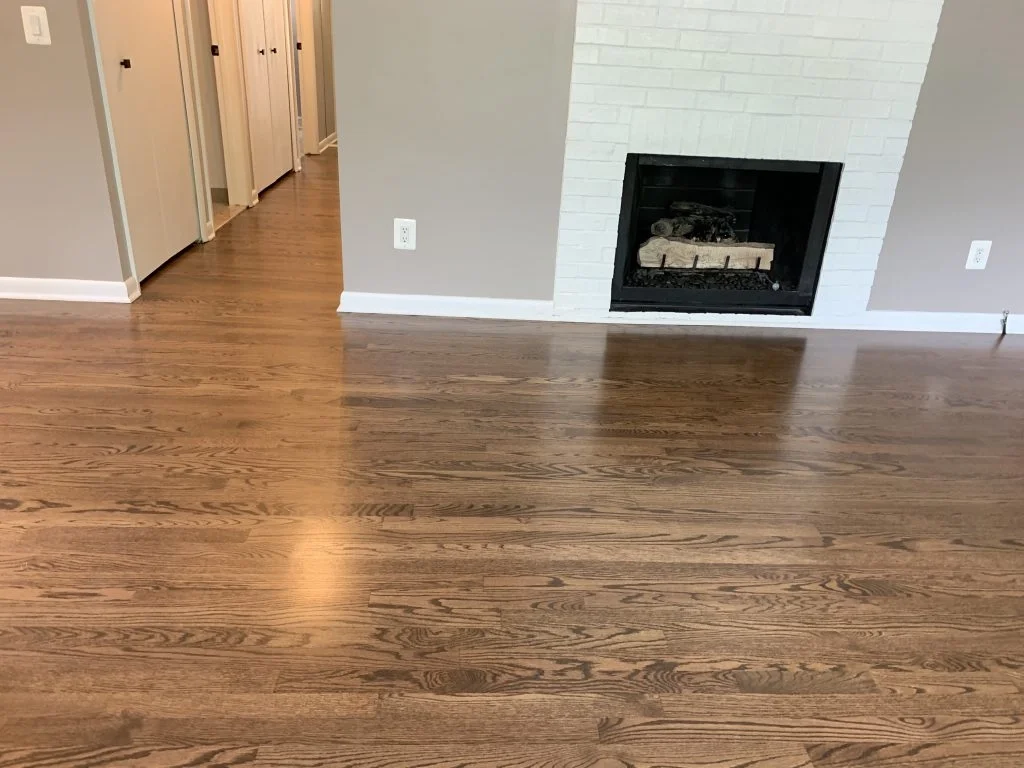
You spent hours picking the perfect stain color for your hardwood floors. You looked at samples, held them up to the light, imagined how they'd look with your furniture. Then the finish goes on and suddenly the color looks completely different than what you expected.
Welcome to the part of hardwood refinishing nobody tells you about: your topcoat doesn't just protect the wood—it changes the color. Sometimes dramatically.
Oil-Based Polyurethane: The Amber Effect
Oil-based polyurethane is the traditional choice for hardwood floors, and for good reason. It's durable, it penetrates well, and it creates that classic warm glow people associate with hardwood. But here's what most homeowners don't realize: oil-based poly has an amber tone that adds warmth to whatever stain you put down.
If you stained your floors a medium brown, oil-based poly will push it toward honey or golden brown. If you went with a dark walnut stain, the finish will add richness and depth. This amber tone intensifies over time as the finish ages and is exposed to sunlight—what starts as subtle warmth can become noticeably golden after a few years.
Sunlight is the variable that affects stain color most after installation — here's the full breakdown on why direct sunlight fades hardwood floors and what you can do to protect them.
When oil-based works:
Traditional brown, espresso, or walnut stains that benefit from warmth
Red oak floors where you want to enhance the natural amber undertones
Homes with warm color palettes (creams, tans, golds)
Clients who want that classic, timeless hardwood look
When oil-based doesn't work:
Cool-toned stains like gray, greige, or driftwood (the amber tone will muddy them)
White oak floors with modern gray stains (you'll lose the clean, contemporary look)
Light natural finishes where you want the wood's true color without added warmth
If you're trying to achieve a cool, modern aesthetic with gray or weathered stains, oil-based poly is going to fight you every step of the way. The amber undertone doesn't just add warmth—it fundamentally shifts the color away from what you were aiming for.
Water-Based Polyurethane: Crystal Clear Finish
Water-based polyurethane has come a long way in the past decade. Early formulations were less durable and didn't look as good, but modern water-based finishes rival oil-based in protection while offering one major advantage: they're crystal clear with no amber tone.
What you see when the stain dries is what you get when the finish goes on. Water-based poly doesn't shift the color, doesn't add warmth, and doesn't yellow over time. If you stained your floors gray, they stay gray. If you wanted a pale natural finish, water-based keeps it light and bright.
When water-based works:
Gray, greige, or any cool-toned stain (this is the only way to preserve the color)
White oak floors with modern finishes (white oak + gray stain + water-based poly = clean contemporary look)
Light natural finishes where you want the wood grain to show without darkening
Homes with cool color palettes (grays, whites, blues)
Clients who want the look to stay consistent over decades (no yellowing)
When water-based doesn't work:
Red oak floors where you want to enhance warmth (water-based won't add any)
Very dark stains where depth and richness matter (oil-based gives more visual dimension)
Clients who specifically want that classic amber glow
Water-based finishes also dry faster, which means less downtime between coats and quicker project completion. They have lower VOCs, so there's less smell during application. But the real reason to choose water-based is color fidelity—if you need your stain to look exactly as intended without any shift, water-based is the only option.
Why This Matters More Than You Think
We've redone floors because homeowners didn't understand this. They pick a beautiful gray stain, we explain the finish will affect the color, they say "yeah yeah, whatever," and then oil-based poly goes on and suddenly their gray floors look taupe. Now they're unhappy, we're re-sanding, and everyone's wasted time and money.
The finish isn't just the last step—it's part of the color decision. You can't separate stain choice from finish choice and expect the results to match your vision.
How We Handle This at Cyclone
When clients come to us with a stain color in mind, we don't just show them samples on raw wood. We show them samples with the finish applied—oil-based on one, water-based on the other—so they can see the actual final result. We explain how oil-based will shift the tone, how water-based keeps it true, and we let them make an informed decision based on what they're actually going to live with.
Most contractors skip this step because it's easier to just default to oil-based and hope the client doesn't notice the color shift. We've been doing this for 20+ years and we've learned that an extra ten minutes of explanation upfront saves everyone headaches later.
The Bottom Line
If you want warm, traditional hardwood with depth and richness, oil-based polyurethane enhances brown and walnut stains beautifully. If you want modern, cool-toned floors—especially grays on white oak—water-based polyurethane is the only way to preserve your color choice.
Don't let your finish sabotage your stain. Know what you're getting before the topcoat goes on, because once it's applied, you're living with it until the next refinish.
Ready to refinish your floors the right way? Contact Cyclone Hardwood Floors for a free estimate. We'll show you how stain and finish work together so you get the look you actually want—not a surprise when the job's done.
