
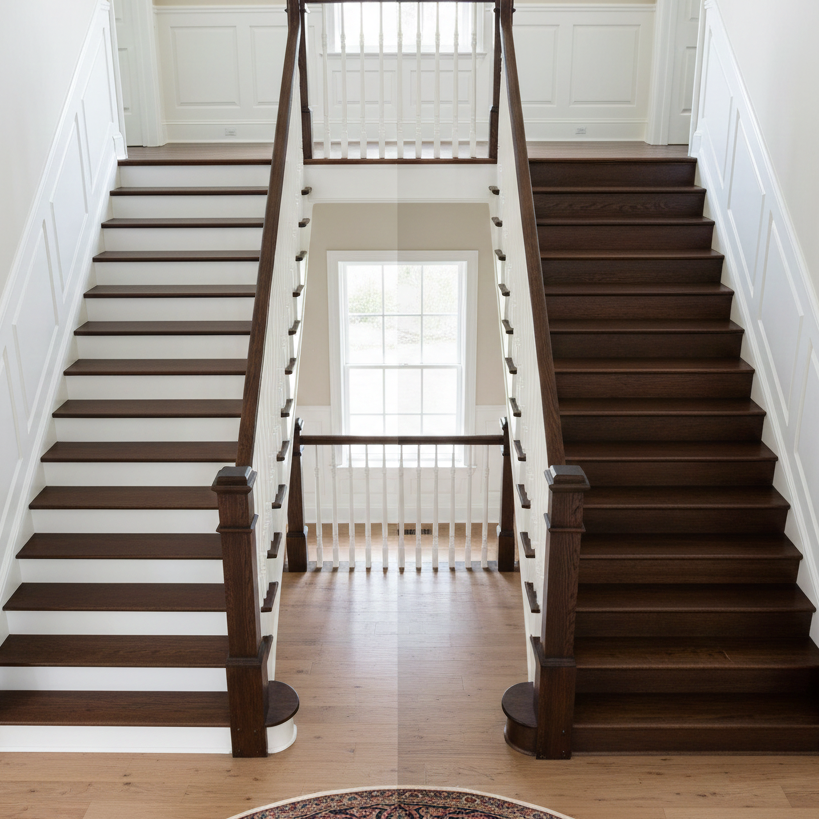
After 20+ years installing and refinishing stairs in PA and NJ, we’ve done both: stairs where everything matches (treads, risers, all stained the same), and stairs with stained treads and painted white risers.
The white riser look is everywhere right now. Open any home design magazine or scroll Instagram, and you'll see it—dark or natural wood treads with crisp white risers. It's clean, modern, and makes staircases look more expensive.
But people always ask: "Does the white get dirty? Is it hard to maintain?"
Fair questions. Let's talk about what actually happens with painted white risers versus matching wood, and what the maintenance really looks like based on what I've seen in hundreds of homes.
Why People Choose White Risers
Before we get into maintenance, let's talk about why this look is so popular.
Visual contrast
White risers against darker wood treads create a strong visual line. Each step is clearly defined, which actually makes stairs easier to navigate (especially for older adults or anyone with vision issues).
The contrast also makes the staircase a design feature instead of just a functional thing you walk on. It draws the eye and adds architectural interest.
Makes stairs look lighter and more open
If you've got a dark, enclosed staircase, painting the risers white brightens the whole space. It reflects light instead of absorbing it.
This is especially helpful in older homes with narrow staircases or limited natural light. White risers make the space feel less closed-in.
Modern aesthetic
All-wood matching stairs can look traditional or dated, depending on the style of your home. White risers give a more contemporary, transitional look that works with most decor styles.
Easier to match than wood stain
If you're replacing treads but keeping the structure, it can be tough to match the stain on old risers perfectly. Painting them white solves that problem—everything looks intentional instead of "we tried to match but it's slightly off."
Why People Stick With Matching Wood
Not everyone wants white risers. Here's why some people prefer everything stained to match:
Consistent, cohesive look
Some people just prefer the unified appearance of wood on wood. It feels more traditional, warmer, and blends into the home rather than standing out as a feature.
Perceived lower maintenance
The assumption is that white paint shows dirt and scuffs more than stained wood. We'll get into whether that's actually true in a minute.
Personal preference
Some people just don't like the look of white risers. That's fine. It's your house.
The design choice between white risers and matching treads is only part of the stair conversation. Here's why your staircase must match your first-floor hardwood and how to get the species and stain connection right throughout Bucks and Montgomery County homes
The Real Maintenance Difference: White Risers vs. Stained Risers
Alright, here's what actually happens after you've lived with these stairs for a few years.
White Risers
What shows up:
Scuff marks from shoes - This is the big one. Every time someone's shoe hits the riser (which happens constantly), it can leave a black or gray scuff mark
Dirt streaks - If people walk on stairs with dirty shoes, you'll see faint streaks or smudges
Hand oils/fingerprints - If people touch the risers (grabbing for balance, kids running their hands along), you'll see marks
How noticeable is it? Depends on your paint choice and your household.
High-gloss or semi-gloss white paint shows every scuff and smudge immediately. It's like a magnet for visible dirt.
Matte or eggshell white paint hides imperfections way better. Scuffs blend in more, and the finish doesn't highlight every fingerprint.
How often do you need to clean it? In a typical household, you'll probably wipe down white risers every 1-2 weeks if you want them to stay crisp and clean.
If you're not bothered by a few scuff marks, you can go a month or more between cleanings.
How do you clean it? Easy. Damp cloth with a little mild soap. Scuffs come off with minimal effort. You're not scrubbing for an hour—it's a 5-minute job for a full staircase.
Magic erasers work great on scuff marks, but don't overuse them because they're mildly abrasive and can dull the paint over time.
Do you need to repaint often? Not really. If you used quality paint and proper prep, white risers can go 5-7 years before needing a fresh coat.
High-traffic households with kids and pets might need to touch up more often—maybe a fresh coat every 3-4 years. But that's just maintenance painting, not a huge project.
Stained/Matching Risers
What shows up:
Dust and dirt - Just like any wood surface, risers collect dust. On dark stain, dust shows up as a light film
Scuffs - Yes, stained risers get scuffed too. The scuffs are just less visually obvious because they're usually darker marks on darker wood
Wear on the finish - Over time, the polyurethane finish can wear down in high-contact areas, making those spots look duller than the rest
How noticeable is it? Stained risers hide dirt better than white paint. Scuff marks blend in. You can go longer without cleaning and the stairs still look decent.
But here's the thing: "hides dirt better" doesn't mean "cleaner." The dirt is still there. You just don't see it as easily.
How often do you need to clean it? You can get away with vacuuming/dusting every couple weeks and wiping down monthly. Stained wood is more forgiving of neglect.
How do you clean it? Vacuum or dust, then damp mop with a wood floor cleaner. Pretty straightforward.
Do you need to refinish often? Not often, but eventually. If the risers are getting foot traffic or hand contact, the finish will wear down over time. Expect to refinish stairs (treads and risers together) every 10-15 years depending on use.
So Which Is Actually More Maintenance?
White risers require more frequent light cleaning (quick wipe-downs every week or two).
Stained risers require less frequent cleaning but eventually need refinishing (a bigger project every 10-15 years).
If you're someone who likes things to look spotless all the time, white risers might drive you crazy because every scuff is visible.
If you're someone who doesn't want to think about your stairs, stained risers are lower-maintenance day-to-day.
But neither option is objectively "high maintenance." It's just different maintenance.
What About Durability?
Painted risers: Paint is tough, especially if you use floor-grade or cabinet-grade paint. It holds up well to normal wear.
The finish matters. Semi-gloss or satin paint is more durable than flat. But even flat paint, if it's quality paint, can last years with just occasional touch-ups.
Stained risers with polyurethane: Polyurethane is extremely durable. It's designed for floors, which take way more abuse than risers.
But polyurethane can wear down where it gets constant contact. If people are always touching the same spot, or if shoes frequently kick the same area, the finish will eventually dull or wear through.
Bottom line: Both hold up fine. This isn't a durability issue. It's a visibility issue—paint shows imperfections more obviously, but that doesn't mean it's less durable.
What Finish Should You Use for White Risers?
If you're going with painted white risers, the paint finish matters a lot.
Flat/Matte:
Hides imperfections best
Scuffs and marks blend in
But: harder to clean (paint can absorb dirt)
Best for low-traffic stairs or if you're not obsessive about spotlessness
Eggshell:
Good middle ground
Hides imperfections reasonably well
Easier to wipe clean than flat
This is what I usually recommend for most homes
Satin/Semi-gloss:
Very easy to clean
Durable finish
But: shows every scuff, smudge, and imperfection
Best if you're committed to frequent cleaning
High-gloss:
Super easy to wipe clean
Extremely durable
But: shows EVERYTHING
Only recommend if you love the shiny look and don't mind constant maintenance
My take: Go with eggshell or satin. You get durability and cleanability without highlighting every tiny mark.
Does It Matter If You Have Kids or Pets?
Kids: Kids are rough on stairs. Dirty shoes, sticky hands, running up and down constantly.
White risers with kids = you'll be wiping them down weekly, maybe twice a week if your kids are especially messy.
Stained risers with kids = you can ignore them longer, but the dirt is still accumulating.
If you have young kids and you're already cleaning constantly, white risers aren't going to add much to your workload. If you're barely keeping up with housework, stained risers might save your sanity.
Pets: Dogs and cats don't really affect risers much unless they're going up and down constantly. Bigger issue is treads (where paws land).
If your dog has dirty paws and runs upstairs, yeah, you'll see marks on white risers. But you'd see them on white walls and furniture too. It's not specific to risers.
Can You Touch Up White Risers, or Do You Have to Repaint Everything?
You can touch up, but it's tricky.
If you've got a small scuff or chip, you can dab on a little matching paint. But even with the exact same paint, touch-ups often show because the surrounding paint has aged slightly (yellowing, subtle color shift, accumulated dirt).
For best results: Every 3-5 years, repaint all the risers with a fresh coat. It's not a huge job—risers are vertical surfaces, so no sanding or floor prep. Just clean, prime if needed, and paint. A full staircase takes a few hours.
If you're handy, you can do this yourself. If not, it's a quick job for a painter.
Our Take After Installing Both for 20+ Years
I've installed stairs both ways hundreds of times. Here's what I tell people:
Go with white risers if:
You want a modern, high-contrast look
Your home has good natural light (white risers enhance brightness)
You're okay with wiping down stairs every week or two
You like things to look crisp and clean
Go with matching stained risers if:
You prefer a traditional or cohesive wood look
You want lower day-to-day maintenance
Your home style is more classic/rustic
You don't want stairs to be a visual focal point
Either way, the maintenance difference is overstated.
White risers aren't some nightmare that requires constant work. They just show dirt more obviously, so you clean them more often. But the cleaning itself is easy.
Stained risers hide dirt better, but that doesn't mean they're cleaner—it just means you notice less.
Pick based on the look you want, not on fear of maintenance. Both are totally manageable.
What We Do When We Install Stairs
When we're installing or refinishing stairs, here's how we handle risers:
For white risers:
We use high-quality floor-grade paint (not cheap wall paint)
Prime properly so the paint adheres and lasts
Apply 2-3 coats for durability
Recommend eggshell or satin finish for best balance
For stained risers:
Match the tread stain (or go with your custom color choice)
Apply the same polyurethane finish as the treads for consistency
Make sure everything is sealed properly so the finish lasts
Either way, you get stairs that look great and hold up.
The Bottom Line
White risers versus matching stained risers is mostly about aesthetics, not maintenance difficulty.
White risers:
Modern, high-contrast look
Show dirt and scuffs more
Easy to wipe clean
Repaint every 3-5 years
Stained risers:
Traditional, cohesive look
Hide dirt better (but dirt is still there)
Refinish every 10-15 years (along with treads)
Neither is "high maintenance." It's just different maintenance. Pick the look you want and commit to keeping it clean—either option will serve you fine.
When you're ready to move from the design decision to actual installation, here's what our stair installation process looks like — treads, risers, railings, carpet-to-hardwood conversions, and everything in between.
Thinking about updating your stairs? Get in touch!
