
Hardwood Floor Stain Color Trends in 2026 — What Pennsylvania Homeowners Are Actually Choosing
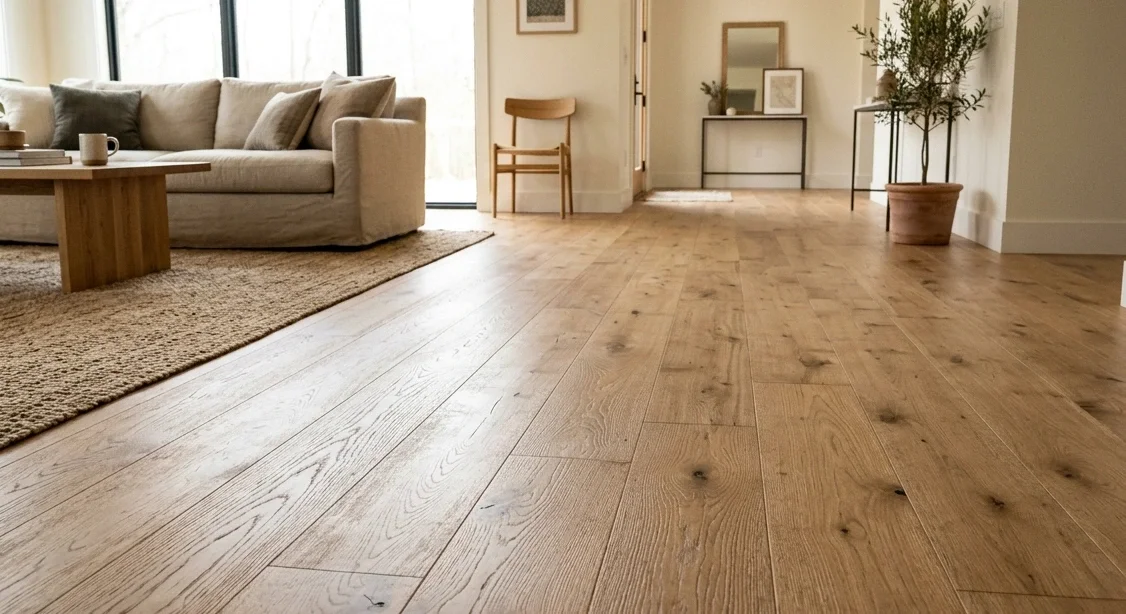
Color trends in hardwood floors move slower than paint or tile but they do move. And 2026 is a genuinely interesting moment in the Philadelphia suburb market because we're in the middle of a real shift — one we're seeing confirmed on job after job throughout Bucks County, Montgomery County, Chester County, and the Main Line.
Gray is not dead but it's no longer the automatic answer. Warm tones are back. Natural and light finishes are dominant. And the whitewashed look — which felt risky three years ago — is now being requested regularly in renovations that would have gone gray in 2021.
Here's what we're actually seeing on the ground from homeowners who are making these decisions right now.
Gray — Still Around, No Longer King
Gray hardwood floors had a genuine decade-long run. Cool gray tones on white oak, ashy finishes on red oak, the whole Scandinavian-influenced palette dominated the Philadelphia suburb renovation market from roughly 2013 through 2022. And it made sense — gray read as modern, neutral, photogenic for listings, and a clean departure from the golden honey polyurethane look it replaced.
In 2026 gray is still being requested. It hasn't fallen off a cliff. But it's shifted from the default answer to a deliberate choice — something a homeowner specifically wants rather than something they land on because it's what everyone is doing. The cooler, darker gray tones are fading fastest. The lighter warm-gray and greige finishes are holding on longer because they sit closer to the natural tones that are trending right now.
If you're refinishing before listing in 2026 and considering gray, the question to ask your agent is whether gray is still resonating with buyers in your specific zip code and price range. In some Main Line markets it still reads as current. In others it's starting to feel like the previous cycle.
Warm Naturals — The Dominant Trend Right Now
This is where the market has landed and it feels less like a trend than a correction. The warmth that got designed out of floors during the gray decade is coming back — not the orange-honey polyurethane of the 1990s, but genuine warm natural wood tones that let the species character show.
On white oak — which is the dominant species in new installations and high-end renovations throughout our market — the warm natural look means minimal stain, a clear or very lightly tinted water-based finish, and letting the natural color of the wood speak. White oak has a slight warmth to it naturally — a light golden-beige tone that photographs beautifully, works with a wide range of interior palettes, and doesn't date the way a stained finish can.
We're applying this finish throughout Doylestown, Newtown, Blue Bell, Bryn Mawr, and West Chester right now and the response from homeowners and agents is consistently strong. It's the finish that works with both traditional and contemporary interiors which is exactly why it's replaced gray as the safe default.
On red oak the warm natural trend requires more care — red oak's natural tone has orange undertones that can read as dated without the right finish approach. A light warm brown stain that pulls the orange back slightly while keeping the warmth produces the best result on red oak in the current market. Not the golden honey look, not gray, but a clean warm medium tone that reads as current without chasing a trend.
The Whitewashed Look — From Risky to Requested
Three years ago a whitewashed hardwood floor felt like a design risk in the Philadelphia suburbs. Too beach house, too coastal, too much. In 2026 we're getting specific requests for it regularly — particularly in the renovation market throughout the Main Line, Bucks County's historic properties, and the newer construction throughout Chester County where contemporary interiors are more common.
What people mean when they say whitewashed varies and it's worth clarifying before any stain goes on your floor. The true whitewash look — a white or very light gray pigment rubbed into the wood and sealed — produces a floor that reads as pale, light, and distinctly Scandinavian. It works in spaces with a lot of natural light, white or light gray walls, and contemporary or transitional furnishings. In a darker traditional interior it can look washed out.
The more popular version in our market right now is a white-tinted oil finish — products like Rubio Monocoat White or a lightly pigmented water-based finish that adds just enough white to cool and lighten the natural wood tone without going full bleached. The result reads as light and natural rather than painted. On wide plank white oak in particular this finish is genuinely stunning — it enhances the ray fleck and grain character while producing a floor that photographs like a Nordic design magazine.
We always sample on your actual boards in your actual light before committing to any whitewashed finish. The same product reads completely differently in a south-facing Bryn Mawr living room versus a north-facing bedroom. This is a finish where sampling is non-negotiable. Here's why finish selection and stain sampling matters more than most homeowners realize before committing to a color.
What's Actually Fading
The dark floors that followed gray — espresso, jacobean, very dark walnut tones — are fading fastest in the current market. They were never as dominant in Pennsylvania as in some other markets but they had a moment. In 2026 dark floors read as dated in most price ranges and they're actively suppressing value in pre-listing situations. Agents throughout our service area are steering sellers away from dark refinishes for listings.
The orange-honey polyurethane finish is still the most common call we get for updates — it's in thousands of 1990s colonials throughout Bucks County and Montgomery County and it's been ready for retirement for a decade. If your floors still look like 1994 the good news is that anything current is an improvement and the transformation is dramatic.
What Holds Value Long Term
Trend awareness is useful but the best floor finish is one that holds value past the current cycle. Here's the honest guidance on longevity:
Natural and warm natural finishes on white oak have the longest runway in our market. They're not chasing a specific trend — they're expressing the natural character of a quality species. That doesn't go out of style.
Lighter finishes photograph better than darker ones for listings — a consistent pattern that agents throughout Doylestown, Newtown, and the Main Line reinforce constantly.
Anything that reads as current in 2026 but is clearly trend-driven — very specific gray tones, very white whitewash, heavily fumed finishes — carries the risk of dating faster than a more neutral natural finish. If you're refinishing for a long-term stay, lean toward natural. If you're refinishing for a listing, ask your agent what's showing best in your specific zip code right now.
The finishes that consistently sell homes fastest in the Philadelphia suburb market — regardless of what's trending in a given year — are covered in detail here.
Frequently Asked Questions
Are gray hardwood floors out of style in 2026? Not out of style but no longer the dominant trend in the Philadelphia suburbs. Cooler darker grays are fading fastest. Lighter warm-gray and greige tones are holding on. If gray is specifically what you want it's still a viable choice — but it's no longer the safe default it was from 2015 to 2022. Natural warm tones have taken that position.
What is the most popular hardwood floor color in 2026? Warm natural finishes on white oak — minimal stain, clear or lightly tinted water-based finish, letting the natural wood tone show. This is the most consistent request we're getting throughout Bucks County, Montgomery County, and Chester County right now and it's the finish that works across the widest range of interior styles and buyer preferences.
Do whitewashed hardwood floors add value in Pennsylvania homes? Yes in the right context — contemporary or transitional interiors with good natural light, particularly in the Main Line and Chester County renovation markets. Less effective in traditional dark interiors where the lightness reads as jarring rather than fresh. Always sample on your actual floor in your actual space before committing to any whitewashed finish.
What hardwood floor color should I choose before selling my home in Bucks County? Ask your listing agent first — they know what's resonating with buyers in your specific zip code and price range right now. Generally in 2026 warm natural tones are the safest choice for listings throughout our market. Avoid very dark finishes and the original golden honey polyurethane. Light, warm, and natural is where buyer response is strongest right now.
Can any hardwood species be whitewashed? Yes but results vary significantly by species. White oak takes whitewash and light oil finishes exceptionally well — the grain and ray fleck character comes through beautifully. Red oak's more open grain absorbs light pigment unevenly and can produce a blotchy result without proper prep. Pine whitewashes well but requires careful finish selection given the species' softness and porosity. Always sample before committing regardless of species.
Cyclone Hardwood Floors LLC has served Bucks County, Montgomery County, Chester County, Delaware County, and Philadelphia for over 20 years. We install and refinish hardwood floors throughout the Philadelphia metro. Serving Doylestown, Newtown, New Hope, Yardley, Blue Bell, Fort Washington, Lansdale, Bryn Mawr, Villanova, West Chester, Paoli, Phoenixville, Havertown, King of Prussia, and surrounding communities. Contact Us here or Call or text (484) 253-5348.
