
Why Engineered Hardwood Is Often the Better Choice for Wide Plank Floors in Pennsylvania
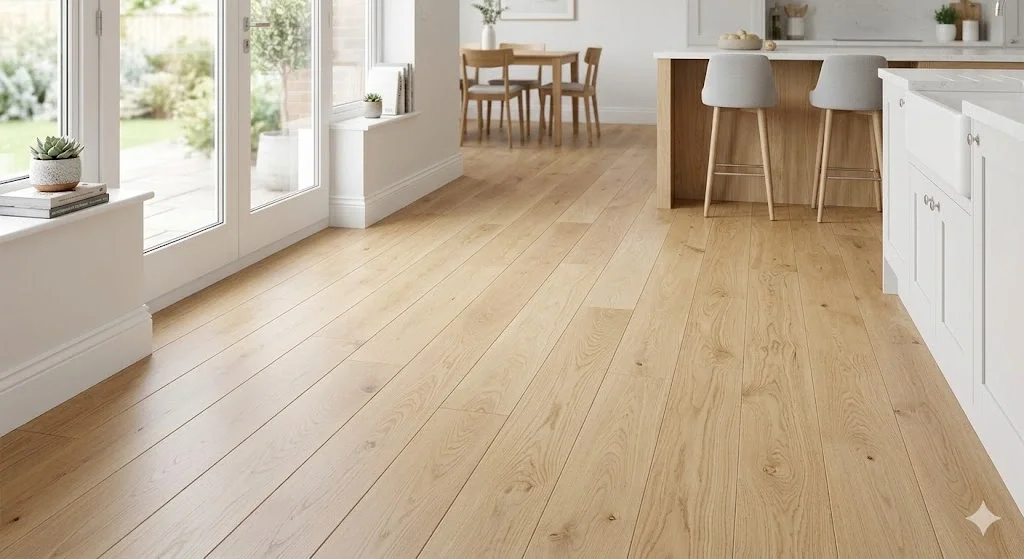
Wide plank hardwood is everywhere in the Philadelphia suburb renovation market right now. Five inch, six inch, seven inch white oak — in Blue Bell colonials, Doylestown farmhouses, Bryn Mawr estates, and new construction throughout Chester County. The look is right for this market and the demand isn't going anywhere.
What most homeowners don't hear from the showroom is the conversation about why wide plank and solid hardwood are a more complicated combination in Pennsylvania's climate than narrow strip ever was — and why engineered hardwood for wide plank installations is often the technically correct call, not a compromise.
Here's the honest version of that conversation.
Why Width Changes Everything
A 2.25 inch red oak strip floor moves seasonally. Every hardwood floor does. But the amount of movement across the face of a narrow board is small enough that standard installation with appropriate expansion gaps handles it without visible consequences year after year.
A 7 inch white oak plank is a different situation entirely. The same moisture-driven expansion and contraction that produces imperceptible movement in a narrow board produces three times the linear movement across the face of a wide one. Pennsylvania's seasonal humidity swing — from 70 to 80% in July to 25 to 30% in a heated January interior — creates real force across a wide plank face. Force that has to go somewhere.
In a nail-only solid installation it goes into the joints between boards. Winter produces gaps. Summer produces pressure that in poorly installed floors causes cupping or buckling. Neither outcome is what a homeowner who paid a premium for wide plank white oak expected when they made the decision.
This isn't a theoretical risk. It's what we're called in to fix regularly throughout our service area. Here's the full breakdown on why hardwood floors buckle in Pennsylvania homes and what installation decisions cause it.
What Engineered Hardwood Does Differently
Engineered hardwood's cross-ply core construction is specifically engineered to resist the moisture-driven dimensional change that causes wide plank problems. The alternating grain direction of the plywood layers works against each other — when one layer wants to expand the adjacent layer resists it. The result is a floor that moves a fraction of what solid hardwood moves under the same moisture conditions.
For wide plank applications in Pennsylvania this isn't a minor difference. It's the difference between a floor that performs correctly for 30 years and one that gaps in February and gets a callback in March.
The surface you're walking on is still genuine hardwood — same white oak species, same grain, same finish options, same appearance. What's different is the core and what that core enables in terms of dimensional stability across a wide face in a variable climate.
Wide plank floors do more than look good — here's how plank width, direction, and finish work together to make any room feel larger.
The Glue Assist Question
Wide plank solid hardwood can be made more stable through glue-assist installation — full spread adhesive used in combination with mechanical fastening. We covered this in detail in our post on why wide plank hardwood requires glue-assist installation on the Main Line. Glue-assist significantly reduces movement in solid wide plank by bonding the full face of the board to the subfloor rather than relying on nails at the edges alone.
But glue-assist on solid hardwood over a plywood subfloor adds cost, complexity, and still doesn't fully match the dimensional stability of quality engineered hardwood in the same application. Over a concrete slab — common in the split-levels and ranchers throughout King of Prussia, Havertown, and Montgomeryville — solid wide plank with glue-assist over concrete in Pennsylvania's climate is a genuine risk we don't recommend. Engineered hardwood full glue-down over moisture-tested concrete is the correct call.
When Solid Wide Plank Still Makes Sense
This isn't a blanket recommendation against solid wide plank. There are specific conditions where solid is the right choice.
Controlled interior humidity year-round. A home with a whole-house humidifier maintaining 40 to 50% relative humidity through Pennsylvania winters significantly reduces the seasonal movement that causes wide plank problems. In that environment properly installed solid wide plank performs reliably. Without that humidity control the risk profile changes.
Plywood subfloor in good condition with glue-assist. The combination of a quality plywood subfloor, full spread moisture-rated adhesive, and mechanical fastening gives solid wide plank its best shot in Pennsylvania's climate. We've done solid wide plank installations this way throughout Bucks County and the Main Line that have performed correctly for years.
Specific aesthetic requirements. Some homeowners — particularly in historic properties in New Hope, Washington Crossing, and West Chester — want solid hardwood for authenticity and material reasons that go beyond performance. For those clients we have the full protocol conversation upfront, discuss humidity management requirements, and proceed with their informed consent. The floor can work. It just requires more from the homeowner in terms of ongoing maintenance.
The Wear Layer Conversation
The one legitimate concern with engineered wide plank is wear layer thickness. A thin wear layer on a wide plank floor is a problem — not because of stability but because of refinishing longevity. A 1.5mm wear layer on a 7 inch plank that cost $14 per square foot installed is a floor you can't refinish and will need to replace in 10 to 15 years.
Our minimum recommendation for any wide plank engineered installation in a Pennsylvania primary residence is 3mm wear layer. For homeowners who plan to stay 20 or more years, 4mm to 6mm is worth the additional cost. The stability benefit of engineered combined with the refinishing longevity of a thick wear layer gives you the best of both products.
This is the specification conversation most showrooms skip because thinner wear layer products have better margins. Ask specifically. Know what you're buying before it goes down.
What We Install in the Philadelphia Suburbs Right Now
The majority of wide plank installations we're running throughout Bucks County, Montgomery County, and Chester County right now are engineered white oak — 5 inch to 7 inch, 4mm wear layer minimum, full glue-down or glue-assist depending on subfloor type. Natural and lightly fumed finishes predominantly. Bona Traffic HD as standard topcoat.
The results are genuinely beautiful and they perform correctly in Pennsylvania's climate without the seasonal drama that wide plank solid can produce in the same homes. That's the outcome every homeowner wants and it's the installation we can stand behind without qualification.
For the full picture on the solid versus engineered decision across all applications — not just wide plank — here's our complete guide to engineered vs solid hardwood for Pennsylvania homes.
Frequently Asked Questions
What width hardwood floor should be engineered vs solid in Pennsylvania? Generally anything 5 inches or wider benefits meaningfully from engineered construction in Pennsylvania's climate. At 7 inches and above engineered is our strong recommendation in most applications. Narrow strip at 2.25 to 3.25 inches performs reliably as solid hardwood in standard plywood subfloor installations throughout our market.
Can wide plank solid hardwood be installed in a Pennsylvania home successfully? Yes — with the right conditions. Plywood subfloor in good condition, glue-assist installation, year-round humidity management keeping interior humidity between 40 and 50%, and appropriate expansion gaps. All of those conditions together produce a solid wide plank installation that performs correctly. Miss any one of them and the risk of seasonal movement problems increases significantly.
Does engineered hardwood look different from solid hardwood in wide plank? No. The surface is genuine hardwood — same species, same grain pattern, same finish options. A 6 inch wide plank engineered white oak floor and a 6 inch wide plank solid white oak floor are visually indistinguishable. The difference is entirely in the core construction and what that means for performance in variable climate conditions.
How long does wide plank engineered hardwood last in Pennsylvania? With a 4mm or thicker wear layer, proper installation, and standard maintenance — 30 to 50 years in normal residential use. Premium products at 6mm wear layer approach solid hardwood in total lifespan. Wear layer thickness is the primary determinant of longevity in engineered products.
What finish do you recommend for wide plank white oak in Pennsylvania? Bona Traffic HD two-component water-based polyurethane for active households — commercial grade durability, fast cure, stays crystal clear without ambering. For clients who want a more natural penetrating oil look Rubio Monocoat is our recommendation — it's particularly well suited to wide plank white oak where the goal is a floor that looks and feels like bare wood. The full comparison is in our oil vs water-based finish guide for Pennsylvania homes.
Cyclone Hardwood Floors LLC has served Bucks County, Montgomery County, Chester County, Delaware County, and Philadelphia for over 20 years. We install wide plank hardwood throughout the Philadelphia metro — engineered and solid, the right product for the right application on every job. Contact Us here or Call or text (484) 253-5348.
