

Why Hardwood Floors Buckle: A Local Contractor's Guide for Mainline and Bucks County Homeowners
After 20+ years refinishing floors across Bucks and Montgomery Counties, here's what causes buckling—and how Mainline homeowners can prevent costly damage.

By the team at Cyclone Hardwood Floors, LLC
After 20+ years of working on hardwood floors across Montgomery and Bucks Counties, I've seen just about every flooring problem you can imagine. But one of the most frustrating issues homeowners call us about? Buckling hardwood floors.
Just last month, I was in a beautiful colonial in Bryn Mawr where the oak floors in the kitchen had buckled so badly you could actually see the boards lifting off the subfloor. The week before that, we got an emergency call from a homeowner in Newtown whose entire first floor looked like a wave pool after their water heater leaked. And don't even get me started on what happens to floors in Wayne and Radnor basements when sump pumps fail during our spring storms.
Here's the thing about buckling floors: they don't happen overnight, and they're almost always preventable if you know what to look for.
What Exactly Is Floor Buckling?
Let me explain this the way I explain it to customers: imagine your hardwood floor is made up of thousands of individual pieces of wood that need to breathe. When those boards absorb too much moisture too quickly, they swell. Since they're nailed or glued down and can't expand outward, they have nowhere to go but up. That's buckling.
It's different from cupping (where boards curl at the edges) or crowning (where the middle of boards rise up). Buckling is the most severe form of moisture damage—we're talking about boards actually detaching from the subfloor and creating peaks or waves across your floor.
The Real Culprits Behind Buckled Floors
1. Water Damage and Flooding
This is the big one. I've responded to water damage calls in Doylestown, Ardmore, and Gladwyne where everything from burst pipes to dishwasher leaks caused floors to buckle within 24-48 hours.
Here's what happens: when water sits on or under your hardwood floor, the wood soaks it up like a sponge. In homes throughout Blue Bell and Ambler, I've seen finished basements flood during heavy rains, and by the time the homeowner realizes what's happening, the floors are already compromised.
The worst case I ever saw was in Yardley—a vacation home where the owners were gone for three weeks and didn't know their washing machine hose had burst. When they came home, the entire first floor had buckled so badly we had to replace everything.
2. High Humidity and Poor Ventilation
This one sneaks up on people. You don't need a catastrophic flood for floors to buckle—sometimes it's just sustained high humidity over months or years.
In older homes throughout Haverford and Narberth, I've seen this happen in rooms with poor air circulation. The humidity slowly works its way into the wood, and eventually, the floors give out. Same thing happens in Buckingham and Solebury township homes with crawl spaces that aren't properly sealed or ventilated.
Your hardwood floors are happiest when indoor humidity stays between 30-50%. When it creeps above 60% for extended periods—which happens a lot in our humid Pennsylvania summers—you're asking for trouble.
3. Improper Installation
I hate to say it, but sometimes buckling happens because the floors weren't installed correctly in the first place.
Wood needs room to expand and contract with seasonal changes. That's why proper installers leave an expansion gap around the perimeter of the room—usually about 3/4 inch—covered by your baseboards. I've been called to homes in Villanova and Rosemont where previous contractors skipped this step or didn't leave enough gap, and when summer humidity hit, the floors had nowhere to expand except up.
Another installation mistake? Not acclimating the wood before installation. Hardwood needs to sit in your home for at least 3-5 days before installation so it can adjust to your home's temperature and humidity. Skip this step, and you're gambling with thousands of dollars worth of flooring.
4. Subfloor Moisture Issues
Sometimes the problem isn't even the hardwood itself—it's what's underneath. I've worked on countless homes in Lower Merion and Cheltenham where moisture was wicking up through concrete slabs that didn't have proper moisture barriers.
In New Hope and Langhorne, where many homes have basements or are built on slabs, this is incredibly common. If there's groundwater or moisture vapor coming up through your foundation and you install hardwood directly over it without a proper vapor barrier, you're essentially setting up a moisture trap. The wood absorbs that moisture from below and—you guessed it—buckles.
5. Plumbing Leaks You Don't Know About
This is the sneaky one that drives homeowners crazy. I've been called to beautiful homes in Conshohocken and Lafayette Hill where floors buckled seemingly out of nowhere. After pulling up the flooring, we discover a slow leak from a pipe in the subfloor that's been dripping for months.
Same thing happens with leaking radiators in older homes throughout Jenkintown and Abington. These slow, hidden leaks are dangerous because by the time you see the buckling on the surface, the damage underneath is usually extensive.
What About Seasonal Changes?
Here's something I explain to almost every customer: some minor expansion and contraction is normal. Our Pennsylvania climate is tough on hardwood—we get humid, muggy summers and dry, heated winters. Your floors are going to move a little bit. That's not buckling.
Real buckling is dramatic. You'll see boards lifting, gaps opening up, and peaks forming across your floor. If you just notice your floorboards are slightly tighter in summer and have small gaps in winter, that's just wood doing what wood does.
Can Buckled Floors Be Fixed?
The answer every homeowner hates: it depends.
If we catch it early—like within a few days of water exposure—sometimes we can dry out the floors, remove some boards to relieve pressure, and reinstall them once everything dries. I've had success with this approach in Wynnewood and Huntingdon Valley homes where homeowners called us immediately after discovering water damage.
But if the buckling is severe, or if it's been happening over a long period due to chronic moisture issues, you're usually looking at floor replacement. The boards have been permanently deformed, and no amount of sanding or refinishing will make them flat again.
Before we do anything, though, we have to fix the source of the moisture. I've had customers in Warminster and Willow Grove who wanted to just replace the buckled boards without addressing the humidity problem or fixing the leaking pipe. That's just throwing money away—the new floors will buckle too.
How to Prevent Floor Buckling
After two decades in this business, here's my honest advice:
Control your indoor humidity. Get a hygrometer (they're like $15) and keep an eye on it. Run dehumidifiers in summer, especially in basements. In homes throughout Perkasie and Quakertown, I always recommend whole-house dehumidifiers if the basement has hardwood.
Address water issues immediately. If you have a leak, a flood, or even just a big spill, don't wait. Pull up area rugs, get fans going, and call a professional. The faster you dry things out, the better your chances of saving the floor.
Use proper vapor barriers. If you're installing hardwood in a basement or over a concrete slab anywhere from Lansdale to Chalfont, insist on a high-quality moisture barrier. Don't let anyone tell you it's optional—it's not.
Maintain your home's systems. Check for plumbing leaks regularly. Make sure your HVAC system is working properly. Keep gutters clean so water doesn't pool around your foundation. This stuff matters more than people think.
Hire experienced installers. I know I'm biased here, but proper installation really does make a difference. A good installer will acclimate your wood, leave proper expansion gaps, use the right fasteners for your subfloor type, and make sure moisture levels are appropriate before starting work.
The Bottom Line
Buckled hardwood floors are heartbreaking to see, especially in the gorgeous homes we work on throughout the Mainline and Bucks County. But here's the good news: they're usually preventable, and when they do happen, an experienced contractor can often help you understand your options and get your home back to beautiful.
If you're seeing signs of buckling—boards lifting, peaks forming, gaps opening up—don't wait. The longer moisture sits in your floors, the worse the damage gets. And if you're planning a new hardwood installation, make sure your contractor is taking moisture seriously from day one.
We've been serving homeowners throughout Montgomery County, Bucks County, and the Philadelphia metro area for over 20 years, and we've seen it all when it comes to hardwood flooring problems. Whether you need an assessment of existing damage, emergency water damage response, or just want a second opinion on an installation quote, we're here to help.
Because at the end of the day, your floors should be something you're proud of—not something you're worried about.
Need help with buckled floors or want to prevent moisture damage? Contact Cyclone Hardwood Floors, LLC for a professional assessment. We serve homeowners throughout Bucks and Montgomery Counties with honest advice and expert craftsmanship.

Thinking Engineered? Why Solid Hardwood Still Reigns Supreme for Bucks & Montgomery County Homes
For homeowners across our beautiful region, from the historic estates of Solebury to the family-friendly neighborhoods of Hatboro and Harleysville, the choice of flooring is a significant one. Engineered wood flooring often catches the eye due to its perceived lower cost, but it's crucial to understand the long-term value.
One of the biggest advantages of solid hardwood—and a significant drawback of most engineered products—is its refinishing potential. A quality solid hardwood floor can be sanded and refinished 3 to 5 times or more over its lifespan, translating into an incredible longevity of 100 years or more, making it a true generational investment.
In contrast, many budget-friendly engineered floors have a thin "wear layer" that cannot be safely sanded at all. Once it's worn through or deeply scratched, your only option is costly replacement.
For homes in areas like Collegeville and Southampton, where you want enduring beauty and resilience, solid hardwood remains the clear winner over the long haul.
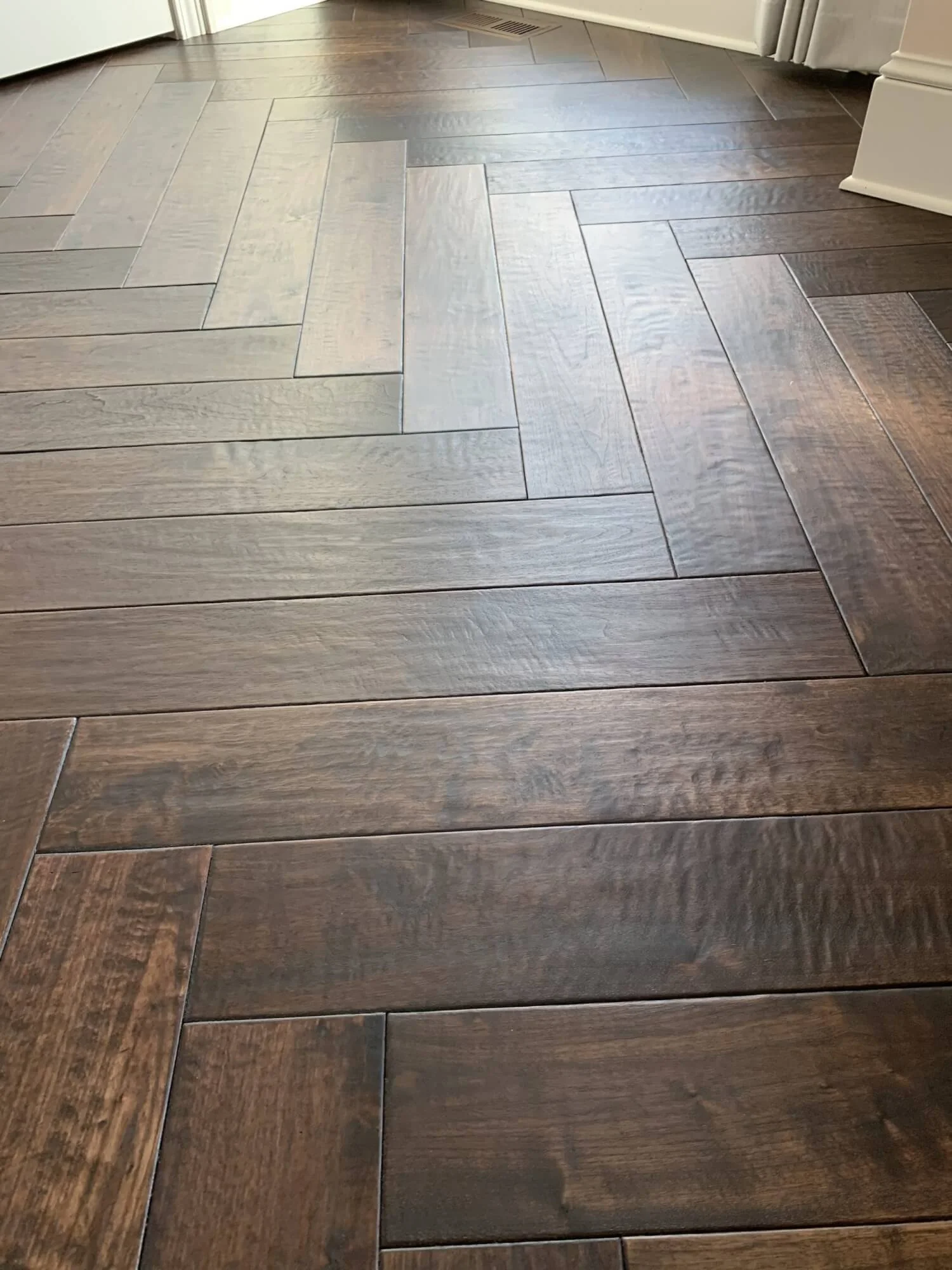
For homeowners across our beautiful region, from the historic estates of Solebury to the family-friendly neighborhoods of Hatboro and Harleysville, the choice of flooring is a significant one. Engineered wood flooring often catches the eye due to its perceived lower cost and ease of installation. However, as experts who've worked on countless floors in Newtown Square, Fort Washington, and Perkasie, we believe it's crucial to understand the long-term value and inherent differences when comparing it to timeless solid hardwood.
Yes, engineered wood has its place, but for many homes in areas like Collegeville and Southampton, it simply can't match the longevity, density, and enduring beauty of its solid counterpart.
The "Refinishing Trap": A Key Difference
One of the biggest advantages of solid hardwood—and a significant drawback of most engineered products—is its refinishing potential.
Solid Hardwood: A quality solid hardwood floor can be sanded and refinished multiple times throughout its lifespan – often 3 to 5 times or more. This means a floor installed today in a classic Hatboro home can be rejuvenated decades later, erasing scratches, dents, and changes in style. This capability translates directly into an incredible lifespan, often 100 years or more, making it a true generational investment.
Engineered Hardwood: While some high-quality engineered floors can be refinished once or twice, many, especially the more budget-friendly options, have a very thin "wear layer" (the actual wood veneer on top). If this layer is too thin (anything less than 3mm), it cannot be safely sanded and refinished at all. Once it's worn through or deeply scratched, your only option is costly replacement. Imagine the frustration for a family in Collegeville with an active household, facing a full floor replacement sooner than expected.
Density & Durability: A Heavier Hand for Busy Homes
Another often-overlooked factor is density. Solid hardwood, by its very nature, is a dense, uniform piece of wood. This contributes significantly to its:
Impact Resistance: It's more forgiving when something heavy drops, making it ideal for busy kitchens and living areas in homes across Fort Washington.
Sound Absorption: A dense solid floor can contribute to a quieter home environment, a subtle but appreciated benefit for many Newtown Square residents.
Structural Stability: While engineered flooring offers some stability against moisture, a well-installed solid hardwood floor offers unparalleled structural integrity over the long haul.
Engineered flooring, being a layered product, can sometimes feel less substantial underfoot. While its cross-ply construction does offer stability against moisture, its overall resistance to impact and heavy wear is often lower than solid wood, particularly in its thinner iterations. For the demands of active family life in Southampton or Perkasie, this difference can be quite noticeable over time.
The True Cost of "Cheaper"
While engineered flooring might have a lower upfront cost, consider the long-term economics:
A solid hardwood floor in a Solebury farmhouse might last 100+ years with proper care and several refinishes.
A thinner engineered floor might need full replacement in 15-30 years, incurring the full cost of demolition, disposal, and new installation multiple times over that same century.
When you factor in these replacement cycles, the "cheaper" engineered option can quickly become the far more expensive choice.
Making the Right Choice for Your Home
For homeowners in Bucks and Montgomery counties who seek a flooring solution that embodies longevity, warmth, and the ability to adapt and revive over decades, solid hardwood remains the gold standard. It’s an investment that grows with your home, providing unparalleled beauty and durability that can be refreshed for generations.
If you're weighing your options and want an expert opinion tailored to your specific home and lifestyle, we invite you to reach out. We serve all these wonderful communities and are happy to help you make the best choice for your floors.
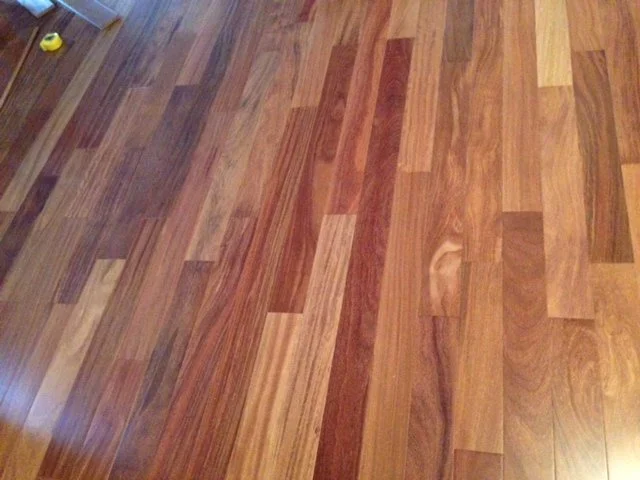
Why Domestic Hardwoods Are Always the Safer Bet for Northeast PA Stability
"If you're buying exotic hardwood for your home, you're taking a gamble in the Northeast climate. It's not about how hard the wood is; it's about stability. We break down exactly why tropical woods fail in PA's humidity and why domestic White Oak is always the safer, longer-lasting choice for your investment."
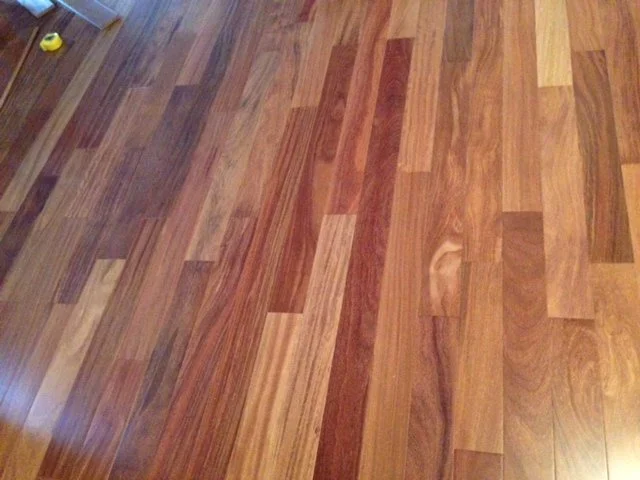
If you are renovating a home in the Bucks County suburbs like Newtown or Solebury, or tackling an older colonial in Montgomery County towns like Ambler, you’ve likely been dazzled by exotic hardwoods like Brazilian Cherry, Tigerwood, or Ipe. Their colors are stunning, and the Janka hardness numbers are impressive.
But here is the truth that often gets left out of the sales pitch: Exotic wood is a gamble in the Northeast climate.
It’s not about strength; it’s about stability. We’re going to break down exactly why domestic species—namely White Oak and Maple—will always give you less headache and a longer-lasting floor in Pennsylvania than their tropical counterparts.
The Northeast Climate: A Hardwood Killer
Our region is one of the most challenging places in North America for hardwood floors. It’s not just four seasons; it’s four extremes of moisture. Hardwood is hygroscopic, meaning it constantly trades moisture with the air. A successful floor installation relies on the wood being milled and acclimated for a regional Equilibrium Moisture Content (EMC) that averages between 6% and 9%.
The problem is that exotic species are accustomed to a stable, high humidity (tropical) environment. When you force them into a rapidly shifting, low-to-high humidity environment like ours, the stress often causes unpredictable movement.

Australian Cypress Hardwood Floor
The Domestic Advantage: Built to Handle the Swing
Domestic hardwoods—Red Oak, White Oak, Maple, and Hickory—have been growing here for millennia. They have evolved to handle the wild, 40-degree temperature swings and the seasonal humidity changes of the Northeast.
Here’s why they are the better investment:
1. Predictable Movement
All wood moves, but domestic wood moves in a way we can predict and manage. This comes down to two properties:
Radial Shrinkage: The movement across the growth rings.
Tangential Shrinkage: The movement parallel to the growth rings.
Domestic woods have a lower overall dimensional change rate than many exotics, meaning they shrink and swell less for the same change in moisture content. When we install White Oak, we know exactly how much gapping to expect in a dry winter. When we install Brazilian Cherry, the shrinkage can be erratic and sometimes forces the planks apart wider than the tongue-and-groove joint can handle. For instance, installing a White Oak floor in a historic Doylestown farmhouse requires a different moisture-testing protocol than a new construction home in Warrington. This is why a local expert who understands Chester County's mix of old and new properties is essential.
2. Better Milling and Drying Standards
American mills that handle domestic species are perfectly calibrated to dry lumber to the exact 6%–9% MC range needed for installation in the Northeast. This is not always the case with imported exotic woods:
MC Mismatch: Imported wood may arrive at 11% or 12% MC, which is suitable for a tropical port but will shrink excessively when introduced to a furnace-heated PA home in winter.
Inconsistent Quality: Quality control standards can vary widely overseas. We've seen exotic stock that is not square or has excessive internal tension, which leads to immediate issues upon installation.
3. Specific Domestic Winners for PA
If you’re building new or installing over radiant heat, we recommend White Oak every time. It has a closed grain structure that makes it more resistant to moisture absorption than Red Oak, giving it superior stability and making it the ideal choice for managing our humidity shifts.
The Exotic Factor: High Hardness ≠ High Stability
Homeowners often choose exotic floors because the Janka hardness score is much higher than Oak (which is true), but high hardness only measures resistance to denting. It has nothing to do with how the wood manages water.
Here are the practical risks of installing exotics in this region:
The Unmanageable Gap: We routinely see exotic floors shrink up to 1/8 inch between planks during the winter dry season. This creates unsightly black gaps that look terrible and collect dirt. Domestic wood, properly installed, typically gaps less than half of that.
Warping and Stress: When exotic wood acclimated at 10% MC is introduced to a bone-dry 6% environment, the extreme tension can cause planks to pull apart from the subfloor, leading to popping sounds and board separation.
Refinishing Difficulty: Exotic woods like Ipe and Brazilian Cherry are incredibly oily, which makes them highly difficult to stain and seal. The oils repel the finish, and if the floor ever needs to be patched, color matching is nearly impossible.
The Cyclone Hardwood Installation Standard: How to Prevent Failure
If you are determined to use an exotic species, you must hire a contractor who follows these non-negotiable standards. This is what separates a professional from a handshake crew.
Strict Moisture Content (MC) Testing: Before a single board is laid, we use a calibrated moisture meter to test the wood planks, the subfloor, and the air. Installation only proceeds when the wood MC is within 2% of the subfloor MC. We use technical data from the National Wood Flooring Association (NWFA) to ensure this.
Extended Conditioning Time: Acclimation isn't just dropping the boxes in the garage. The wood must be stacked and stickered in the specific room it will be installed in for a minimum of 7–10 days, allowing it to condition to the living environment.
Proper Spacing: We use wider expansion gaps (at the walls, under baseboards) for exotic wood to allow for the greater movement we anticipate.
For peace of mind and long-term beauty in your Northeast PA home, whether you're in Lower Gwynedd or renovating a home near Valley Forge, our recommendation is always a domestic species like White Oak. Contact us today—we service all of Bucks, Montgomery, and Chester Counties.
Ready to talk about the right wood for your property?
Call us today for a free, detailed estimate that accounts for your home's specific environment.

Red Oak vs. White Oak: Stability, Finish, and Longevity in Bucks, Montco, Chester & Delco
Stop blaming the humidity for gapping or cupping floors in your Bucks, Montco, or Delco home. The issue is usually the wood choice. We break down the crucial stability differences between Red and White Oak—and why one is the only safe choice for PA's extreme climate swings.

Red Oak vs White Oak Hardwood Flooring
If you're installing new hardwood or replacing existing floors in the Philadelphia Metro area—from a historic home in Doylestown to a modern remodel in Lower Gwynedd, or a colonial in Media, Delaware County—you will inevitably face one choice: Red Oak or White Oak.
The differences are far more than cosmetic. These two classic American species perform completely differently under the seasonal stress of a PA home. One is harder, one is more stable, and one handles the local humidity better than the other.
This is the straight-talking breakdown you need from a contractor who works with both species every single day across Bucks, Montgomery, Chester, and Delaware Counties.
Red Oak we stained w/ medium brown stain
The Most Important Difference: Stability and Moisture Resistance
When a homeowner chooses wood, they usually look at the Janka hardness test, which measures dent resistance. While White Oak (approx. 1360) is slightly harder than Red Oak (approx. 1290), both are plenty hard enough for residential use.
The real performance metric in our region is stability. How does the wood react to the huge swings in temperature and humidity common in PA?
White Oak: The Champion of Stability
White Oak's cellular structure is the key to its superior stability: it is closed-cell. The pores of the wood are naturally plugged with tyloses, acting like tiny internal barriers.
What this means for a Delaware County home:
Superior Water Resistance: White Oak is highly resistant to water penetration. This is why it’s historically used for boat building, whiskey barrels, and exterior siding. For kitchens, laundry rooms, or first-floor installations in a humid Chester County summer, White Oak is the safer choice.
Dimensional Stability: The closed cells make White Oak more resistant to expansion and contraction. This is crucial for managing the dry, furnace-heated winter months where Red Oak might show excessive gapping.
Red Oak: The Workhorse with Open Pores
Red Oak has an open-cell grain structure. The pores are open and act like microscopic straws, which means they easily absorb moisture from the air and from spills.
What this means for your PA home:
Moisture Susceptibility: Red Oak is faster to absorb airborne moisture and standing water. If a humidity control system fails or if a leak occurs, Red Oak will swell, cup, or crown faster than White Oak.
Historic Match: Despite the moisture concerns, Red Oak is the most common hardwood installed in homes built mid-century across the entire Philadelphia Metro area. If you are patching or matching an existing floor in a traditional Springfield (Delco) colonial or a Warrington ranch home, Red Oak is generally the only option for a seamless transition.
Appearance and Finish: Why Your Stain Needs the Right Oak
The way Red Oak and White Oak accept stain is the second most critical factor in your choice. This is where most homeowners make design mistakes.
Going Gray, White, or Natural? Choose White Oak
White Oak has a neutral, muted tone that makes it the default choice for modern, light finishes like grays, whitewashes, or natural oil looks popular in remodels across Radnor and Lower Merion. If you want a floor to look truly pale or cool-toned, White Oak will achieve it without fighting the red pigment.
Going Traditional Dark or Patching? Choose Red Oak
The bold grain of Red Oak helps hide minor imperfections and is excellent when stained with rich, dark browns. If your project is a repair, addition, or remodel within an older home in Havertown or Upper Darby (Delco), the original floor is highly likely Red Oak, and matching the species is essential for consistency.

Wide Plank White Oak
Our Contractor's Recommendations by Project Type
As hardwood floor specialists who work throughout the region, we see predictable success patterns. Here’s what we typically advise our clients in Bucks, Montgomery, Chester, and Delaware Counties:
1. Kitchens, Basements, and Slabs
Recommendation: White Oak.
Reasoning: These areas have the highest risk of moisture or humidity swings. White Oak’s closed-cell structure minimizes potential cupping and warping, making it the highest-performing option for these high-risk installations.
2. Full Refinishing & Restoration in Historic Homes
Recommendation: Depends on the Existing Wood.
Reasoning: If you are restoring a 100-year-old floor in Newtown or Ambler, you must identify the original species. We specialize in refinishing techniques that preserve the character of the existing wood, regardless of species, focusing on proper sanding and durable finish application.
3. Custom Color Finishes (Fuming, Reactive Stains)
Recommendation: White Oak.
Reasoning: These advanced, high-end finishes rely on the wood's tannins reacting with the stain chemicals. White Oak has a high tannin content and a tight, neutral grain that allows for even, dramatic color changes required for custom jobs in Solebury or Malvern.
The Cyclone Hardwood Floors Bottom Line
The best choice for your home isn't about which wood is 'harder'; it's about which is more stable and fits your design goals.
For maximum stability, moisture resistance, and modern light finishes, White Oak is the superior product for the Northeast.
For traditional homes, dark stains, or repairs, Red Oak remains the industry standard.
No matter which oak you choose, the preparation matters more than the wood itself. We follow a strict protocol of subfloor flattening, moisture content (MC) testing of the wood and the environment, and proper acclimation. This is how we guarantee a beautiful, lasting floor across Bucks, Montgomery, Chester, and Delaware Counties.
Ready to explore the perfect oak for your property?
Call Cyclone Hardwood Floors LLC today for a free, detailed estimate that accounts for your home's specific environment.
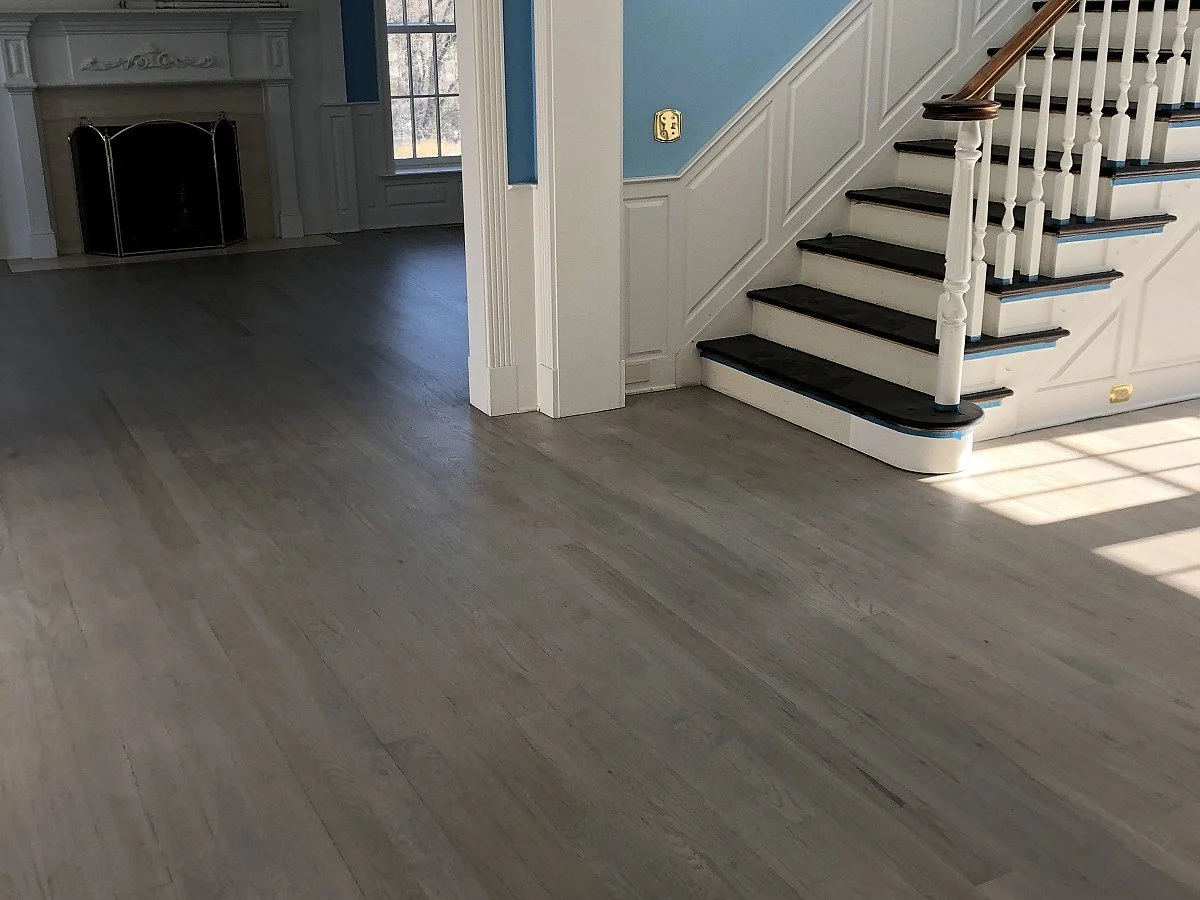
It’s True, hardwood floors + value to your bucks county home
Thinking about a new floor? Don't just think about style—think about your home's value. Our guide breaks down the true ROI of hardwood floors and why they're a smart investment.
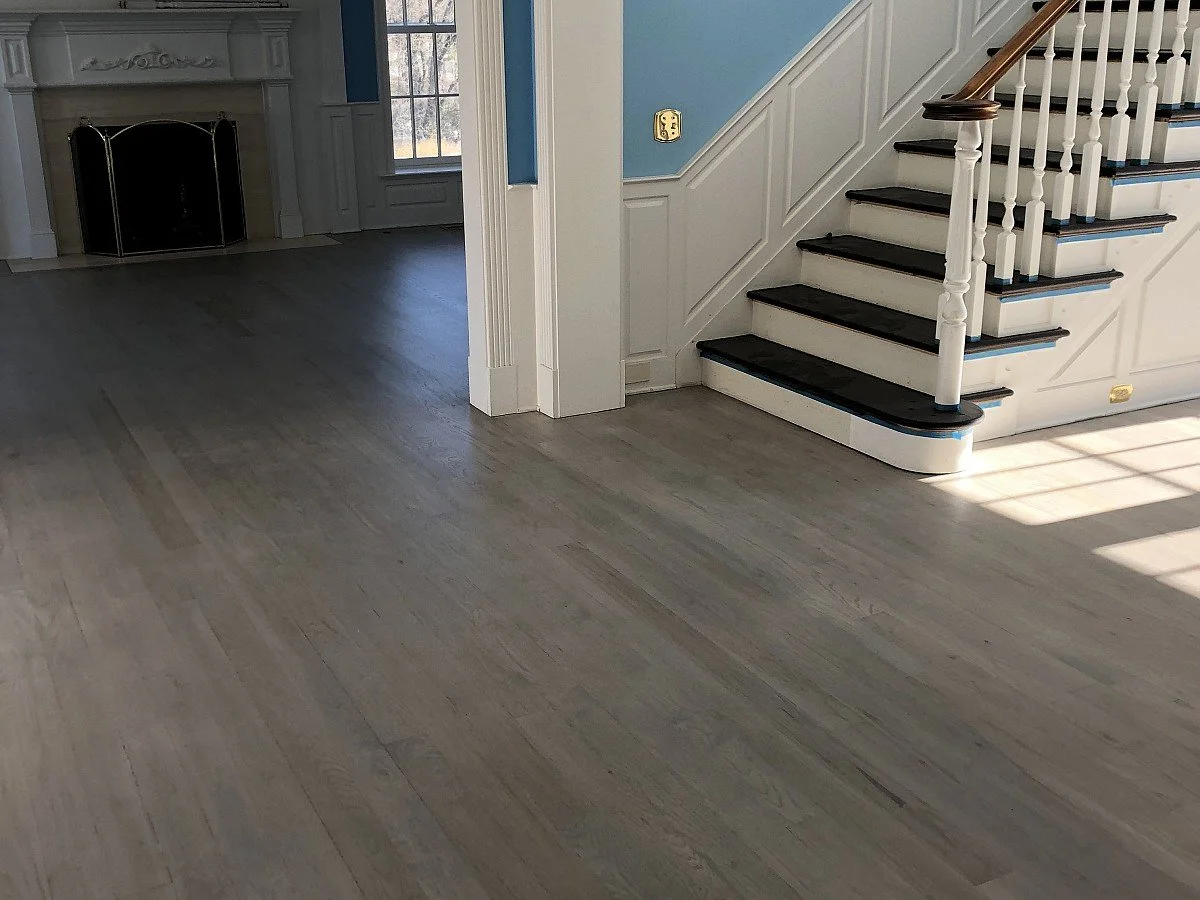
New Hope, PA
Why Hardwood Floors are a Bucks County Homeowner's Best Investment
In Bucks County, where historic charm meets suburban sophistication, hardwood floors are more than a design choice—they're a valuable asset. From the rolling hills of Doylestown to the riverfront charm of New Hope and the family-friendly streets of Newtown, local homebuyers prioritize quality and timeless style. Adding or restoring hardwood flooring is one of the most effective home improvements you can make to boost your property's value and appeal in this competitive market.
The Bucks County Numbers: A Strong Return on Investment
Let's look at the data. Bucks County's real estate market is robust, with a median sale price of $530,000, and homes selling quickly, often within 27 days. In this fast-paced environment, features that help a house stand out are critical.
Significant Value Increase: Studies consistently show that hardwood floors can increase a home's value by as much as 10%. In Bucks County, with its median home price, this could mean an extra $53,000 at closing.
High ROI: A typical hardwood floor installation project costs anywhere from $10,830 to $12,041 in areas like Doylestown. With an estimated return on investment (ROI) of 70-80%, you can expect to recoup a substantial portion of your initial outlay.
Faster Sales: According to local real estate agents, homes with hardwood floors sell faster because they appeal to a wider range of buyers who are looking for move-in-ready properties. This reduces your time on the market and can lead to multiple offers.
More Than Just Numbers: The Appeal of Hardwood in Bucks County
Beyond the financial gains, hardwood flooring resonates deeply with the Bucks County lifestyle. It's about combining classic elegance with modern practicality.
Timeless Aesthetic: Whether in a historic farmhouse in Solebury or a new build in Yardley, wood floors add a layer of authenticity and warmth. They are a versatile foundation that complements the traditional architecture of towns like Doylestown and the contemporary designs of homes in Langhorne and Richboro.
Durability & Longevity: Bucks County residents value things that are built to last. Hardwood floors, when properly cared for, can endure for decades. The ability to sand and refinish the floors multiple times means they can be restored to their original beauty, making them a generational asset.
Health and Cleanliness: For families in towns like Newtown and Chalfont, easy-to-clean surfaces are a major plus. Unlike carpet, hardwood doesn't trap dust, allergens, or pet dander, promoting a healthier indoor environment for everyone.
The "Bucks County Buyer": Buyers in this area are discerning. They are drawn to properties that reflect quality and care. The presence of well-maintained hardwood floors signals a home that has been loved and invested in, creating an immediate emotional connection that can make or break a sale.
Your Hardwood Floor Options
When considering this investment, you'll likely encounter a couple of options. Solid hardwood offers unparalleled longevity, while engineered hardwood is a great choice for areas with higher moisture, like basements and kitchens, as it's more resistant to warping. For a Bucks County home, a professional flooring installation will ensure the job is done right, maximizing both the aesthetic and financial return.
Hardwood floors are an investment in your home's future, a testament to its quality, and a feature that will pay dividends whether you're selling tomorrow or enjoying your space for years to come. In a market as dynamic and desirable as Bucks County, it's a strategic move that simply makes sense. Get in touch today for an estimate on the upgrade that will always pay you back!

Your Hardwood Floors are Crying: A Montco Homeowner’s Guide to Cleaning Smarter
Are you making common cleaning mistakes that are dulling your hardwood floors? Learn which products and methods to avoid to keep your Montgomery County, PA home's floors looking new.
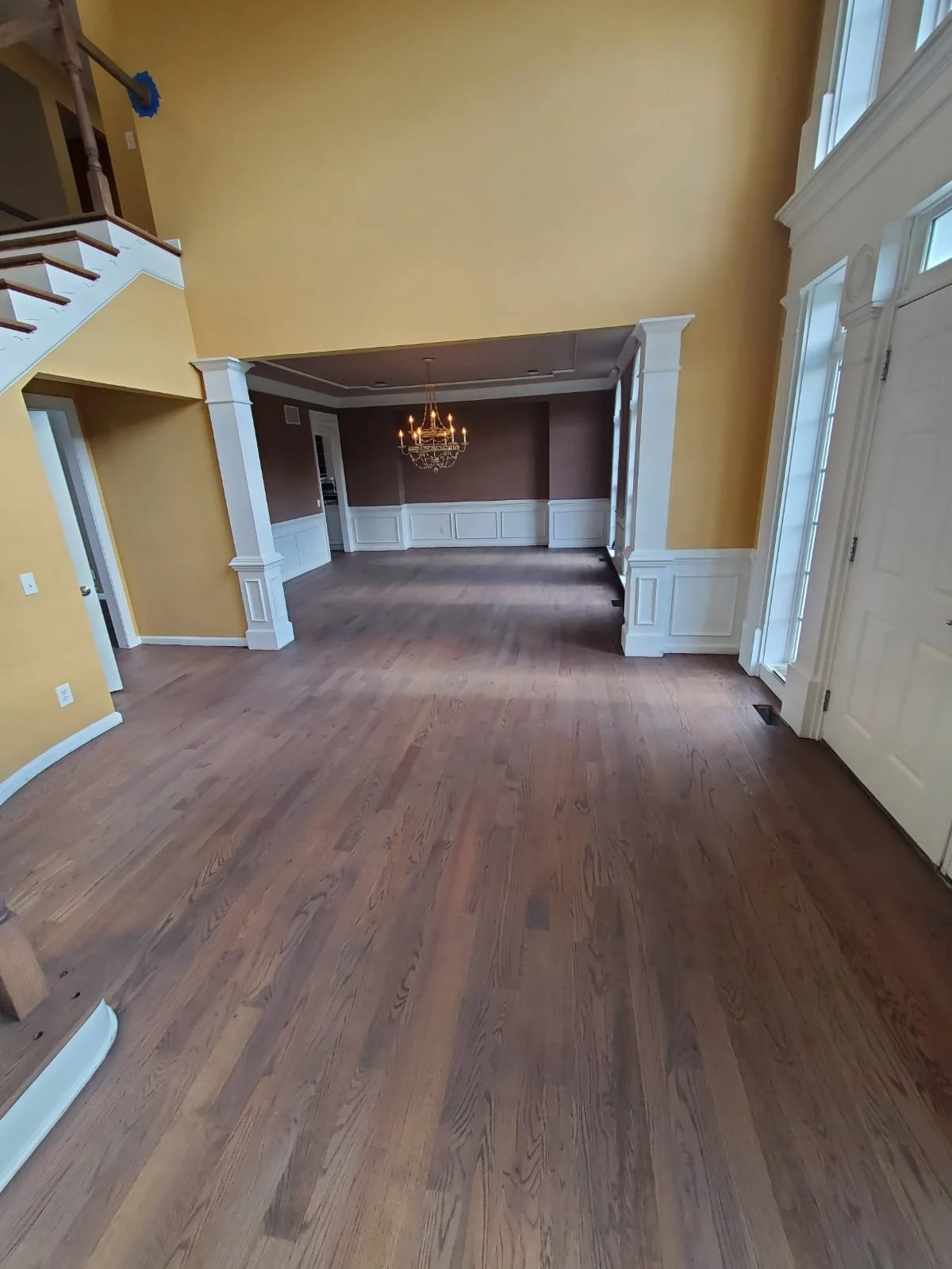
Blue Bell, PA
Hey, Montgomery County, PA! We know you love your homes. From the historic farmhouses in Lansdale to the stunning new builds in King of Prussia and Collegeville, your hardwood floors are a source of pride and a key part of your home's character. But let's be honest: are you cleaning them the right way after an installation?
We've seen it all, and the truth is, many of our customers in Montco are making a few common, well-intentioned mistakes that are slowly, but surely, damaging their beautiful real wood floors.
Here’s the deal: cleaning hardwood isn't like cleaning tile or vinyl. It's a delicate art, and the wrong approach can lead to dull finishes, water damage, and a shorter lifespan for your floors.
The Big 3 Hardwood Cleaning Sins in Montgomery County
The Soaking Wet Mop: You’re Drowning Your Floors!
We get it. A sparkling clean floor feels like a floor you can eat off of. But that bucket of soapy water? It’s a death sentence for your hardwood. Wood and excessive moisture are arch-enemies. That mop you're wringing out (or not) is pushing water into the tiny seams and cracks, causing the wood to swell, cup, and warp over time. In a place with varying humidity like Montgomery County, this is a recipe for disaster.
The Fix: Ditch the mop and bucket. Use a damp microfiber mop with a hardwood-specific cleaner. "Damp" is the key word here, not "wet." The mop head should feel barely moist to the touch.
The "All-Purpose" Cleaner: Don’t Use That on Your Wood!
Many household cleaners—including popular options with vinegar or ammonia—are too acidic or alkaline for a hardwood finish. They might work great on tile, but on wood, they can eat away at the polyurethane seal, leaving your floors looking dull, hazy, or sticky. We've seen homeowners in Plymouth Meeting and Blue Bell use these products, and the floors look good at first, but over time, they lose their luster and become vulnerable to scratches.
The Fix: Only use cleaning products specifically designed for hardwood floor cleaning. Brands like Bona or other pH-neutral, water-based cleaners are your best bet. A quick spot test in an inconspicuous area is a great idea before you commit.
The Wrong Vacuum Attachment: You’re Sanding Your Floors!
A vacuum is a fantastic tool for keeping dirt and grit off your floors, but if you're using the wrong attachment, you're doing more harm than good. Vacuums with a beater bar or stiff plastic bristles can cause micro-scratches that, over time, will dull your floor’s finish and make it look worn out.
The Fix: Always use a vacuum with a soft brush attachment or a "hard floor" setting that disables the beater bar. This will effectively pick up dust and debris without scratching the wood. Better yet, a high-quality microfiber dust mop is your first line of defense against the daily wear and tear that leads to scratching.
Pro-Tips for Sparkling Hardwood Floors
Sweep/Dust Mop Daily: A quick pass with a soft broom or microfiber dust mop in high-traffic areas like your kitchen in Oaks or living room in Ardmore will prevent the build-up of abrasive dirt and sand.
Wipe Spills Immediately: Don't let spills sit. Even a little water can cause a stain or penetrate the wood if left for too long.
Invest in Mats: A simple entryway mat at your door can trap most of the dirt and debris before it gets tracked onto your floors so you won’t have to refinish your hardwood floors as often.
Trim Pet Nails: This seems obvious, but a dog's long nails can leave deep scratches. Regular nail trims are a small effort for a big reward.
Your hardwood floors are a significant home investment. By avoiding these common mistakes and using the right techniques, you can ensure they remain a beautiful, durable asset for years to come. Floors not looking good even after a cleaning? Get in touch today for an estimate so we can bring them back to life!
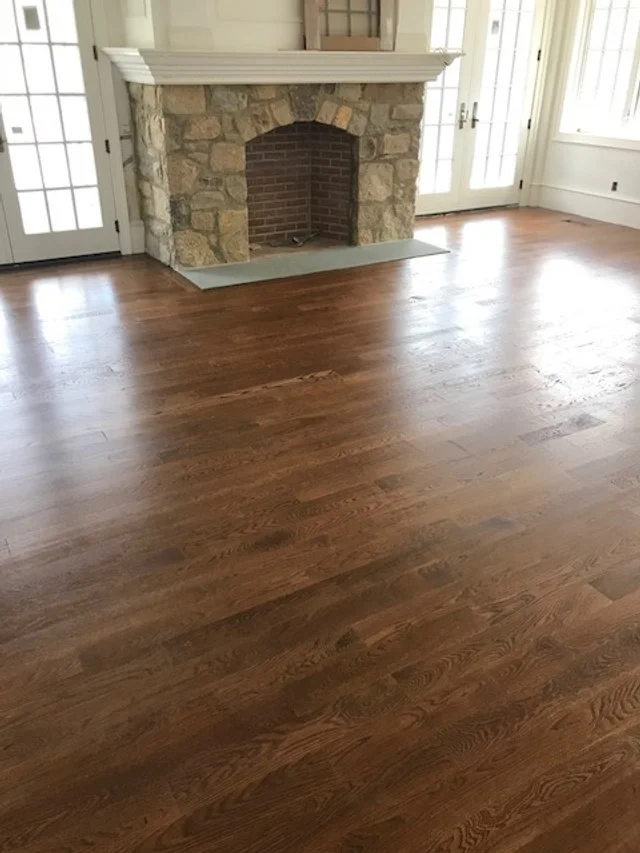
Wide Plank Hardwood Floor Installation: Why the Glue-Assist Method Is Non-Negotiable in PA
Pennsylvania's climate makes wide plank hardwood floors one of the most technically demanding installations in residential flooring. Here's why glue-assist isn't optional for 5"+ boards in Chester, Delaware, and Montgomery County homes — and what happens when installers skip it.
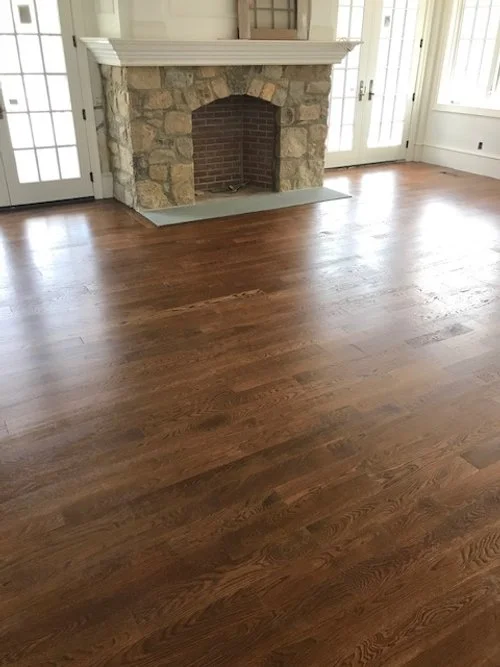
5” Handscraped Oak
If you are renovating a custom home in Villanova, installing a new build in Malvern, or upgrading a historic estate in Lower Merion, the wide plank hardwood look is a definitive choice for luxury.
However, the wider the board, the higher the risk of gapping, crowning, or cupping. A traditional nail-down installation, which works fine on standard 3" oak, is simply inadequate for 7"-10" planks in the climate extremes of the Philadelphia area.
“When installing wide-plank flooring (7 inches or wider) in the Main Line’s historic homes, the ‘Nail and Glue’ method isn’t just an option—it’s a structural necessity. Because PA experiences significant humidity swings between July and January, wide planks are prone to ‘cupping’ if only nailed. By using a full-spread moisture-rated adhesive like Bostik’s Best or SikaBond in tandem with cleats, we create a permanent bond to the subfloor. This dual-attachment setup minimizes seasonal movement and ensures those high-end wide planks stay flat for decades, regardless of the Main Line’s weather.”
This is a technical warning from a contractor who works on the Main Line every day. We explain why the glue-assist method is not a luxury—it’s a non-negotiable requirement for long-term success in your high-value home across Chester, Delaware, and Montgomery Counties.
The Wide Plank Problem: The Physics of Movement
Wood moves. It expands in the humid summer and contracts in the dry, furnace-heated winter. This is a fact of life in the Northeast.
1. The Ratio of Movement
A 10-inch wide plank has more than three times the potential for moisture-driven movement than a standard 3-inch board. When that movement happens, a nail every 8-12 inches is often not enough to restrain the board, leading to unsightly gapping and irreversible warping.
2. Subfloor Sensitivity
High-end Main Line homes often have complex subfloor conditions—concrete slabs, older plywood over masonry, or radiant heat systems. These environments are prone to higher localized moisture content (MC) fluctuations that conventional nailing cannot handle.
If your installer doesn't address these two factors, your expensive wide plank floor will fail, regardless of the species or quality of the wood.
The Only Solution: The Glue-Assist and Full Glue-Down Methods
To successfully install wide planks (typically 5 inches or wider), we combine mechanical fasteners (nails) with high-performance elastomeric adhesive (glue). This is the glue-assist method.
1. The Role of the Glue
The adhesive acts as a vapor barrier and a moisture inhibitor under the plank, providing a layer of protection from the subfloor's moisture content. Critically, it also provides shear strength and continuous restraint across the entire width of the board, stopping the cupping and crowning that nails alone cannot prevent.
2. Subfloor Prep: The Unsung Hero
For a glue-assist installation to work in a Wayne or Radnor basement or first-floor slab installation, the subfloor must be perfectly prepared. We follow a strict three-step protocol:
Flattening: The subfloor must be perfectly flat (usually within 1/8" over 10 feet). We use specialized leveling compounds to ensure the adhesive has 100% surface contact.
Moisture Content (MC) Testing: We never assume the subfloor is dry. We use a professional-grade meter to test the concrete or plywood MC, often requiring a concrete moisture mitigation system before we even open the box of wood.
Vapor Barrier: The adhesive we use (typically a high-quality urethane or moisture-cure product) must also function as a vapor barrier to protect the wood from residual moisture.
Wide Plank Use Cases on the Main Line
Our decades of experience on the Main Line dictate specific installation choices based on the unique properties of these multi-million dollar homes:
1. Custom Homes with Radiant Heat (e.g., Bryn Mawr, Villanova)
Requirement: Full Glue-Down Method. For any floor over a hydronic (water-based) radiant heat system, the full glue-down method is required. The adhesive bonds the wood directly to the subfloor, maximizing heat transfer and minimizing the movement that the constant temperature cycles induce. Nail-down only will fail.
2. Historic Stone Mansions (e.g., Malvern, Chester Springs)
Requirement:Glue-Assist on Structural Plywood. Older homes often have structural quirks and higher basement humidity. The full, continuous adhesion of the glue-assist method provides the security needed to hold these wide boards flat over older or less-than-perfect subfloors.
3. Concrete Slab Installations (High-Rise Philly & City Suburbs)
Requirement:Full Glue-Down with Vapor Barrier Adhesive. Concrete slabs are notorious for residual moisture. A full glue-down using an adhesive that specifically inhibits moisture is the only acceptable professional method to prevent the floor from failing from below.
Why Choose Cyclone for Your Main Line Wide Plank Floor
We are not generalists. We are technical experts specializing in the high-stakes installations demanded by the Philadelphia, Chester, Delaware, and Montgomery markets. We guarantee our work by following protocols that others skip:
Dedicated Tools: We invest in specialty wide-plank rollers, advanced MC meters, and premium adhesives—tools standard contractors don't carry.
Zero-Drama Schedule: We understand that high-end projects operate on tight timelines. Our precise prep work ensures we hit our installation start and finish dates, minimizing delays for other trades.
Installation Warranty: We back our wide plank glue-assist installations because we trust our process.
Don't risk your high-end investment on an installer who cuts corners with a simple nail-down technique. For the stability and longevity required on the Main Line, the glue-assist method is your insurance.
Frequently Asked Questions
What width hardwood floor requires the glue-assist method?
Generally any board 5 inches or wider benefits from glue-assist installation in the Philadelphia area climate. At 7 inches and above it's non-negotiable. The wider the board the more surface area is exposed to seasonal moisture movement — nails alone cannot restrain that movement across the full width of the plank.
Can wide plank floors be installed over radiant heat in Main Line homes?
Yes but only with full glue-down method using an adhesive specifically rated for radiant heat applications. Nail-down only over radiant heat will fail — the constant temperature cycling accelerates moisture movement in the wood and nails cannot provide the continuous restraint the floor needs. We specify the correct adhesive product based on your system type before any installation begins.
How do I know if my subfloor is ready for wide plank glue-assist installation?
Flatness and moisture content are the two gatekeepers. The subfloor needs to be within 3/16 inch over 10 feet for glue-assist — tighter tolerances than standard nail-down. Moisture content needs to be within the adhesive manufacturer's specified range. We test both before any product is ordered. If the subfloor isn't ready, we prepare it first. Installing over a non-compliant subfloor is how expensive wide plank floors fail.
Does glue-assist installation make future refinishing harder?
No. Glue-assist wide plank floors refinish exactly like nail-down floors. The adhesive is between the wood and subfloor — below the surface entirely. Sanding and refinishing the top surface is unaffected. The floor can be refinished multiple times over its lifetime regardless of the installation method used.
What adhesives do you use for wide plank installation on the Main Line?
Our standard products are Bostik's Best urethane adhesive and SikaBond T-55 depending on the subfloor type and conditions. Both are moisture-curing elastomeric adhesives that provide vapor barrier properties in addition to mechanical bond strength. We don't use commodity adhesives on high-value wide plank installations.
Call Cyclone Hardwood Floors LLC today for a free, detailed, and technically sound estimate.

Oil-Based vs. Water-Based Polyurethane for Hardwood Floors: A Contractor's Honest Breakdown
The oil vs. water-based polyurethane debate comes up on nearly every refinishing job we do on the Main Line. Here's the honest breakdown from a contractor who works in Bryn Mawr, Villanova, Gladwyne, and Malvern every week — including a real client story that settled it.
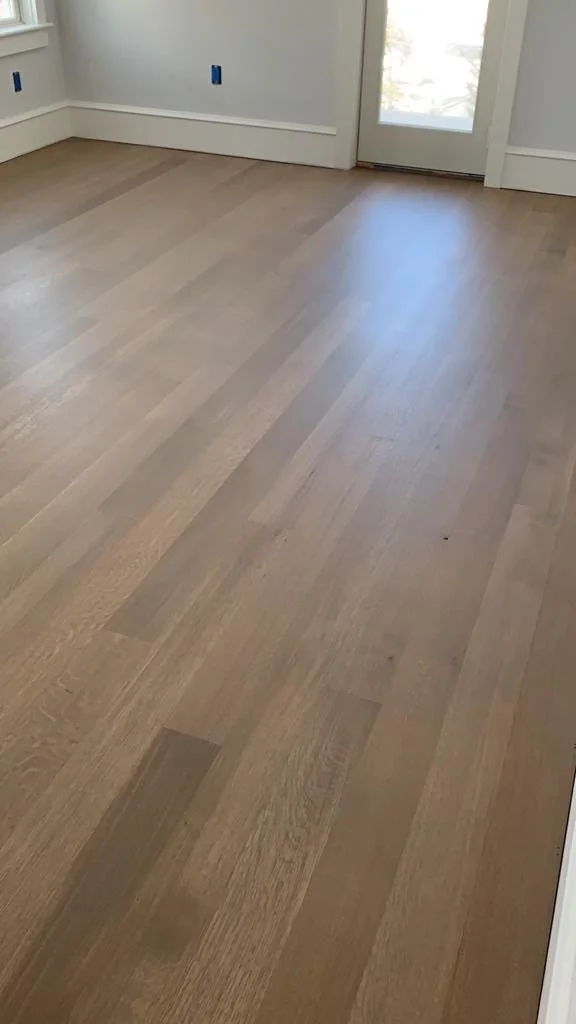
Bona Beauty in Bryn Mawr
When homeowners in Bryn Mawr, Villanova, Gladwyne, and across the Main Line are getting their hardwood floors refinished, the finish selection conversation comes up on every single job. Oil-based polyurethane or water-based? It's not a simple answer — and the right choice depends on your wood species, your household, your aesthetic goals, and how long you need to be out of the space. After 20 years of refinishing floors throughout Montgomery, Delaware, and Chester County, here's the honest breakdown.
The Classic Contender: Oil-Based Urethane
Oil-based polyurethane has been the traditional choice for hardwood floor finishing for decades, and for good reason.
Pros:
Exceptional Durability: Historically, oil-based finishes are known for their ruggedness. They create a very thick, hard, and protective layer that stands up well to heavy foot traffic.
Rich, Ambering Hue: Over time, oil-based finishes develop a warm, amber glow that deepens the natural color of the wood. Many homeowners love this classic, aged look, especially on traditional species like oak hardwood flooring.
Cost-Effective: Often, oil-based polyurethanes are more budget-friendly per gallon than their water-based counterparts.
Cons:
Longer Drying Times: Each coat of oil-based poly can take 8-12 hours (or more) to dry, significantly extending the project timeline.
Strong Fumes: The high VOC (Volatile Organic Compounds) content means strong, lingering odors during and after application, requiring good ventilation and temporary relocation for some.
Ambering (Aesthetic Preference): While a "pro" for some, others prefer a finish that doesn't change the wood's natural color.
The Modern Marvel: Water-Based Urethane
Water-based polyurethane has gained immense popularity, particularly for those seeking a quicker, cleaner, and more contemporary finish.
Pros:
Faster Drying Times: You can often apply multiple coats in a single day, drastically reducing project duration.
Low VOCs, Low Odor: Minimal fumes make it a much more pleasant experience for homeowners and pets, allowing for a quicker return to the space.
Clear, Non-Yellowing Finish: Water-based poly dries clear and stays clear, preserving the natural color of the wood. This is ideal for lighter wood species like maple or ash, or for achieving a modern, Scandinavian aesthetic.
Eco-Friendly Options: Many water-based products are formulated with lower environmental impact.
Cons:
Perceived Durability (Historically): Older formulations were less durable, leading to a lingering misconception. However, modern, high-quality water-based products, like the one in our story, have exceptional wear resistance.
Higher Cost: Generally, water-based urethanes are more expensive per gallon.
A Bryn Mawr Dog Lover's Dilemma: Finding the Perfect Finish
We recently had a wonderful customer in Bryn Mawr, a charming historic home brimming with character – and no less than three energetic dogs! She was set on a hardwood floor refinishing project, but when it came to the finish, she was adamant about water-based urethane. Her primary concerns were the strong fumes of oil-based poly (for her beloved canine companions) and preserving the light, airy feel of her home without the ambering effect.
Given the heavy paw traffic expected, our initial recommendation for ultimate durability would typically lean towards an oil-based system. We expressed our concerns about potential wear with a standard water-based product under such rigorous conditions. It was a classic "durability vs. desired aesthetic/health" debate.
The Compromise & Triumph: Bona Traffic HD
After a thorough discussion, we found the perfect compromise: Bona Traffic HD. This premium, two-component commercial-grade water-based urethane is specifically engineered for extreme durability and heavy traffic – think airport terminals and bustling restaurants, not just residential homes! It offered:
Unmatched Scratch & Scuff Resistance: Crucial for three playful dogs.
Low VOCs & Fast Drying: Allowing her dogs to return home much sooner.
Crystal Clear Finish: Maintaining her home's bright, modern aesthetic.
The result? Our client was thrilled. Her Bryn Mawr hardwood floors not only look stunning, maintaining their beautiful, natural tone, but they are also holding up phenomenally against daily dog-induced chaos. It was a testament to how finding the right product, even within a specific category, can meet unique homeowner needs.
Elevating Main Line Homes with the Right Expertise
Frequently Asked Questions
Which lasts longer — oil-based or water-based polyurethane?
Modern commercial-grade water-based products like Bona Traffic HD match or exceed oil-based durability in real-world residential conditions. The old reputation of water-based as the weaker option was earned by early formulations from the 1990s. A two-component water-based finish applied correctly today outperforms a standard oil-based product in scratch resistance and longevity. Single-component water-based products are a different story — durability varies significantly by brand and formulation.
How long do I need to be out of my house with oil-based polyurethane?
Plan for 24 hours minimum between coats with oil-based, and 48 to 72 hours after the final coat before light foot traffic. Full cure takes up to 30 days. For households with pets, young children, or pregnant family members, the VOC off-gassing during application and initial cure is a serious consideration — water-based finishes are significantly lower in VOC content and allow faster, safer re-entry.
Does water-based polyurethane change the color of hardwood floors?
Water-based finishes dry clear and stay clear — they will not amber over time. Oil-based finishes add a warm, golden tone that deepens over years. On red oak this ambering is often desirable and enhances the traditional character of the wood. On white oak, maple, or ash where a natural or gray tone is the goal, oil-based finish will fight the aesthetic — water-based is the correct choice.
Is Bona Traffic HD worth the extra cost?
For high-traffic households — dogs, kids, heavy use, commercial applications — yes. It's a two-component finish that cross-links during cure, creating a harder surface film than standard single-component water-based products. The price difference per gallon is real but the performance gap is significant. For a lightly used formal living room, a standard water-based product is fine. For the kitchen, hallway, and main living areas in an active household, Traffic HD is worth every dollar.
Can I switch from oil-based to water-based finish when I refinish?
Yes — full sanding back to bare wood removes the previous finish entirely regardless of type, and you start fresh with whatever product you choose. A screen and recoat — where only the surface is abraded without full sanding — is different. Going from oil-based to water-based on a screen and recoat risks adhesion failure because water-based products don't bond reliably over oil-based residue. Full refinishing has no such restriction.
Whether your home is a classic colonial in Villanova or a contemporary masterpiece in Malvern, understanding your hardwood floor finish options is crucial for its longevity and beauty. Our expertise in hardwood floor installation, refinishing, and maintenance across the Main Line ensures that your floors receive the tailored treatment they deserve.
Don't guess when it comes to your valuable wood flooring. Consult with a professional to discuss your lifestyle, aesthetic goals, and budget. We're here to help you choose the ideal urethane finish that will protect your investment and keep your Main Line hardwood floors looking impeccable for decades. Get in touch today for a no-obligation estimate!