
Why Refinishing Prefinished Hardwood Floors Is a Different Job — And a Harder One
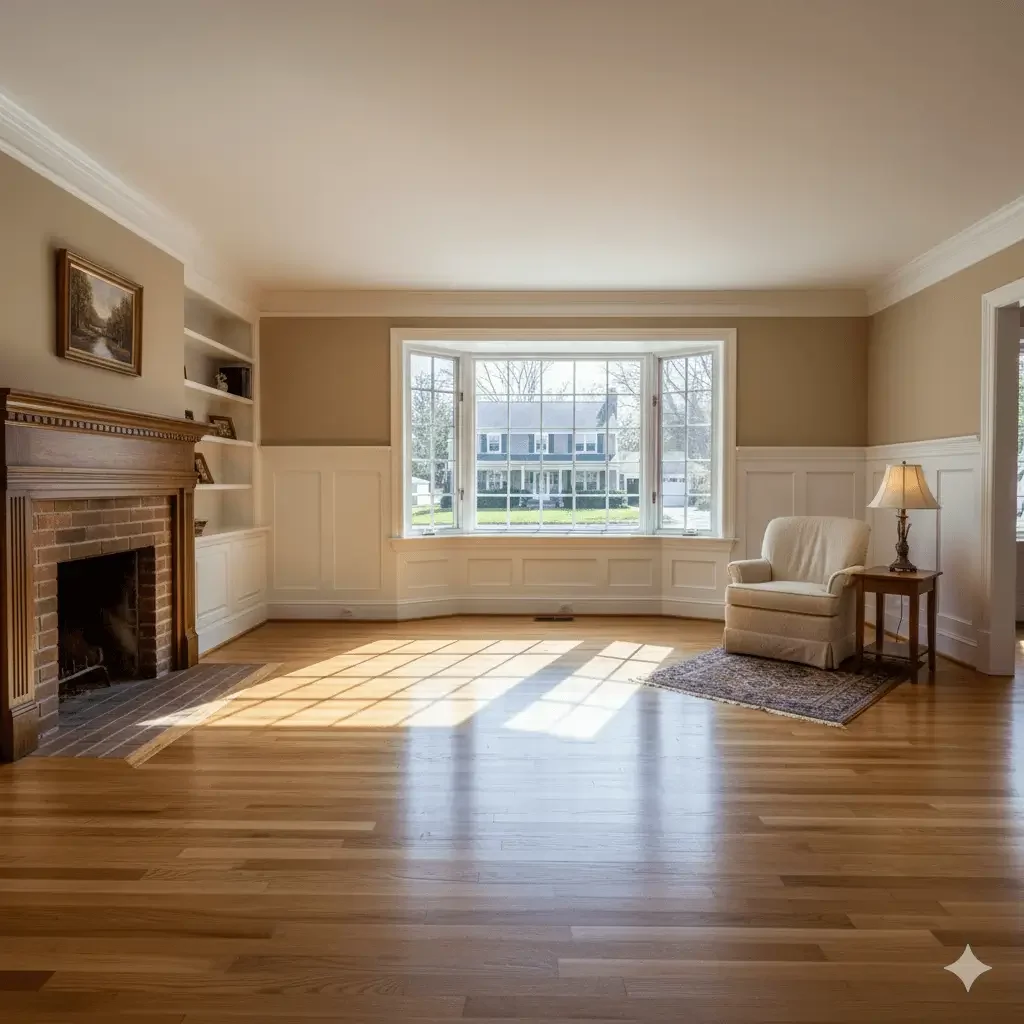
There's a Bruce floor in half the colonials we walk into throughout Bucks County and Montgomery County. Shaw, Armstrong, Hartco — same category, different label. Prefinished 3/4 inch red oak strip, installed sometime between 1995 and 2010, and now looking exactly like what it is — a floor that was beautiful when it went in and has been quietly aging ever since.
The homeowner calls us expecting a standard refinishing job. Sand it down, stain it, put some coats on it. Same as any other floor.
It's not the same as any other floor. Not even close. Here's why prefinished hardwood refinishing is harder, more labor intensive, and requires a different approach from the ground up — and what happens when contractors who don't know this difference put a standard sander on a prefinished floor.
What's Actually On That Floor
A site-finished floor — original hardwood that was sanded and finished after installation — typically has 3 coats of polyurethane applied in sequence. Each coat is thin. The total film build is manageable. A standard sanding sequence cuts through it cleanly and gets back to bare wood without drama.
A prefinished floor from Bruce, Shaw, or any of the major manufacturers has a completely different finish stack. The industry standard for prefinished hardwood during the peak installation years is 7 coats of urethane — sometimes more — with 3 to 4 of those coats containing aluminum oxide. The total finish film build is significantly thicker than a site finish and significantly harder.
Aluminum oxide as we've covered before is a hard mineral abrasive compound added to factory finish to increase surface hardness and scratch resistance. It's effective at what it does — making the finish surface harder to scratch. The problem when it comes time to refinish is that it's also harder to sand. The same property that resists a dog's nail resists a sanding belt. Standard sanding equipment and standard grit sequences that cut through a site finish efficiently load up, glaze over, and burn through belts on an aluminum oxide prefinished floor. Here's the full breakdown on what aluminum oxide finish actually does and what it doesn't — why prefinished floors are scratch resistant but not scratch proof.
The Beveled Edge Problem
This is the detail that separates contractors who have refinished prefinished floors from those who haven't.
Almost every prefinished hardwood floor has a micro-bevel or full bevel machined into the top edges of each board at the factory. It's a slight chamfer — an angled or rounded edge — that creates a subtle V-groove where two boards meet. The manufacturer puts it there deliberately to disguise the minor height variation between adjacent boards that's inherent in factory production. It also adds a visual detail that distinguishes prefinished from site-finished floors.
When you sand a prefinished floor with beveled edges you have two options and neither is perfect. You can sand lightly — a screen and recoat approach — that cleans the flat face of each board without fully removing the bevels. The result is a refreshed surface with the V-grooves still visible between boards. The floor looks better than before but doesn't look like a freshly refinished site-finished floor. The grooves remain and they collect debris and look darker than the field of the floor.
Or you can sand aggressively enough to remove the bevels entirely — flattening the floor to a continuous surface. This requires significant material removal. On a floor that's already been refinished once or has a thinner wear layer from age and use, removing the bevels may not be feasible without going dangerously close to the tongue. And the sanding required to get there is heavy — multiple passes, multiple belt changes, more time, more cost.
Most homeowners don't know the bevels exist until we're standing in their living room explaining why the floor isn't going to look like a new site-finished installation when we're done.
What Happens When Contractors Skip This Conversation
We've been called in behind other contractors who put a standard drum sander on a prefinished Bruce floor without understanding what they were dealing with. The outcomes are consistent and unpleasant.
Glazed belts that overheat and leave burn marks on the floor surface. Uneven sanding because the aluminum oxide finish resisted the sanding in some zones and not others, leaving a floor that's flat in the traffic lanes and still wearing the original factory finish near the walls. Beveled edges partially sanded that now look worse than if they'd been left alone — half the bevel removed, creating an irregular shadow line between boards that looks like a mistake.
The homeowner paid for a refinish and got a floor that looks like a botched attempt at one. In some cases the floor needs to be fully sanded again to correct what the first contractor did wrong — removing more wear layer than the job should have consumed, potentially shortening the refinishable life of the floor by a full cycle.
The Correct Approach for Prefinished Floors
A prefinished floor requires a modified approach from the first pass to the last coat.
Assessment before anything. We check the wear layer thickness, the bevel depth, the finish condition, and whether the floor has been previously refinished. A prefinished floor that has already been through one refinishing cycle may have limited material remaining. We measure before we quote and tell you honestly what the floor can support. Here's the full breakdown on engineered vs solid hardwood for Pennsylvania homes and what wear layer thickness means for refinishing potential.
Screening versus full sanding. For prefinished floors in reasonable condition — surface scratching, dullness, minor wear — a screen and recoat is often the right first move. It doesn't remove the bevels, it doesn't consume wear layer, and it restores the finish surface at a fraction of the cost of full refinishing. The result is a floor that looks significantly better without the risks of aggressive sanding on a floor that wasn't designed with refinishing ease in mind.
When full sanding is necessary — significant staining, color change desired, finish that has failed and can't be screen coated over — the approach starts with coarser grit than a standard site finish job to cut through the aluminum oxide layer efficiently. Belt changes happen more frequently. The edger work around the perimeter requires specific attention to the bevel situation. More time, more labor, more belts consumed. All of that is cost that a contractor who quotes prefinished refinishing the same as site-finished refinishing either hasn't thought through or is going to discover on the job at your expense.
Finish adhesion preparation. After sanding prefinished hardwood the surface requires specific preparation before new finish will bond correctly. Factory finish residue — particularly from aluminum oxide enhanced coats — can interfere with adhesion if the surface isn't properly cleaned and prepared. We use appropriate prep products on every prefinished refinishing job. A finish that peels or wears unevenly within a year is almost always an adhesion failure that comes from skipping this step. Here's how oil-based and water-based finish affects hardwood floors and why finish selection matters after prefinished refinishing.
The Cost Reality
Refinishing a prefinished floor costs more than refinishing original hardwood of comparable square footage. Not dramatically more in every case — but more. The additional belt consumption, the additional labor time for the modified sanding approach, the prep work for adhesion — all of it adds up. A contractor who quotes prefinished refinishing at the same rate as original hardwood either doesn't know the difference or is going to find a way to cut corners on the job.
When we quote a prefinished refinishing job we explain exactly what the additional cost covers and why. Homeowners who understand what's involved almost always agree that the extra cost is justified. The ones who don't find out the hard way when they hire the cheapest bid and get a floor that looks worse than when they started.
The Screen and Recoat Option for Prefinished Floors
For a significant percentage of the prefinished floors we assess throughout Bucks County, Montgomery County, and Chester County, a screen and recoat is genuinely the right answer — not a lesser option but the correct one given what the floor is and what it can support.
It preserves wear layer. It avoids the bevel situation. It restores surface appearance at lower cost. And for a floor that doesn't need a color change and isn't severely damaged, the result is a floor that looks dramatically better than before without the risks of full sanding on a floor that wasn't designed for easy refinishing.
We tell homeowners this when it's true. We don't sell a full refinish on a floor that a screen and recoat will serve correctly. That's the conversation your previous flooring contractor may not have had with you — and the one we have before any work is scheduled. Here's the full breakdown on how long hardwood floor refinishing lasts and when a screen and recoat is the right call versus full refinishing.
Frequently Asked Questions
Can Bruce hardwood floors be refinished?
Yes — but the process is different and more involved than refinishing original site-finished hardwood. The aluminum oxide factory finish requires modified sanding technique, more aggressive grit sequences, more frequent belt changes, and specific adhesion preparation before new finish is applied. The beveled edges between boards need to be assessed and a decision made about whether to preserve or remove them before sanding begins. We assess every prefinished floor individually before quoting.
How many times can a prefinished hardwood floor be refinished?
Depends on wear layer thickness and how aggressively the floor was sanded in previous refinishing cycles. A standard 3/4 inch prefinished solid hardwood floor has comparable wear layer to site-finished solid and can typically be refinished 3 to 4 times if each refinishing is done correctly and conservatively. Prefinished engineered products have significantly less refinishing potential depending on wear layer thickness — some can be refinished once, some cannot be safely refinished at all.
Why does my prefinished floor have lines between the boards that won't sand out?
Those are the factory-machined bevels — a deliberate feature of most prefinished hardwood products. They don't sand out with a light screen and recoat. Removing them requires full sanding to a depth that eliminates the chamfered edge — which consumes significant wear layer. Whether removing the bevels is feasible depends on how much material is left above the tongue. We assess this before quoting.
Is it worth refinishing a prefinished floor or should I replace it?
Depends on the floor's condition, age, and remaining wear layer. A prefinished floor in structurally sound condition with adequate wear layer remaining is almost always worth refinishing rather than replacing — the cost difference is significant and the result is comparable. A floor that's been refinished before and is getting thin, or one with structural damage or severe staining throughout, may be a replacement candidate. We give you an honest assessment before any commitment is made.
How much does refinishing a prefinished hardwood floor cost in Bucks County and Montgomery County?
Most prefinished refinishing jobs in our market run $3.50 to $5.50 per square foot — slightly higher than standard site-finished refinishing to account for the additional labor, belt consumption, and prep work involved. Screen and recoat on a prefinished floor runs $1.50 to $2.50 per square foot and is the right call in many situations. Free written estimates with line items before any work begins.
Cyclone Hardwood Floors LLC has served Bucks County, Montgomery County, Chester County, Delaware County, and Philadelphia for over 20 years. We refinish both prefinished and site-finished hardwood floors throughout the Philadelphia metro. Serving Doylestown, Newtown, New Hope, Blue Bell, Fort Washington, Lansdale, Bryn Mawr, Villanova, West Chester, Paoli, Phoenixville, Havertown, King of Prussia, Warrington, Elkins Park, Jenkintown, Yardley, and surrounding communities. Contact Us Here or Call or text (484) 253-5348.
