
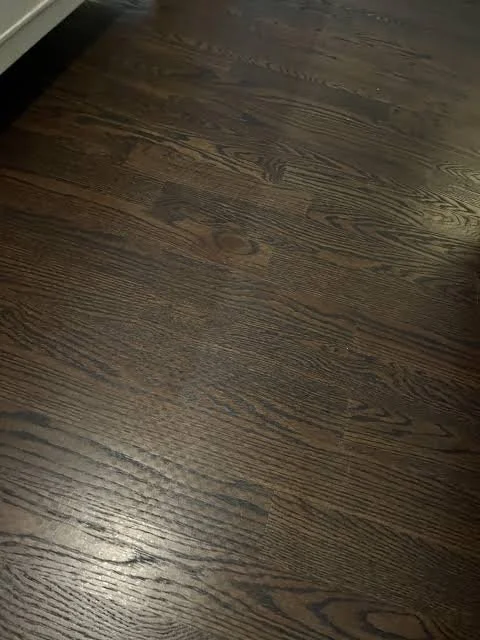
Pull up an area rug that's been sitting on a hardwood floor for two or three years and what's underneath tells you everything about what kind of rug pad was under it. A good rug pad leaves the floor exactly as it was — finish intact, color consistent, surface undamaged. A bad one leaves a ghost — a discolored rectangle the exact shape of the rug that in some cases has penetrated below the finish layer into the wood itself.
We see this constantly throughout Bucks County, Montgomery County, and Chester County. Homeowners who took good care of their floors in every other way — correct cleaning products, dust mopping regularly, furniture pads on every leg — undone by a $15 rubber-backed rug pad from a big box store sitting under a 9x12 for three years.
Here's the complete guide to what goes under an area rug on hardwood and what never should.
Why the Wrong Rug Pad Damages Hardwood
There are two distinct mechanisms by which rug pads damage hardwood floors and understanding both helps you make the right choice.
Moisture trapping. A non-breathable rug pad — solid rubber, PVC, or any material that doesn't allow air movement — creates a sealed environment between the rug and the floor surface. Humidity from the air above and moisture from foot traffic and cleaning accumulate under the pad with nowhere to go. Over weeks and months that trapped moisture works on the finish and the wood beneath it. The finish clouds, softens, and separates from the wood surface. In worse cases the wood itself discolors — darker than the surrounding floor from prolonged moisture exposure. Pull the rug up and the damage is permanent. Here's the complete guide to hardwood floor cleaning and maintenance mistakes that accelerate floor damage.
Chemical reaction. Natural rubber, synthetic rubber, and many PVC formulations contain plasticizers and chemical compounds that react with polyurethane finish over time. The reaction doesn't happen overnight — it builds over months of contact. The result is a sticky residue on the finish surface, discoloration that follows the exact pattern of the rug pad's texture, and in severe cases finish that has bonded chemically to the pad and lifts off the floor when the rug is moved. We've seen floors in Doylestown and Lansdale where the rug pad texture was literally transferred into the finish surface — every grid mark, every pattern in the rubber, permanently imprinted.
These two mechanisms operate independently and simultaneously. A solid rubber pad traps moisture AND reacts chemically with the finish. That's why rubber-backed rugs and solid rubber rug pads are the most consistently damaging product category in residential hardwood floor care.
What Never Goes Under a Rug on Hardwood
Before the recommended products here's the definitive list of what never contacts hardwood floors under a rug.
Solid rubber rug pads. The most common offender. Sold everywhere, inexpensive, marketed as non-slip. The non-slip claim is accurate. The floor damage claim is never on the packaging but it's the consistent result. Any rug pad that is solid rubber throughout — not rubber backing on a breathable fabric but a solid rubber sheet — does not go on hardwood.
Rubber-backed rugs. This is different from a separate rug pad — it's a rug with rubber or latex coating applied directly to the back. Walk into any home goods store and half the area rugs have it. It does the same chemical damage as a solid rubber pad with the added problem that homeowners don't realize the rug itself is the issue. If a rug has any rubber, latex, or vinyl coating on the backing it does not go directly on hardwood without a proper breathable pad between it and the floor.
PVC and vinyl pads. Marketed as waterproof and durable. Both true. Also chemically reactive with polyurethane finish over time. Not appropriate for hardwood floors.
Felt pads with rubber backing. This one confuses people because felt-only pads are the correct recommendation. A felt pad with a rubber backing layer added for grip combines a safe material with an unsafe one. The rubber backing contacts the floor. Same problem as solid rubber.
Leaving any pad in place without lifting it. Even the correct pad needs to be lifted and the floor beneath it dried periodically — monthly in high humidity months, every 6 to 8 weeks otherwise. Moisture accumulates under any pad given enough time regardless of breathability. Lifting it regularly allows the floor to dry completely.
What Actually Works — The Right Rug Pad Materials
Felt rug pads — the gold standard. Dense felt — typically recycled synthetic fiber — is the most consistently recommended material for hardwood floors. It's breathable, it doesn't react chemically with polyurethane finish, it provides cushioning that protects the floor from furniture legs through the rug, and it adds sound absorption. The felt needs to be dense enough to provide grip — thin felt slides. Look for felt pads at least 1/4 inch thick from a manufacturer that specifically states safe for hardwood floors and no chemical additives.
Our specific recommendation throughout our service area: Mohawk Home Dual Surface Felt and Rubber Rug Pad — but only the version where the rubber dots are small grip points on the top surface contacting the rug, not a continuous rubber layer contacting the floor. The felt contacts the hardwood. The rubber grip dots face up. Read the product description carefully before purchasing.
Natural fiber pads. Jute, wool, and cotton rug pads are breathable and chemically inert relative to hardwood finish. They don't provide the same grip as felt but they don't damage floors. For lightweight decorative rugs in low-traffic areas natural fiber pads are a clean option.
Felt and grip combination pads — the right kind. Several manufacturers make pads with a dense felt base and a waffle or grid texture on the top surface for grip against the rug. The felt contacts the floor, the textured surface grips the rug from underneath. This is the correct construction. Brands like Rugpadusa and Gorilla Grip Original Felt and Rubber make versions of this correctly — felt down, grip texture up. Confirm the construction before purchasing.
The Pine Floor Exception
If your floors are pine — common in older Bucks County farmhouses, New Hope and Washington Crossing colonials, and Victorian-era properties throughout Chester County — the rug pad conversation becomes even more critical. Pine is softer and more porous than oak. Moisture penetrates faster, chemical reactions produce more visible results, and the damage threshold is lower.
For pine floors we recommend felt-only pads with no rubber component whatsoever and more frequent lifting and drying — every 4 to 6 weeks during humid months. A rubber-backed rug that might produce minor discoloration on an oak floor after two years can produce significant damage on a pine floor in six months. Here's the full breakdown on pine hardwood floor care and why moisture is their number one enemy.
Size and Placement
The rug pad should be cut approximately 1 inch smaller than the rug on all sides. A pad that extends to the edge of the rug or beyond it creates an edge that curls, catches, and creates a trip hazard. More importantly a pad flush with the rug edge means any moisture that wicks under the rug edge contacts the pad immediately — a pad set back 1 inch on all sides allows the rug edge to dry before moisture reaches the pad.
In dining rooms where chairs are constantly being pulled in and out the rug and pad take significant lateral force. Use a denser felt pad in these applications — thin felt pads migrate under repeated chair movement and bunch up under the rug, creating uneven pressure points on the floor surface. A pad that moves is a pad that's not protecting correctly.
What to Do If You've Already Had the Wrong Pad
Pull the rug up and look at the floor. If the floor beneath the rug matches the surrounding floor in color and sheen you got lucky or haven't had the rug down long enough for damage to accumulate. Replace the pad with felt and continue.
If the floor beneath the rug is discolored — darker, lighter, or showing the texture of the pad in the finish surface — the damage has started. Light finish discoloration that hasn't penetrated the wood may respond to a professional cleaning and screen and recoat. Deeper discoloration in the wood itself requires assessment for refinishing. Finish that has chemically bonded to a rubber pad and lifted from the floor requires full refinishing of the affected area. Here's how long hardwood floor refinishing lasts and when a screen and recoat is the right call for finish damage.
Call us before you do anything. We'll look at it and tell you honestly what the damage level is and what the options are. In some cases what looks severe is manageable. In others what looks minor has gone deeper than it appears. We've seen both throughout the Philadelphia metro and we know the difference. Moisture damage from rug pads follows the same pattern as moisture damage from wet mopping and improper cleaning — here's why kitchen hardwood floors are the most vulnerable room in the house.
Frequently Asked Questions
Can rubber rug pads damage hardwood floors?
Yes — consistently and over time. Solid rubber and rubber-backed pads trap moisture against the hardwood finish and react chemically with polyurethane, causing discoloration, finish softening, and in some cases permanent damage to the wood surface. The damage accumulates over months and isn't visible until the rug is moved. Felt rug pads are the correct alternative for hardwood floors.
What is the best rug pad for hardwood floors?
Dense felt — at least 1/4 inch thick — that specifically states safe for hardwood floors and contains no rubber backing layer contacting the floor surface. Mohawk Home and Rugpadusa both make products that meet this spec. Confirm the construction before purchasing — felt side down, any grip texture facing up toward the rug.
How often should I lift my area rug to check the floor underneath?
Every 4 to 6 weeks during summer humidity season, every 6 to 8 weeks otherwise. Lift the rug and pad, allow the floor to dry completely with airflow for several hours, inspect the floor surface, and replace when dry. This is particularly important for pine floors and any room with above-average humidity.
My floor is discolored where a rug pad sat for years. Can it be fixed?
Depends on how deep the damage goes. Surface discoloration in the finish layer may respond to professional cleaning and a screen and recoat. Discoloration that has penetrated into the wood fiber requires refinishing of the affected area. Chemical damage from rubber pads that has lifted finish requires full refinishing. We assess before quoting — call us with a photo and we can usually give you a preliminary answer before scheduling a site visit.
Are rug pads safe for engineered hardwood floors?
Same rules apply. Felt pads safe for hardwood floors are appropriate for engineered hardwood. Rubber and PVC pads carry the same chemical and moisture risks on engineered products as on solid hardwood — sometimes more so because engineered wear layers are thinner and less tolerant of repeated moisture exposure.
Cyclone Hardwood Floors LLC has served Bucks County, Montgomery County, Chester County, Delaware County, and Philadelphia for over 20 years. We install and refinish hardwood floors throughout the Philadelphia metro. Serving Doylestown, Newtown, New Hope, Blue Bell, Fort Washington, Lansdale, Bryn Mawr, Villanova, West Chester, Paoli, Phoenixville, Havertown, King of Prussia, Warrington, Elkins Park, Jenkintown, Yardley, and surrounding communities. Contact Us Here or Call or text (484) 253-5348.
