

Red Oak vs. White Oak: Stability, Finish, and Longevity in Bucks, Montco, Chester & Delco
Stop blaming the humidity for gapping or cupping floors in your Bucks, Montco, or Delco home. The issue is usually the wood choice. We break down the crucial stability differences between Red and White Oak—and why one is the only safe choice for PA's extreme climate swings.

Red Oak vs White Oak Hardwood Flooring
If you're installing new hardwood or replacing existing floors in the Philadelphia Metro area—from a historic home in Doylestown to a modern remodel in Lower Gwynedd, or a colonial in Media, Delaware County—you will inevitably face one choice: Red Oak or White Oak.
The differences are far more than cosmetic. These two classic American species perform completely differently under the seasonal stress of a PA home. One is harder, one is more stable, and one handles the local humidity better than the other.
This is the straight-talking breakdown you need from a contractor who works with both species every single day across Bucks, Montgomery, Chester, and Delaware Counties.
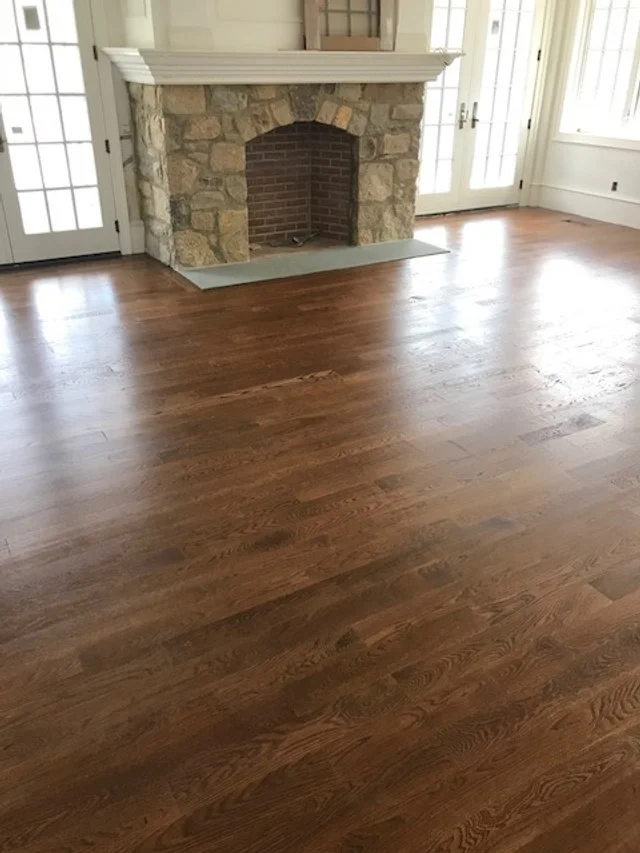
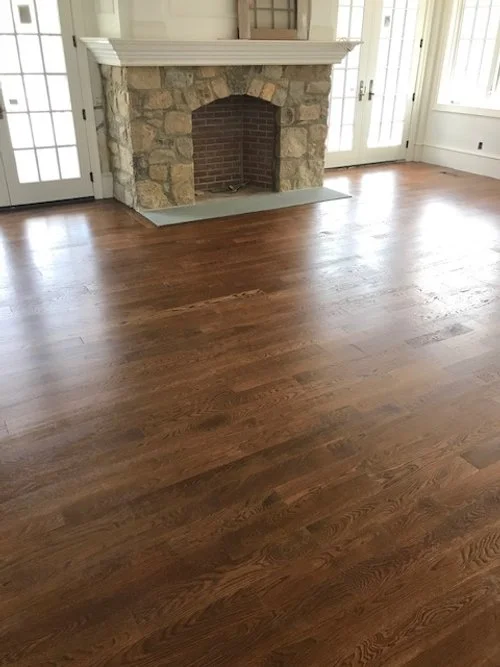
Red Oak we stained w/ medium brown stain
The Most Important Difference: Stability and Moisture Resistance
When a homeowner chooses wood, they usually look at the Janka hardness test, which measures dent resistance. While White Oak (approx. 1360) is slightly harder than Red Oak (approx. 1290), both are plenty hard enough for residential use.
The real performance metric in our region is stability. How does the wood react to the huge swings in temperature and humidity common in PA?
White Oak: The Champion of Stability
White Oak's cellular structure is the key to its superior stability: it is closed-cell. The pores of the wood are naturally plugged with tyloses, acting like tiny internal barriers.
What this means for a Delaware County home:
Superior Water Resistance: White Oak is highly resistant to water penetration. This is why it’s historically used for boat building, whiskey barrels, and exterior siding. For kitchens, laundry rooms, or first-floor installations in a humid Chester County summer, White Oak is the safer choice.
Dimensional Stability: The closed cells make White Oak more resistant to expansion and contraction. This is crucial for managing the dry, furnace-heated winter months where Red Oak might show excessive gapping.
Red Oak: The Workhorse with Open Pores
Red Oak has an open-cell grain structure. The pores are open and act like microscopic straws, which means they easily absorb moisture from the air and from spills.
What this means for your PA home:
Moisture Susceptibility: Red Oak is faster to absorb airborne moisture and standing water. If a humidity control system fails or if a leak occurs, Red Oak will swell, cup, or crown faster than White Oak.
Historic Match: Despite the moisture concerns, Red Oak is the most common hardwood installed in homes built mid-century across the entire Philadelphia Metro area. If you are patching or matching an existing floor in a traditional Springfield (Delco) colonial or a Warrington ranch home, Red Oak is generally the only option for a seamless transition.
Appearance and Finish: Why Your Stain Needs the Right Oak
The way Red Oak and White Oak accept stain is the second most critical factor in your choice. This is where most homeowners make design mistakes.
Going Gray, White, or Natural? Choose White Oak
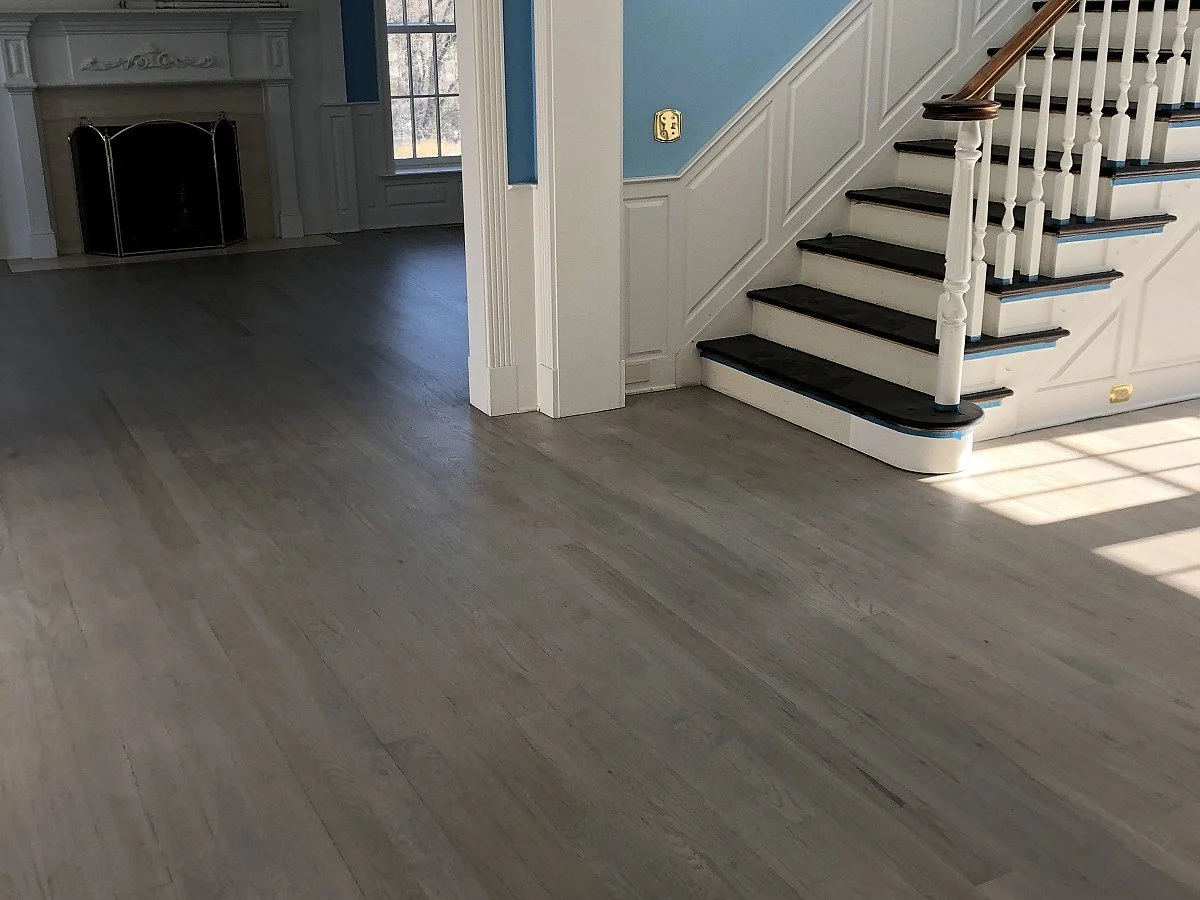
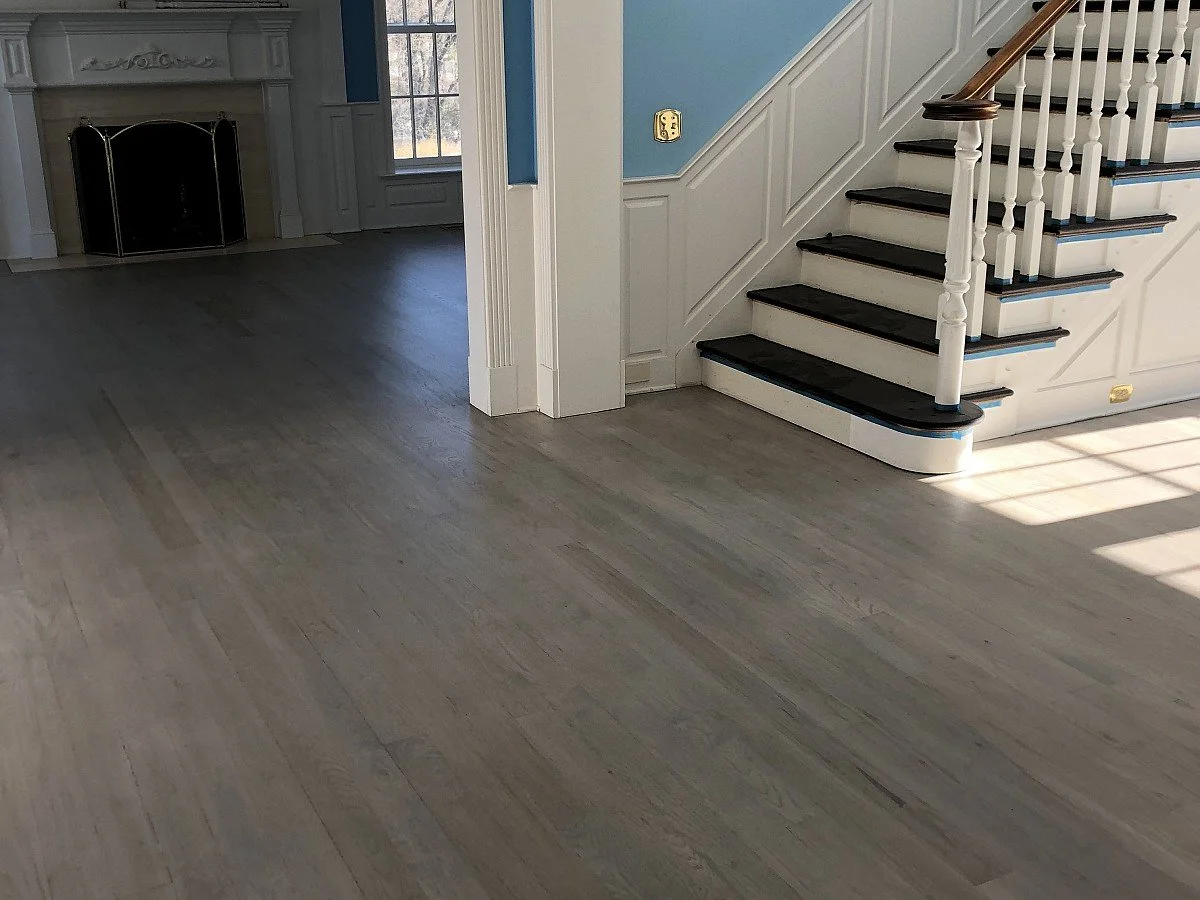
White Oak has a neutral, muted tone that makes it the default choice for modern, light finishes like grays, whitewashes, or natural oil looks popular in remodels across Radnor and Lower Merion. If you want a floor to look truly pale or cool-toned, White Oak will achieve it without fighting the red pigment.
Going Traditional Dark or Patching? Choose Red Oak
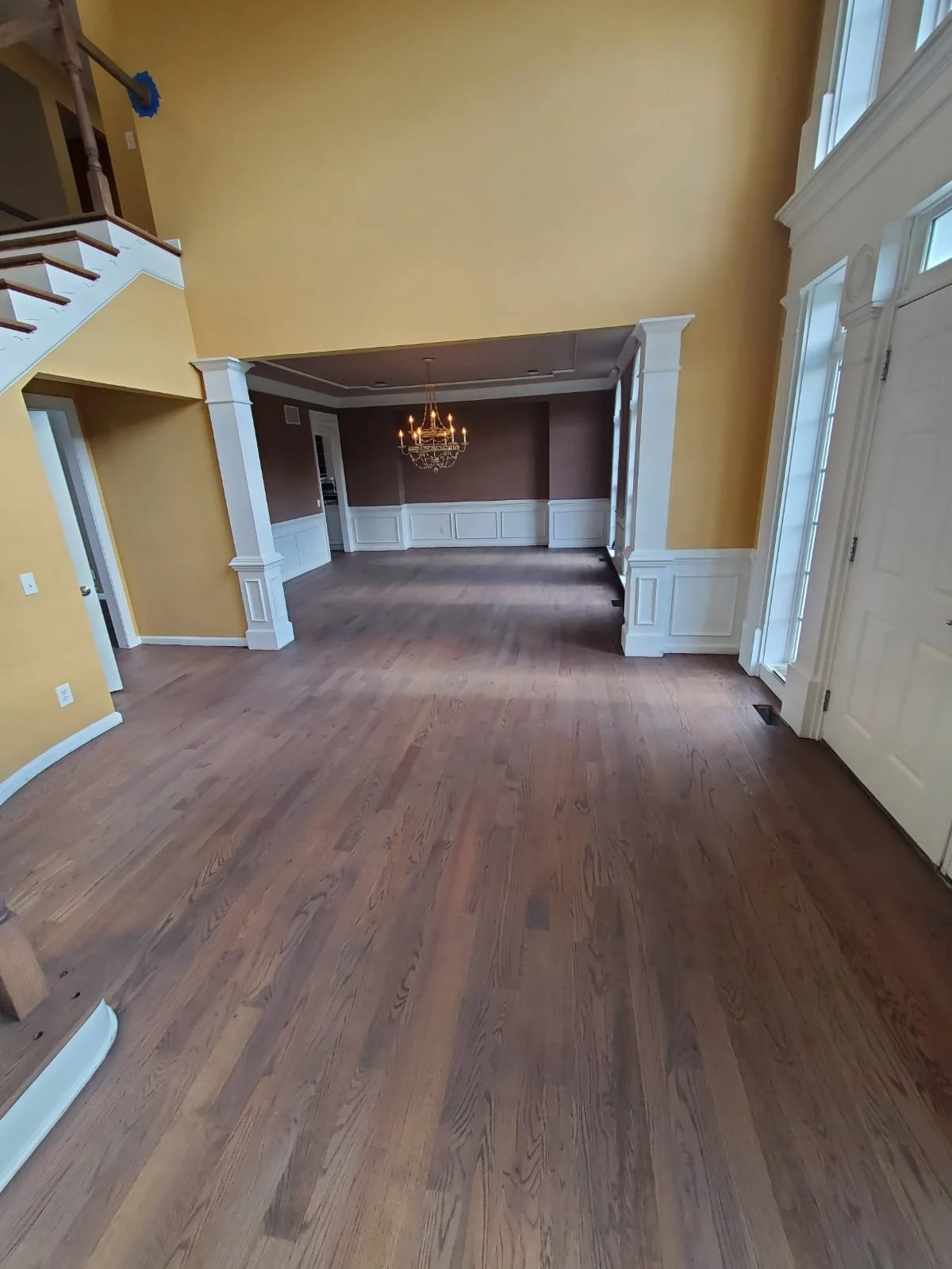
The bold grain of Red Oak helps hide minor imperfections and is excellent when stained with rich, dark browns. If your project is a repair, addition, or remodel within an older home in Havertown or Upper Darby (Delco), the original floor is highly likely Red Oak, and matching the species is essential for consistency.

Wide Plank White Oak
Our Contractor's Recommendations by Project Type
As hardwood floor specialists who work throughout the region, we see predictable success patterns. Here’s what we typically advise our clients in Bucks, Montgomery, Chester, and Delaware Counties:
1. Kitchens, Basements, and Slabs
Recommendation: White Oak.
Reasoning: These areas have the highest risk of moisture or humidity swings. White Oak’s closed-cell structure minimizes potential cupping and warping, making it the highest-performing option for these high-risk installations.
2. Full Refinishing & Restoration in Historic Homes
Recommendation: Depends on the Existing Wood.
Reasoning: If you are restoring a 100-year-old floor in Newtown or Ambler, you must identify the original species. We specialize in refinishing techniques that preserve the character of the existing wood, regardless of species, focusing on proper sanding and durable finish application.
3. Custom Color Finishes (Fuming, Reactive Stains)
Recommendation: White Oak.
Reasoning: These advanced, high-end finishes rely on the wood's tannins reacting with the stain chemicals. White Oak has a high tannin content and a tight, neutral grain that allows for even, dramatic color changes required for custom jobs in Solebury or Malvern.
The Cyclone Hardwood Floors Bottom Line
The best choice for your home isn't about which wood is 'harder'; it's about which is more stable and fits your design goals.
For maximum stability, moisture resistance, and modern light finishes, White Oak is the superior product for the Northeast.
For traditional homes, dark stains, or repairs, Red Oak remains the industry standard.
No matter which oak you choose, the preparation matters more than the wood itself. We follow a strict protocol of subfloor flattening, moisture content (MC) testing of the wood and the environment, and proper acclimation. This is how we guarantee a beautiful, lasting floor across Bucks, Montgomery, Chester, and Delaware Counties.
Ready to explore the perfect oak for your property?
Call Cyclone Hardwood Floors LLC today for a free, detailed estimate that accounts for your home's specific environment.
It’s True, hardwood floors + value to your bucks county home
Thinking about a new floor? Don't just think about style—think about your home's value. Our guide breaks down the true ROI of hardwood floors and why they're a smart investment.
New Hope, PA
Why Hardwood Floors are a Bucks County Homeowner's Best Investment
In Bucks County, where historic charm meets suburban sophistication, hardwood floors are more than a design choice—they're a valuable asset. From the rolling hills of Doylestown to the riverfront charm of New Hope and the family-friendly streets of Newtown, local homebuyers prioritize quality and timeless style. Adding or restoring hardwood flooring is one of the most effective home improvements you can make to boost your property's value and appeal in this competitive market.
The Bucks County Numbers: A Strong Return on Investment
Let's look at the data. Bucks County's real estate market is robust, with a median sale price of $530,000, and homes selling quickly, often within 27 days. In this fast-paced environment, features that help a house stand out are critical.
Significant Value Increase: Studies consistently show that hardwood floors can increase a home's value by as much as 10%. In Bucks County, with its median home price, this could mean an extra $53,000 at closing.
High ROI: A typical hardwood floor installation project costs anywhere from $10,830 to $12,041 in areas like Doylestown. With an estimated return on investment (ROI) of 70-80%, you can expect to recoup a substantial portion of your initial outlay.
Faster Sales: According to local real estate agents, homes with hardwood floors sell faster because they appeal to a wider range of buyers who are looking for move-in-ready properties. This reduces your time on the market and can lead to multiple offers.
More Than Just Numbers: The Appeal of Hardwood in Bucks County
Beyond the financial gains, hardwood flooring resonates deeply with the Bucks County lifestyle. It's about combining classic elegance with modern practicality.
Timeless Aesthetic: Whether in a historic farmhouse in Solebury or a new build in Yardley, wood floors add a layer of authenticity and warmth. They are a versatile foundation that complements the traditional architecture of towns like Doylestown and the contemporary designs of homes in Langhorne and Richboro.
Durability & Longevity: Bucks County residents value things that are built to last. Hardwood floors, when properly cared for, can endure for decades. The ability to sand and refinish the floors multiple times means they can be restored to their original beauty, making them a generational asset.
Health and Cleanliness: For families in towns like Newtown and Chalfont, easy-to-clean surfaces are a major plus. Unlike carpet, hardwood doesn't trap dust, allergens, or pet dander, promoting a healthier indoor environment for everyone.
The "Bucks County Buyer": Buyers in this area are discerning. They are drawn to properties that reflect quality and care. The presence of well-maintained hardwood floors signals a home that has been loved and invested in, creating an immediate emotional connection that can make or break a sale.
Your Hardwood Floor Options
When considering this investment, you'll likely encounter a couple of options. Solid hardwood offers unparalleled longevity, while engineered hardwood is a great choice for areas with higher moisture, like basements and kitchens, as it's more resistant to warping. For a Bucks County home, a professional flooring installation will ensure the job is done right, maximizing both the aesthetic and financial return.
Hardwood floors are an investment in your home's future, a testament to its quality, and a feature that will pay dividends whether you're selling tomorrow or enjoying your space for years to come. In a market as dynamic and desirable as Bucks County, it's a strategic move that simply makes sense. Get in touch today for an estimate on the upgrade that will always pay you back!

Your Hardwood Floors are Crying: A Montco Homeowner’s Guide to Cleaning Smarter
Are you making common cleaning mistakes that are dulling your hardwood floors? Learn which products and methods to avoid to keep your Montgomery County, PA home's floors looking new.
Blue Bell, PA
Hey, Montgomery County, PA! We know you love your homes. From the historic farmhouses in Lansdale to the stunning new builds in King of Prussia and Collegeville, your hardwood floors are a source of pride and a key part of your home's character. But let's be honest: are you cleaning them the right way after an installation?
We've seen it all, and the truth is, many of our customers in Montco are making a few common, well-intentioned mistakes that are slowly, but surely, damaging their beautiful real wood floors.
Here’s the deal: cleaning hardwood isn't like cleaning tile or vinyl. It's a delicate art, and the wrong approach can lead to dull finishes, water damage, and a shorter lifespan for your floors.
The Big 3 Hardwood Cleaning Sins in Montgomery County
The Soaking Wet Mop: You’re Drowning Your Floors!
We get it. A sparkling clean floor feels like a floor you can eat off of. But that bucket of soapy water? It’s a death sentence for your hardwood. Wood and excessive moisture are arch-enemies. That mop you're wringing out (or not) is pushing water into the tiny seams and cracks, causing the wood to swell, cup, and warp over time. In a place with varying humidity like Montgomery County, this is a recipe for disaster.
The Fix: Ditch the mop and bucket. Use a damp microfiber mop with a hardwood-specific cleaner. "Damp" is the key word here, not "wet." The mop head should feel barely moist to the touch.
The "All-Purpose" Cleaner: Don’t Use That on Your Wood!
Many household cleaners—including popular options with vinegar or ammonia—are too acidic or alkaline for a hardwood finish. They might work great on tile, but on wood, they can eat away at the polyurethane seal, leaving your floors looking dull, hazy, or sticky. We've seen homeowners in Plymouth Meeting and Blue Bell use these products, and the floors look good at first, but over time, they lose their luster and become vulnerable to scratches.
The Fix: Only use cleaning products specifically designed for hardwood floor cleaning. Brands like Bona or other pH-neutral, water-based cleaners are your best bet. A quick spot test in an inconspicuous area is a great idea before you commit.
The Wrong Vacuum Attachment: You’re Sanding Your Floors!
A vacuum is a fantastic tool for keeping dirt and grit off your floors, but if you're using the wrong attachment, you're doing more harm than good. Vacuums with a beater bar or stiff plastic bristles can cause micro-scratches that, over time, will dull your floor’s finish and make it look worn out.
The Fix: Always use a vacuum with a soft brush attachment or a "hard floor" setting that disables the beater bar. This will effectively pick up dust and debris without scratching the wood. Better yet, a high-quality microfiber dust mop is your first line of defense against the daily wear and tear that leads to scratching.
Pro-Tips for Sparkling Hardwood Floors
Sweep/Dust Mop Daily: A quick pass with a soft broom or microfiber dust mop in high-traffic areas like your kitchen in Oaks or living room in Ardmore will prevent the build-up of abrasive dirt and sand.
Wipe Spills Immediately: Don't let spills sit. Even a little water can cause a stain or penetrate the wood if left for too long.
Invest in Mats: A simple entryway mat at your door can trap most of the dirt and debris before it gets tracked onto your floors so you won’t have to refinish your hardwood floors as often.
Trim Pet Nails: This seems obvious, but a dog's long nails can leave deep scratches. Regular nail trims are a small effort for a big reward.
Your hardwood floors are a significant home investment. By avoiding these common mistakes and using the right techniques, you can ensure they remain a beautiful, durable asset for years to come. Floors not looking good even after a cleaning? Get in touch today for an estimate so we can bring them back to life!
Wide Planks, Perfected: Why Your Luxury Home Needs a Nailing and Gluing Installation
Installing Wide Plank Hardwood on the Main Line? You can't just nail it down. We break down the physics of wide-plank movement and why the glue-assist method is the only way to guarantee stability and prevent gapping.
5” Handscraped Oak
If you are renovating a custom home in Villanova, installing a new build in Malvern, or upgrading a historic estate in Lower Merion, the wide plank hardwood look is a definitive choice for luxury.
However, the wider the board, the higher the risk of gapping, crowning, or cupping. A traditional nail-down installation, which works fine on standard 3" oak, is simply inadequate for 7"-10" planks in the climate extremes of the Philadelphia area.
“When installing wide-plank flooring (7 inches or wider) in the Main Line’s historic homes, the ‘Nail and Glue’ method isn’t just an option—it’s a structural necessity. Because PA experiences significant humidity swings between July and January, wide planks are prone to ‘cupping’ if only nailed. By using a full-spread moisture-rated adhesive like Bostik’s Best or SikaBond in tandem with cleats, we create a permanent bond to the subfloor. This dual-attachment setup minimizes seasonal movement and ensures those high-end wide planks stay flat for decades, regardless of the Main Line’s weather.”
This is a technical warning from a contractor who works on the Main Line every day. We explain why the glue-assist method is not a luxury—it’s a non-negotiable requirement for long-term success in your high-value home across Chester, Delaware, and Montgomery Counties.
The Wide Plank Problem: The Physics of Movement
Wood moves. It expands in the humid summer and contracts in the dry, furnace-heated winter. This is a fact of life in the Northeast.
1. The Ratio of Movement
A 10-inch wide plank has more than three times the potential for moisture-driven movement than a standard 3-inch board. When that movement happens, a nail every 8-12 inches is often not enough to restrain the board, leading to unsightly gapping and irreversible warping.
2. Subfloor Sensitivity
High-end Main Line homes often have complex subfloor conditions—concrete slabs, older plywood over masonry, or radiant heat systems. These environments are prone to higher localized moisture content (MC) fluctuations that conventional nailing cannot handle.
If your installer doesn't address these two factors, your expensive wide plank floor will fail, regardless of the species or quality of the wood.
The Only Solution: The Glue-Assist and Full Glue-Down Methods
To successfully install wide planks (typically 5 inches or wider), we combine mechanical fasteners (nails) with high-performance elastomeric adhesive (glue). This is the glue-assist method.
1. The Role of the Glue
The adhesive acts as a vapor barrier and a moisture inhibitor under the plank, providing a layer of protection from the subfloor's moisture content. Critically, it also provides shear strength and continuous restraint across the entire width of the board, stopping the cupping and crowning that nails alone cannot prevent.
2. Subfloor Prep: The Unsung Hero
For a glue-assist installation to work in a Wayne or Radnor basement or first-floor slab installation, the subfloor must be perfectly prepared. We follow a strict three-step protocol:
Flattening: The subfloor must be perfectly flat (usually within 1/8" over 10 feet). We use specialized leveling compounds to ensure the adhesive has 100% surface contact.
Moisture Content (MC) Testing: We never assume the subfloor is dry. We use a professional-grade meter to test the concrete or plywood MC, often requiring a concrete moisture mitigation system before we even open the box of wood.
Vapor Barrier: The adhesive we use (typically a high-quality urethane or moisture-cure product) must also function as a vapor barrier to protect the wood from residual moisture.
Wide Plank Use Cases on the Main Line
Our decades of experience on the Main Line dictate specific installation choices based on the unique properties of these multi-million dollar homes:
1. Custom Homes with Radiant Heat (e.g., Bryn Mawr, Villanova)
Requirement:Full Glue-Down Method. For any floor over a hydronic (water-based) radiant heat system, the full glue-down method is required. The adhesive bonds the wood directly to the subfloor, maximizing heat transfer and minimizing the movement that the constant temperature cycles induce. Nail-down only will fail.
2. Historic Stone Mansions (e.g., Malvern, Chester Springs)
Requirement:Glue-Assist on Structural Plywood. Older homes often have structural quirks and higher basement humidity. The full, continuous adhesion of the glue-assist method provides the security needed to hold these wide boards flat over older or less-than-perfect subfloors.
3. Concrete Slab Installations (High-Rise Philly & City Suburbs)
Requirement:Full Glue-Down with Vapor Barrier Adhesive. Concrete slabs are notorious for residual moisture. A full glue-down using an adhesive that specifically inhibits moisture is the only acceptable professional method to prevent the floor from failing from below.
Why Choose Cyclone for Your Main Line Wide Plank Floor
We are not generalists. We are technical experts specializing in the high-stakes installations demanded by the Philadelphia, Chester, Delaware, and Montgomery markets. We guarantee our work by following protocols that others skip:
Dedicated Tools: We invest in specialty wide-plank rollers, advanced MC meters, and premium adhesives—tools standard contractors don't carry.
Zero-Drama Schedule: We understand that high-end projects operate on tight timelines. Our precise prep work ensures we hit our installation start and finish dates, minimizing delays for other trades.
Installation Warranty: We back our wide plank glue-assist installations because we trust our process.
Don't risk your high-end investment on an installer who cuts corners with a simple nail-down technique. For the stability and longevity required on the Main Line, the glue-assist method is your insurance.
Call Cyclone Hardwood Floors LLC today for a free, detailed, and technically sound estimate.

Oil vs. Water-Based Urethane: Your Main Line Hardwood Floor Finish Showdown
Oil or water-based urethane? For your Main Line hardwood floors, the right finish makes all the difference. Learn the pros and cons to protect your home's investment.
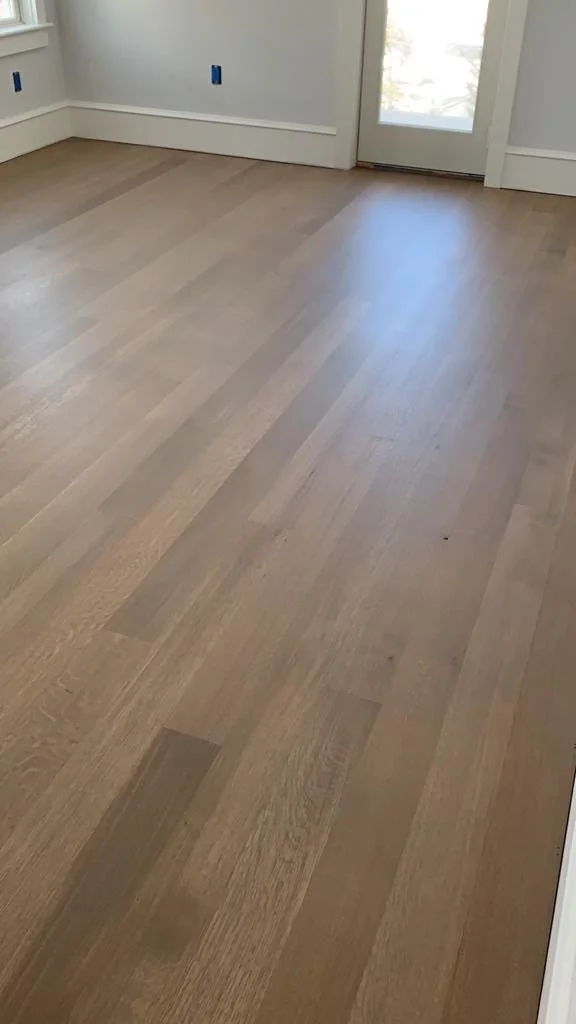
Bona Beauty in Bryn Mawr
For homeowners in Bryn Mawr, Villanova, Gladwyne, and across the distinguished Main Line of Pennsylvania, hardwood flooring is more than just a surface—it's a significant home investment. When it comes to protecting that investment, the finish you choose is paramount. The debate between oil-based urethane and water-based urethane isn't just about aesthetics; it's about durability, maintenance, and how your real wood floors will perform for years to come.
As your trusted hardwood floor experts in the Philly burbs, we're here to break down the key differences and share a true story from one of your Bryn Mawr neighbors that perfectly illustrates this dilemma.
The Classic Contender: Oil-Based Urethane
Oil-based polyurethane has been the traditional choice for hardwood floor finishing for decades, and for good reason.
Pros:
Exceptional Durability: Historically, oil-based finishes are known for their ruggedness. They create a very thick, hard, and protective layer that stands up well to heavy foot traffic.
Rich, Ambering Hue: Over time, oil-based finishes develop a warm, amber glow that deepens the natural color of the wood. Many homeowners love this classic, aged look, especially on traditional species like oak hardwood flooring.
Cost-Effective: Often, oil-based polyurethanes are more budget-friendly per gallon than their water-based counterparts.
Cons:
Longer Drying Times: Each coat of oil-based poly can take 8-12 hours (or more) to dry, significantly extending the project timeline.
Strong Fumes: The high VOC (Volatile Organic Compounds) content means strong, lingering odors during and after application, requiring good ventilation and temporary relocation for some.
Ambering (Aesthetic Preference): While a "pro" for some, others prefer a finish that doesn't change the wood's natural color.
The Modern Marvel: Water-Based Urethane
Water-based polyurethane has gained immense popularity, particularly for those seeking a quicker, cleaner, and more contemporary finish.
Pros:
Faster Drying Times: You can often apply multiple coats in a single day, drastically reducing project duration.
Low VOCs, Low Odor: Minimal fumes make it a much more pleasant experience for homeowners and pets, allowing for a quicker return to the space.
Clear, Non-Yellowing Finish: Water-based poly dries clear and stays clear, preserving the natural color of the wood. This is ideal for lighter wood species like maple or ash, or for achieving a modern, Scandinavian aesthetic.
Eco-Friendly Options: Many water-based products are formulated with lower environmental impact.
Cons:
Perceived Durability (Historically): Older formulations were less durable, leading to a lingering misconception. However, modern, high-quality water-based products, like the one in our story, have exceptional wear resistance.
Higher Cost: Generally, water-based urethanes are more expensive per gallon.
A Bryn Mawr Dog Lover's Dilemma: Finding the Perfect Finish
We recently had a wonderful customer in Bryn Mawr, a charming historic home brimming with character – and no less than three energetic dogs! She was set on a hardwood floor refinishing project, but when it came to the finish, she was adamant about water-based urethane. Her primary concerns were the strong fumes of oil-based poly (for her beloved canine companions) and preserving the light, airy feel of her home without the ambering effect.
Given the heavy paw traffic expected, our initial recommendation for ultimate durability would typically lean towards an oil-based system. We expressed our concerns about potential wear with a standard water-based product under such rigorous conditions. It was a classic "durability vs. desired aesthetic/health" debate.
The Compromise & Triumph: Bona Traffic HD
After a thorough discussion, we found the perfect compromise: Bona Traffic HD. This premium, two-component commercial-grade water-based urethane is specifically engineered for extreme durability and heavy traffic – think airport terminals and bustling restaurants, not just residential homes! It offered:
Unmatched Scratch & Scuff Resistance: Crucial for three playful dogs.
Low VOCs & Fast Drying: Allowing her dogs to return home much sooner.
Crystal Clear Finish: Maintaining her home's bright, modern aesthetic.
The result? Our client was thrilled. Her Bryn Mawr hardwood floors not only look stunning, maintaining their beautiful, natural tone, but they are also holding up phenomenally against daily dog-induced chaos. It was a testament to how finding the right product, even within a specific category, can meet unique homeowner needs.
Elevating Main Line Homes with the Right Expertise
Whether your home is a classic colonial in Villanova or a contemporary masterpiece in Malvern, understanding your hardwood floor finish options is crucial for its longevity and beauty. Our expertise in hardwood floor installation, refinishing, and maintenance across the Main Line ensures that your floors receive the tailored treatment they deserve.
Don't guess when it comes to your valuable wood flooring. Consult with a professional to discuss your lifestyle, aesthetic goals, and budget. We're here to help you choose the ideal urethane finish that will protect your investment and keep your Main Line hardwood floors looking impeccable for decades. Get in touch today for a no-obligation estimate!